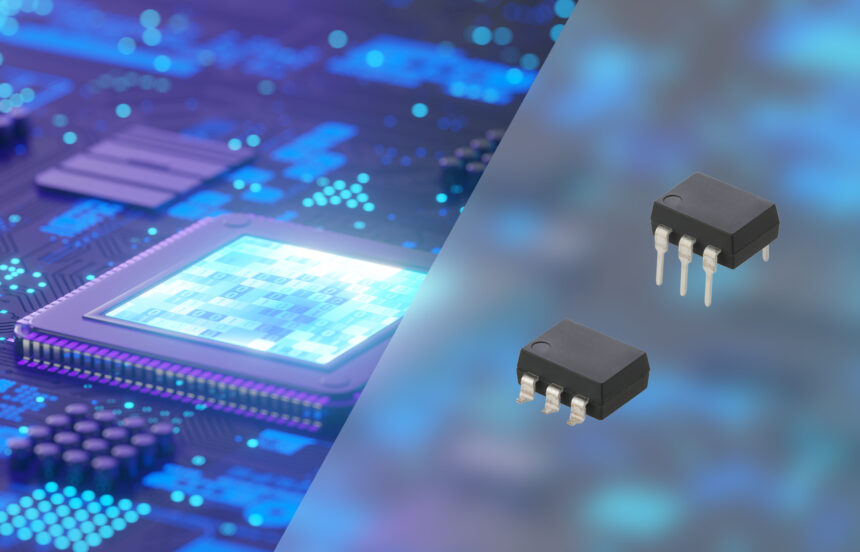
Omron Electronic Components Europe has launched G3VH SiC-MOSFET relays with 1,800V and 3,300V load voltage ratings for high-voltage power switching and automated test applications.
The relays use silicon carbide MOSFET technology to provide solid-state switching for bus and battery voltages of 1,000V and above. Target applications include industrial drives, automation equipment, renewable energy systems, energy storage, ground fault detection, and automated test equipment used with high-voltage wide bandgap power semiconductors.
Higher-voltage systems are spreading across vehicles, factories, charging infrastructure, renewable generation, and industrial energy systems. As those systems become more powerful and compact, the components used to switch, isolate, protect, and test electrical circuits must tolerate greater stress while maintaining repeatable performance.
Relays can be easy to overlook beside inverters, power modules, MOSFETs, IGBTs, and converters, yet switching components influence reliability, safety, and test integrity. Automated test equipment may need to switch high voltages repeatedly under controlled conditions, with low leakage, stable isolation, and consistent behaviour across large numbers of cycles. In production testing, small variations can create false failures, missed defects, or avoidable downtime.
Wide bandgap semiconductor testing is one of the most demanding applications. Silicon carbide and gallium nitride devices are being adopted in electric vehicle traction systems, high-power charging, solar inverters, industrial drives, and data centre power systems. Testing those devices requires equipment that can support high voltage, fast response, thermal stability, and repeatability.
Solid-state relays can offer advantages where mechanical relay wear, switching speed, acoustic noise, or lifetime constraints become limiting. The choice will still depend on on-resistance, leakage, isolation, heat dissipation, packaging, cost, and availability. The use of SiC technology gives Omron a route to address higher-voltage applications where conventional relay designs may face constraints.
Industrial energy systems are creating additional demand for robust switching. Battery storage, DC distribution, renewable generation, microgrids, and EV charging systems all rely on control and protection architectures that can operate safely under higher voltage conditions. Retrofit projects in factories and infrastructure sites can be especially demanding because new electrical equipment must be fitted into existing panels, controls, and safety regimes.
Automation applications add another layer of use. Variable frequency drives, servo systems, robotics, pumps, conveyors, compressors, and fans influence both production performance and energy consumption. Equipment manufacturers need reliable switching and test components to validate products before deployment, while operators need confidence that electrical systems can be maintained without compromising uptime.
Omron’s release sits within a wider expansion of power electronics capacity and capability. The opening of major European power semiconductor manufacturing, including new capacity in Dresden, underlines how central high-voltage devices have become to electrification. Component launches such as the G3VH range sit downstream of that manufacturing base, helping engineers test, control, and integrate power devices into usable systems.
SiC technology is adopted where material properties support better performance under voltage, temperature, and switching stress. In relay applications, those advantages have to translate into lower losses, reliable isolation, long operating life, and practical integration into test or control equipment. The value will be measured less by the material label than by performance in real electrical systems.
The G3VH launch shows how electrification is pushing innovation into component categories that rarely attract public attention. High-voltage energy systems depend on devices that can switch accurately, withstand stress, and fit into automated engineering workflows. As power electronics becomes more central to vehicles, factories, grids, and renewables, supporting components will carry more of the system’s reliability burden.