Mykor has secured £4 million in funding to scale industrial biofabrication technologies for low-carbon construction materials grown from agricultural and industrial waste streams.
The Bristol-based biotechnology company said the round was led by Clean Growth Fund, with participation from the British Business Bank’s South West Investment Fund via The FSE Group, Green Angel Ventures, and support from Innovate UK’s investor partnership programme.
The latest investment brings Mykor’s total funding to £7.5 million, made up of £5.5 million in equity investment and £2 million in grant funding. The company will use the capital to expand production and develop a replicable model for deploying manufacturing capacity across key markets.
Mykor’s process combines engineered mycelium strains, green chemistry additives, and closed-loop automated manufacturing to produce construction products including prefabricated walls and cavity wall insulation. Rather than building its growth around a single centralised factory, the company is developing a platform that can be integrated into existing production lines and construction systems.
The first product to market, MykoSIP, is a preassembled partition wall designed to reduce embodied and operational carbon without compromising fire safety, cost, buildability, or performance. Mykor said the system delivers an estimated carbon saving of around 23kgCO₂e per m² compared with incumbent systems, equal to at least 50% carbon savings before biogenic carbon storage is included.
The panels are designed to provide comparable thermal and acoustic performance while using 90% less water and 40% less electricity than polystyrene counterparts. The company also said the panels are mould-free, breathable, and do not emit toxins as they degrade in the way some synthetic insulation products can.
Commercial demand is already forming around the technology. Mykor said it is delivering live construction projects and has secured two large offtake agreements worth £338 million with UK and European contractors, giving the company a route from product development into scaled deployment.
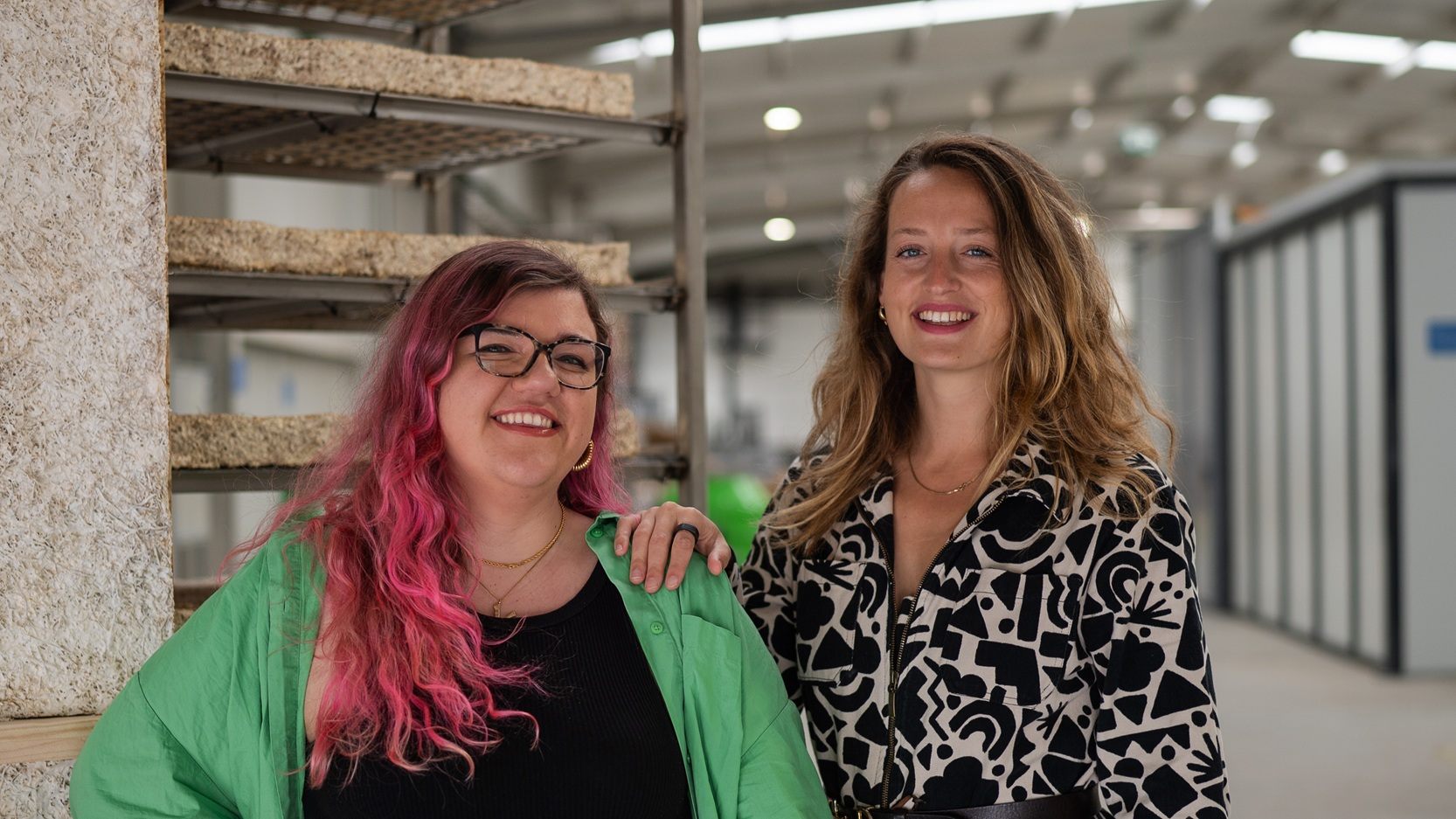
“We’ve built Mykor around the idea that decarbonising construction cannot come at the expense of cost, performance or practicality. The challenge has never just been inventing a biomaterial — it’s been manufacturing these systems at industrial scale and integrating them into real construction supply chains. This funding allows us to scale that model further alongside major contractors and manufacturing partners globally. We’re very pleased to be working with investors who understand both the urgency of the problem and the scale of the opportunity ahead,” said Olivia Page, CEO and Co-founder of Mykor.
Building standards are placing greater pressure on developers and contractors to reduce both operational energy use and embodied carbon. Insulation is central to that shift, but material choices are increasingly being tested against fire behaviour, circularity, installation familiarity, cost, and supply reliability as well as thermal performance.
Susannah McClintock, Investment Partner at Clean Growth Fund, said: “Mykor addresses one of construction’s most pressing challenges: reducing embodied carbon without adding cost or complexity. Their solution integrates seamlessly into existing building practices and is cost-competitive with conventional materials — delivering meaningful carbon savings without adding cost. We’re delighted to support this exceptional team as they scale commercially.”
Mykor’s next phase will centre on turning offtake agreements, live projects, and manufacturing partnerships into repeatable capacity. Further information is available through Mykor’s company website.