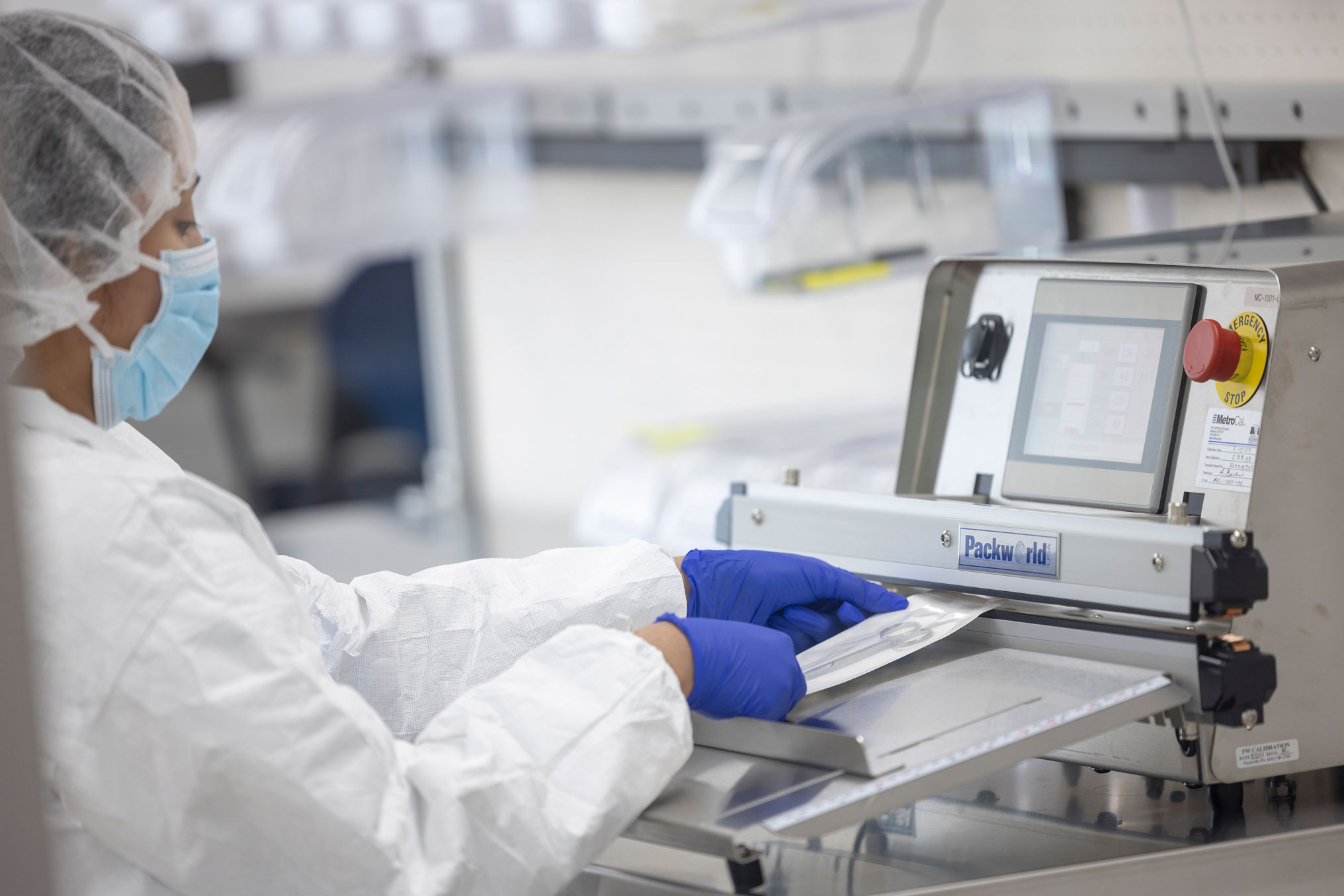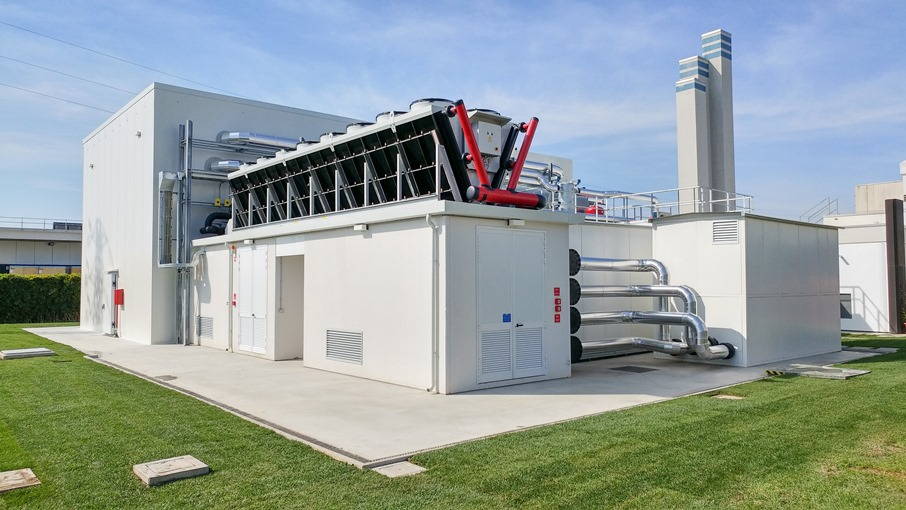
Vertiv is expanding chiller manufacturing and integrated testing at its Tognana campus near Padua as higher-density artificial intelligence infrastructure increases demand for industrial cooling equipment.
The company expects to double regional chiller production capacity by the end of 2026 and complete a new large-scale testing laboratory in early 2027. Additional roles will be created across engineering, manufacturing, testing, and technical support as activity increases at the site.
Tognana is one of Vertiv’s principal European centres for thermal-management development, combining research and development, product management, manufacturing, training, and a Customer Experience Centre where equipment can be demonstrated under representative operating conditions.
Additional production processes will support greater output for European and international projects, while the new laboratory will test large chillers and their integration with liquid-cooling systems under high heat loads and a wide range of ambient temperatures.
Data centre cooling has traditionally relied heavily on conditioned air moving through rooms, aisles, racks, and server enclosures. Increasing processor density concentrates more heat within each rack, reducing the practicality of air-only arrangements and accelerating the use of systems that move heat through liquid closer to the electronic components.
Liquid cooling does not remove the need for chillers or heat-rejection equipment. Cold plates, immersion tanks, coolant distribution units, pumps, manifolds, and heat exchangers transfer heat away from the servers, after which it must still be rejected to outdoor air, water, or another useful heat sink.
Each part of that chain must operate as a coordinated thermal system. A chiller can meet its individual specification while the complete installation experiences unstable flow, unsuitable water chemistry, poor temperature control, conflicting control loops, insufficient redundancy, or excessive energy consumption at partial load.
“AI is driving thermal demands that didn’t exist two years ago, with higher densities, faster deployment demands, and no room to compromise on reliability,” said Gio Albertazzi, chief executive of Vertiv. “The expansion at Tognana puts us further ahead with more manufacturing capacity, integrated testing, and advanced thermal management systems built for current and future generations of silicon.”
Testing moves from equipment to thermal systems
The new laboratory will reproduce high-density operating conditions before equipment reaches the customer site, allowing chillers, pumps, controls, liquid loops, distribution equipment, and heat exchangers to be assessed together under changing load and temperature.
AI workloads can vary rapidly, producing substantial changes in heat output over short periods. Cooling equipment must respond without allowing component temperatures to exceed operating limits or causing instability as pumps, valves, compressors, and fans adjust simultaneously.
Transient behaviour becomes more demanding as thermal density rises. Coolant and metal provide some thermal buffering, but a control delay, pump fault, closed valve, or interruption to heat rejection can allow temperatures to increase rapidly when a large amount of computing power is concentrated within a small space.
Integrated testing can identify control interactions and interface problems before installation, while witness testing allows customers to assess performance against specified flow, temperature, load, redundancy, and fault conditions. Resolving those issues at the factory reduces the quantity of troubleshooting required during site commissioning.
Extreme ambient testing is particularly useful for equipment supplied across different climates. Outdoor temperature and humidity affect chiller efficiency, available free cooling, condenser performance, water consumption, and the temperature at which heat can be rejected.
Cooling efficiency also influences the size and operation of the electrical connection. Analysis of battery operation across British data centres has shown how storage can reduce peak grid imports, although it does not remove the underlying computing and cooling load.
Pumps, fans, compressors, and auxiliary systems form a material part of facility demand, particularly when equipment operates far from its optimum point. Accurate testing across partial load, high ambient temperature, and failure conditions provides a more useful efficiency profile than a single nominal design point.
Water consumption creates another design constraint. Evaporative systems can reduce electrical demand but consume water, while dry arrangements use more fan power and may deliver lower efficiency during very hot weather. Hybrid systems allow the balance to change, although they add controls, treatment requirements, maintenance, and capital cost.
Waste heat can be exported where a suitable industrial process or district-energy network is located nearby. The temperature available from the cooling loop governs how easily that heat can be used, and a heat pump may be required where the receiving system operates at a higher temperature.
Manufacturing capacity addresses the parallel problem of equipment lead time. Data centre construction requires chillers, transformers, switchgear, generators, power conversion, racks, liquid-cooling equipment, and controls, several of which have experienced extended delivery schedules as demand has increased.
Doubling output requires more than additional final-assembly space. Suppliers of compressors, heat exchangers, motors, drives, pumps, controls, vessels, valves, sheet metal, and electrical equipment must support the increased rate, while production testing and skilled labour expand alongside the line.
Tognana has produced precision cooling equipment since the 1960s through the legacy of Liebert and Hiross. Together with Vertiv’s Castel Guelfo facility near Bologna, it forms one of the company’s principal European thermal-technology hubs.
Both Italian sites also operate as Vertiv Academy locations within a network of 30 training centres worldwide, including 15 across Europe, the Middle East, and Africa. Liquid cooling increases the need for training around commissioning, coolant quality, controls, leak management, heat exchangers, and maintenance.
“The expertise of our Tognana teams is central to Vertiv’s ability to support increasingly complex cooling requirements,” said Sam Bainborough, vice president of Vertiv’s thermal business in EMEA. “By expanding manufacturing, integrated testing and our local talent base, we are strengthening the campus’s role in serving customers across EMEA and other global markets while creating skilled opportunities in the region.”
The investment joins greater factory output with the ability to validate complete thermal behaviour before equipment is installed. Production quality, lead time, control stability, water use, electrical efficiency, and field reliability will determine how effectively the expanded campus supports the next generation of high-density computing facilities.