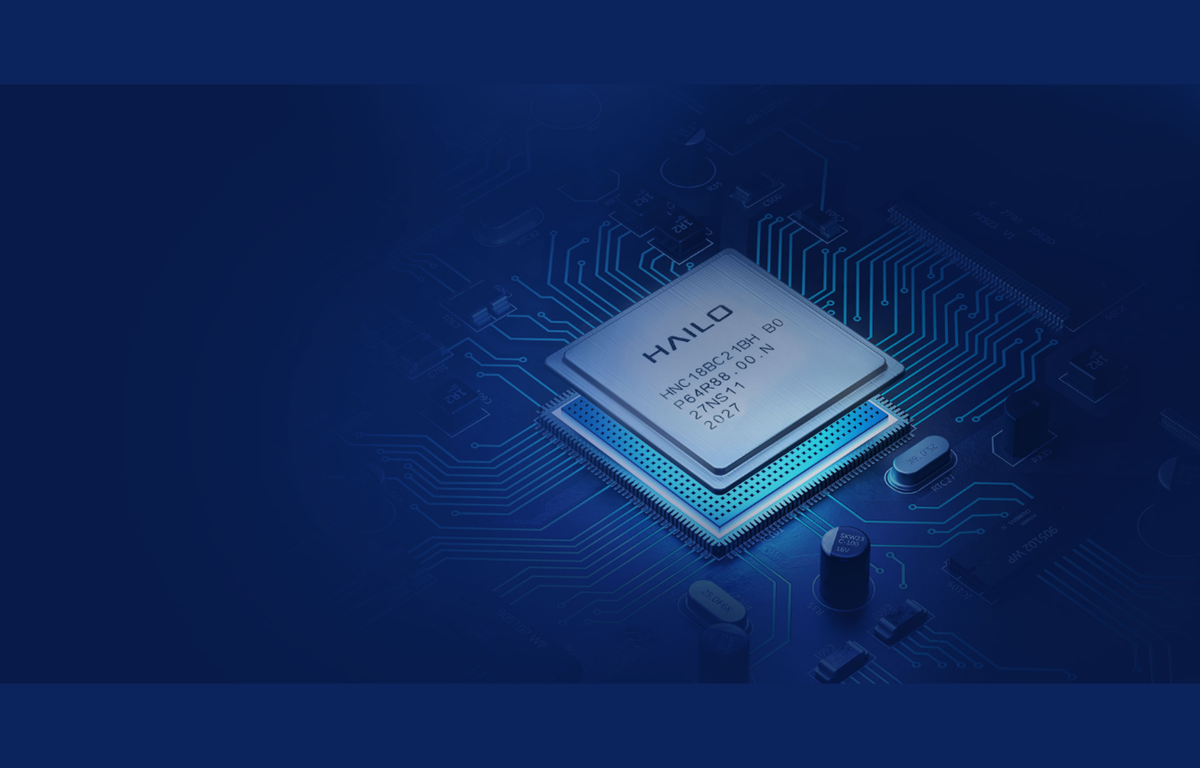
Electronics distributor Farnell has added Hailo’s edge artificial intelligence accelerators, modules, and development equipment to its EMEA portfolio under a new global distribution agreement.
The arrangement will make Hailo hardware available through Farnell across Europe, the Middle East, and Africa, through Newark in North America, and through element14 in the Asia-Pacific region. Development resources, engineering support, and supply services will accompany the hardware as projects progress from initial evaluation to production.
Hailo develops processors designed to perform AI inference locally within embedded equipment. Target applications include industrial automation, machine vision, robotics, logistics, automotive systems, security equipment, and infrastructure that cannot rely on a continuous cloud connection.
Processing sensor data close to its source reduces the delay associated with sending information to a remote data centre, while also limiting network traffic and allowing sensitive images or production data to remain within the local system. Equipment can continue operating during a communications outage, provided that its models and control logic are available at the edge.
The distribution agreement covers accelerator products, modules, and development kits. Accelerators can add AI processing to an existing host platform, while modules and evaluation systems combine the processor with memory, interfaces, power management, and supporting software in a known development configuration.
Embedded AI projects depend on considerably more than access to the processor itself. Engineers need software tools, reference designs, documentation, lifecycle information, technical support, and a supply route capable of supporting the move from a handful of prototypes to regular production.
Industrial equipment often remains in service for many years, creating requirements for product longevity, controlled change notification, security updates, and access to the same configuration long after faster-moving consumer markets have adopted another generation of hardware.
Local inference enters industrial control systems
Edge AI is increasingly used for visual inspection, object detection, process monitoring, predictive maintenance, autonomous navigation, and safety applications. Many of those functions require responses within milliseconds and cannot tolerate unpredictable delays from external networks.
A machine vision system inspecting components at production speed must capture an image, run the model, make a decision, and signal a reject or process adjustment before the part moves beyond the relevant station. Processing performance therefore has to be assessed alongside camera timing, lighting, data movement, control latency, and the mechanical response of the machine.
Power and heat impose tight limits within embedded equipment. An accelerator must fit within the available electrical and thermal envelope while communicating reliably with cameras, sensors, memory, and the host processor. Cooling requirements can affect enclosure design, ingress protection, fan life, and maintenance.
Model performance can also change after deployment as lighting, camera position, component finish, product mix, dust, vibration, and equipment wear alter the input data. A system that performs strongly on a development dataset may require monitoring and controlled retraining once installed on a live production line.
That creates a software lifecycle extending throughout the equipment’s service life. Manufacturers need version control for models and runtime software, records of training data, test procedures, rollback capability, cybersecurity updates, and evidence that a change has not weakened inspection performance.
Robotics introduces further demands because the output of an AI model can initiate physical movement. Object classification, pose estimation, path planning, and obstacle detection must remain within a defined safety architecture, with independent limits and stopping functions available when perception is uncertain or the software behaves unexpectedly.
Automotive programmes add long qualification and support cycles. Components may require environmental testing, cybersecurity evidence, functional-safety assessment, and supply assurance before entering a platform, while the selected processor must remain available through vehicle production and aftermarket support.
Farnell’s distribution structure gives Hailo access to engineering teams that may not buy enough volume to work directly with a semiconductor manufacturer. Developers can also source power supplies, connectors, sensors, cameras, memory, industrial computers, and supporting components through the same channel.
That consolidation can simplify early purchasing, although production readiness still depends on thermal design, electromagnetic compatibility, enclosure constraints, industrial interfaces, test equipment, and the security architecture around the finished system. Development kits rarely address those requirements completely.
Engineers must also determine whether dedicated acceleration is justified. Some applications can run on existing processors or microcontrollers, whereas larger models and higher inference rates may require a separate accelerator. Model size, numerical precision, memory bandwidth, latency, power, and software optimisation all influence that decision.
Hardware availability can dictate design choices as strongly as raw performance. A processor with excellent benchmark results offers little practical value when lead times, lifecycle policy, or software support make it unsuitable for a product expected to remain in production for several years.
Security management becomes especially important when AI platforms accept model updates or communicate with external systems. Signed software, controlled update mechanisms, secure boot, protected credentials, and vulnerability response all need to be designed into the product rather than added after deployment.
Farnell’s agreement broadens the commercial route for Hailo technology as local inference moves further into machinery and infrastructure. Adoption will be governed by how readily the processors can be integrated, cooled, secured, qualified, and supplied throughout the operating life of the equipment.