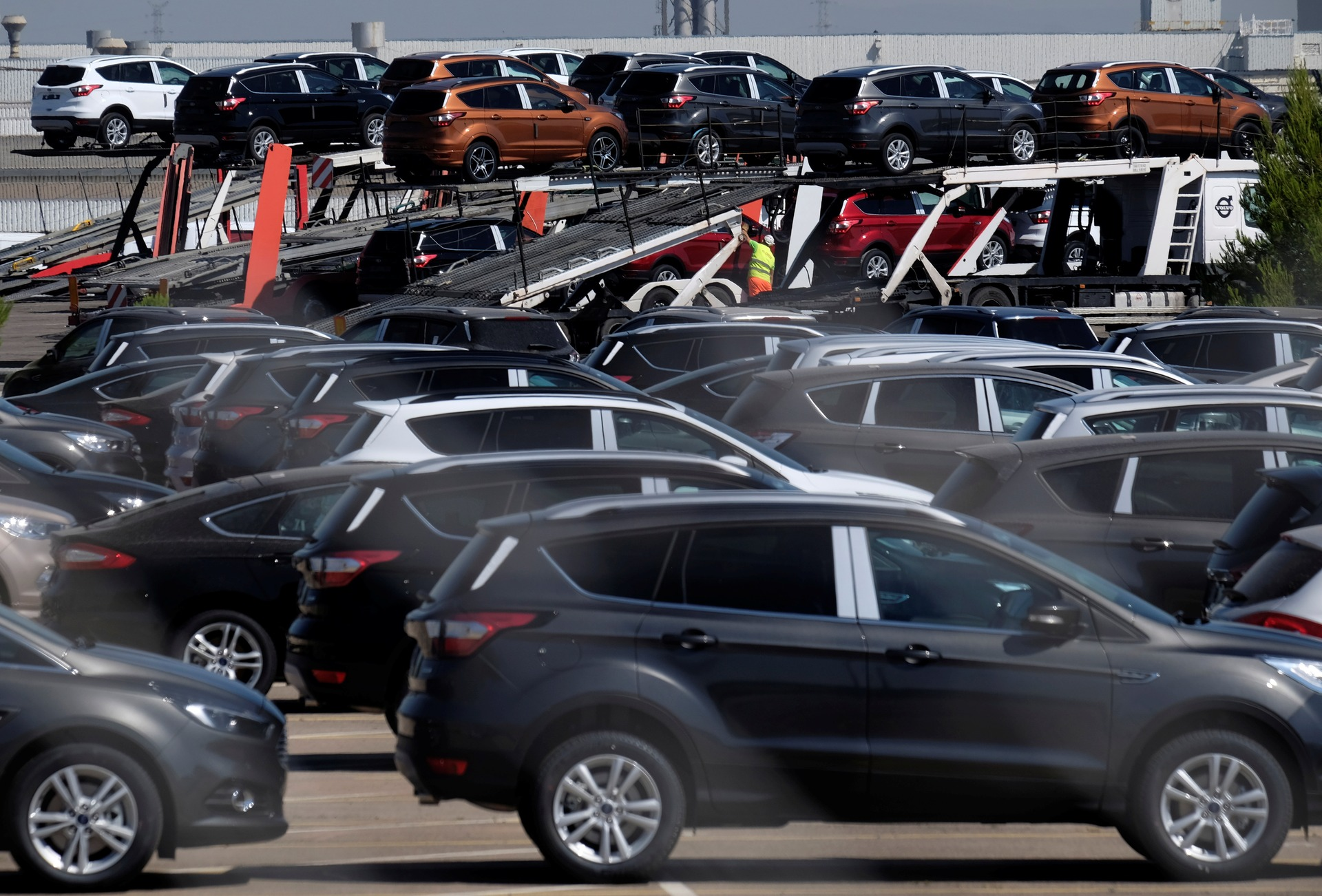
Ford and Geely are discussing an arrangement that could bring production of Geely electric vehicles to Ford’s Almussafes plant near Valencia.
Although neither company had formally confirmed a final agreement when the discussions became public, the proposed structure would allow Geely to use manufacturing capacity and infrastructure at the Spanish site. Ford would gain additional production activity while preparing Almussafes for a new multi-energy vehicle scheduled to enter manufacture from 2028.
Spanish accounts have differed over whether Ford would transfer part of the site or operate a production partnership based on shared facilities. The distinction affects responsibility for labour, tooling, quality, procurement, data, investment, and regulatory approval, leaving several important terms unresolved.
Almussafes currently produces the Ford Kuga after losing the Mondeo, S-Max, Galaxy, and Transit Connect programmes. Annual output fell below 100,000 vehicles during 2025, more than 70% below its 2019 level, while the workforce has contracted to approximately 4,200 people.
Additional models could improve use of the body, paint, assembly, logistics, and quality infrastructure already installed at the factory. Geely would avoid waiting for a complete greenfield plant and gain access to a workforce experienced in high-volume European vehicle production.
Local manufacture could also reduce transport distance and exposure to tariffs applied to electric vehicles imported from China. The commercial effect would depend on the origin of the battery, electronics, drivetrain, and other major components, together with the rules used to determine the finished vehicle’s manufacturing origin.
Any new model would require detailed assessment against the plant’s existing equipment. Vehicle dimensions, body materials, joining methods, battery architecture, electrical system, and option content all influence whether current machinery can be reused or must be replaced.
Shared production creates complex boundaries
Contract manufacturing and shared-plant arrangements can improve asset utilisation without constructing another factory, but they divide responsibility across product design and production operations. Ford and Geely would need to establish which company controls process engineering, quality release, supplier approval, production scheduling, warranty investigation, and factory data.
Automotive manufacturing relies on tightly connected design records, software versions, component traceability, and quality results, some of which may contain commercially sensitive information. Separate digital environments could protect intellectual property, although excessive separation would make production planning, fault analysis, and line control more difficult.
Body shops can support several models when tooling, fixtures, robots, and joining equipment are sufficiently flexible. Different vehicle platforms may nevertheless require new framing stations, welding guns, adhesive systems, riveters, dimensional measurement, and material handling.
The paint shop is among the most capital-intensive shared assets within a vehicle plant, and using it more fully can improve project economics. Coating chemistry, body geometry, corrosion requirements, oven temperatures, colour scheduling, and throughput must still be compatible across the combined production programme.
Electric vehicles introduce high-voltage operations throughout assembly and testing. Battery packs may arrive complete or be assembled nearby, while lifting, connection, leak testing, coolant filling, charging, electrical isolation, software flashing, and end-of-line diagnostics require equipment and trained staff.
The production sequence must accommodate different component flows without disrupting the Kuga or Ford’s future multi-energy model. Mixed-model lines can improve flexibility, but growing option content and divergent platforms increase the chance of material errors, cycle-time imbalance, and quality escapes.
Local sourcing will determine how much industrial value remains within Spain and the wider European supply base. Seats, interiors, glass, stampings, tyres, electronics, battery components, and logistics can be procured regionally, although suppliers need adequate volume and programme duration before investing in tooling and capacity.
Geely already controls or owns interests in several European automotive companies, providing experience of engineering, regulation, and production within the region. Almussafes would offer another path to capacity while avoiding the construction period and permitting process associated with a new plant.
Ford faces a broader European transition as vehicle demand, emissions policy, energy cost, and the pace of electric adoption remain uneven. Maintaining skilled plants during model changeovers has become difficult where historic factories were designed for output considerably above current volumes.
A shared programme could bridge part of that gap, although Ford would become partly dependent on Geely’s product cycle and sales performance. A completed contract would need to define investment contributions, minimum volume, production duration, ownership of dedicated equipment, and the treatment of unused capacity.
Employment commitments and public support will attract close attention from Spanish and regional authorities. Additional production can preserve skills and supplier activity in the near term, but lasting industrial value will depend on engineering work, procurement decisions, future model allocation, and the ability to keep the plant competitive after the first contract ends.
The proposed partnership joins underused European capacity with a manufacturer seeking greater regional production, giving the discussions a clear operational foundation. Turning that fit into a stable vehicle programme will require extensive work across tooling, data, suppliers, labour, quality, and regulatory approval before the first Geely vehicle can leave Almussafes.