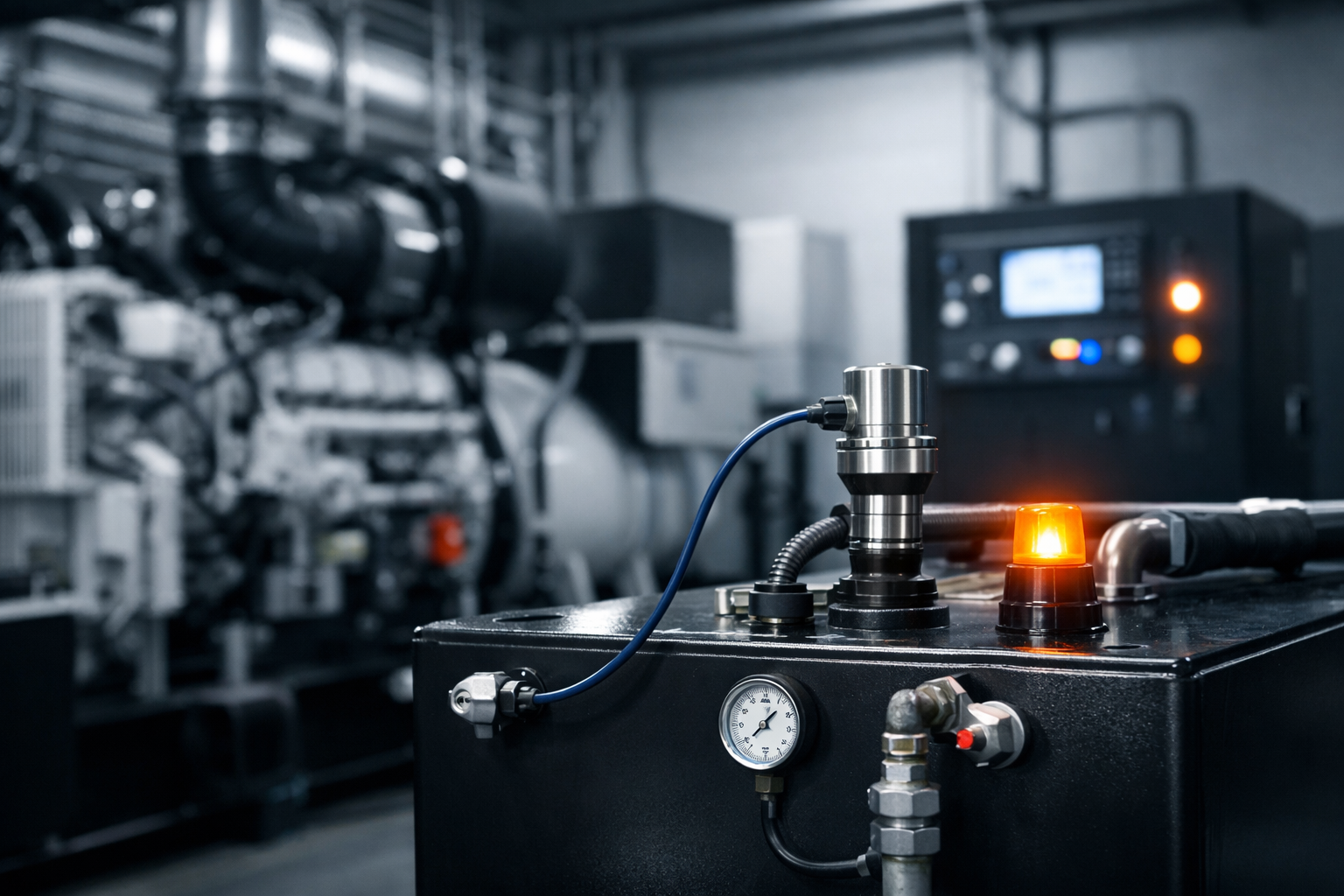
In the modern industrial landscape, the seamless operation of power generation facilities and fuel storage depots is the backbone of global infrastructure. From massive data centres requiring uninterruptible power supplies (UPS) to remote industrial sites relying on diesel generators, the margin for error is razor-thin. At the heart of these complex systems lies a critical, often overlooked component, which is the liquid level sensor.
As a leader in the field, Rochester Sensors provides the high-accuracy, durable technology needed to monitor these volatile, vital fluids. But why exactly are these sensors so pivotal? Let’s explore the critical roles they play in power generation and fuel management.
Ensuring continuity in backup power
Power generation is not always about the main grid. For hospitals, data centres, and emergency services, backup power is a matter of life and death. These facilities rely on large-scale diesel generators that must be ready to fire up at a moment’s notice.
A liquid level sensor ensures that fuel tanks are never caught empty. By providing real-time data, sensors such as the T/LL130 Capacitance Level Sensor enable facility managers to monitor fuel consumption and schedule refills well before a critical low-level state is reached. In these environments, ‘empty’ is seen as a system failure.
Protecting equipment from damage
Power generation equipment is a massive capital investment. Running a generator on a low fuel level can pull sediment from the bottom of the tank into the engine, leading to clogged filters and permanent damage. Similarly, monitoring coolant levels is essential to prevent engine overheating.
Rochester Sensors’ range of coolant level switches and oil level sensors acts as a first line of defence. By utilising electromechanical or electronic switches, these systems can trigger automatic shutdowns or alarms if fluid levels drop below a safe threshold, preserving the longevity of the machinery and preventing costly repairs.
Precision in fuel storage and custody transfer
Fuel is an expensive commodity. In large-scale fuel storage, even a 1% margin of error in level measurement can equate to thousands of pounds in lost inventory. This is where high-accuracy technology, such as Hydrostatic Level Sensors (T/LL200) or Guided Wave Radar (GWR), becomes indispensable.
These sensors provide precise measurements regardless of tank shape or fluid turbulence. In fuel storage, knowing exactly how much product is on hand allows for better financial forecasting, more efficient logistics, and the detection of leaks or unauthorised fuel siphoning.
Environmental safety and leak detection
The environmental stakes of fuel storage are incredibly high. A leak in a massive storage tank can lead to catastrophic soil and groundwater contamination, resulting in heavy fines and environmental disasters.
Modern liquid level sensors are integral to leak detection systems. By monitoring for static drops in fuel levels during periods of non-use, these sensors can alert operators to potential tank integrity issues. Furthermore, Water-in-Fuel (WIF) sensors play a specialised role by detecting the presence of water at the bottom of fuel tanks, a common issue caused by condensation that can lead to bacterial growth (fuel blight) and tank corrosion.
Efficiency through automation
In the past, monitoring fuel levels was a manual process involving dipsticks and physical inspections. Today, products like the QuickTurn – Liquid Level Sensor (T/LL25X Series) allow for rapid installation and integration into automated Building Management Systems (BMS) or Remote Monitoring Systems.
This automation allows for a ‘set and forget’ reliability. Operators can receive SMS or email alerts when a tank hits a specific percentage, ensuring that fuel logistics are handled with surgical precision rather than guesswork.
The role of liquid level sensors in power generation and fuel storage extends far beyond simple measurement. They are the eyes of the system, providing the data necessary for operational continuity, environmental safety, and financial accuracy.
In demanding industries where failure is not an option, the durability and precision offered by Rochester Sensors ensure that when the lights need to stay on, the fuel is ready, the engines are protected, and the environment is safe. Whether it is a single backup generator or a massive fuel farm, the right sensor is the difference between a smooth operation and a catastrophic failure.
To find the right sensing solution for your power generation or fuel storage needs, explore the full range of electronic sensors and switches at Rochester Sensors UK.