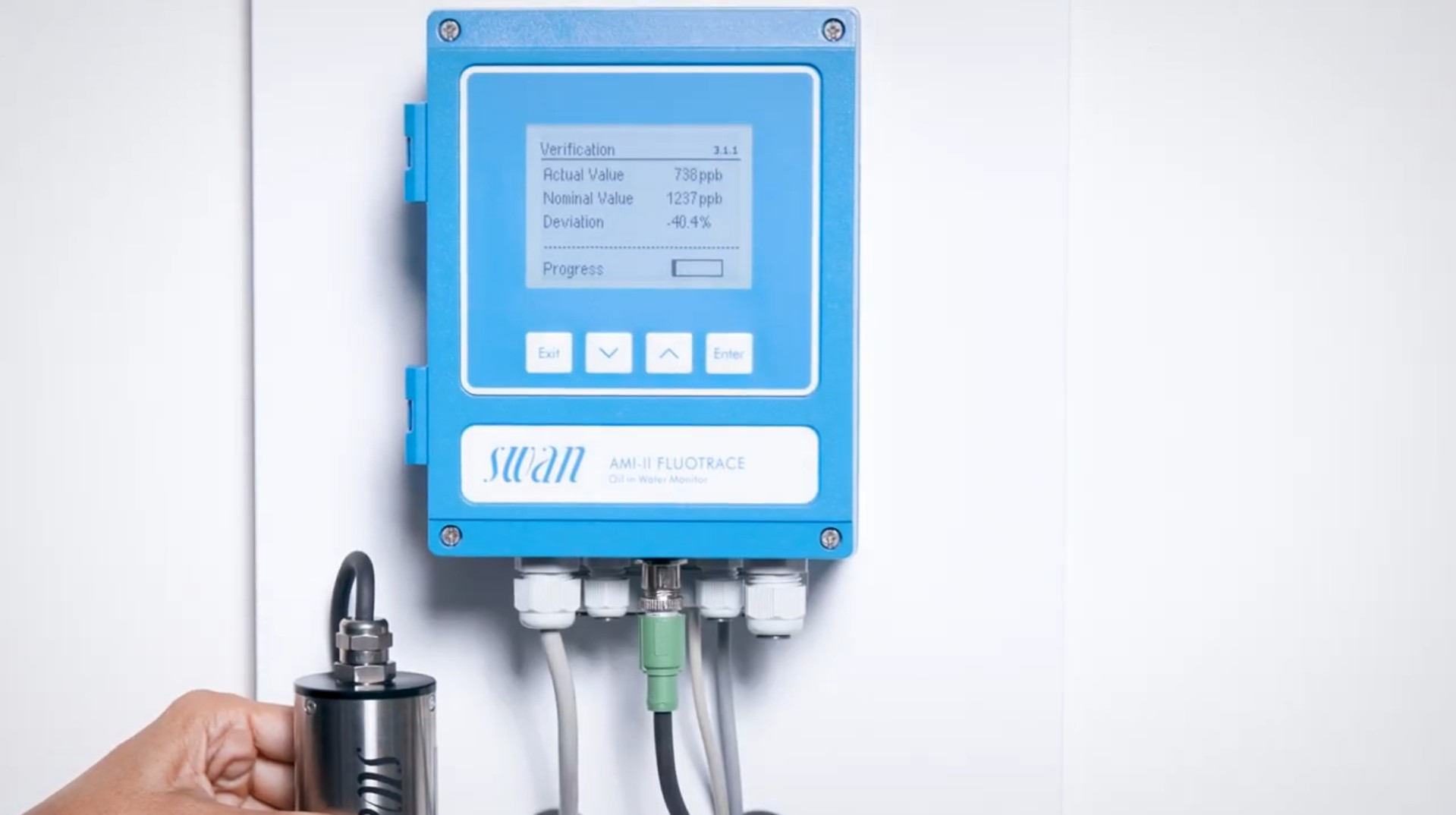
Swan Analytical Instruments has launched the AMI II Fluotrace Oil analyser for continuous measurement of oil and polycyclic aromatic hydrocarbons in industrial, marine, environmental, and water treatment applications.
The system uses ultraviolet fluorescence and provides a typical response time of less than six seconds. Swan specifies a detection limit of 0.15ppm for oil and 5ppb for polycyclic aromatic hydrocarbons.
Applications include cooling water, return condensate, surface water, seawater treatment, raw water intake, ballast water, effluent monitoring, and environmental discharge. The sensor can be installed at line, in line, or immersed directly within a water system.
Hydrocarbon contamination can indicate a leaking heat exchanger, failed seal, damaged storage system, process crossover, or accidental discharge. Rapid detection gives operators more time to isolate equipment, divert flow, or investigate the source before contamination spreads.
Oil entering returned condensate can affect boiler water quality and carry contaminants back into steam generation equipment. Operators may discard suspect condensate to protect the plant, although doing so loses treated water and heat while increasing the load on make up and treatment systems.
Cooling water presents a different measurement environment because suspended solids, biological material, treatment chemicals, and changing background conditions may all be present. An online analyser must identify a meaningful hydrocarbon event while retaining stability as the process stream changes.
The AMI II Fluotrace Oil uses excitation at 255nm and measures fluorescence at 360nm. Hydrocarbon compounds absorb ultraviolet energy and emit light at another wavelength, allowing their concentration to be estimated without adding chemical reagents to the sample.
Reagent free measurement reduces consumable storage, replacement, handling, and waste. Optical equipment still requires maintenance, however, because fouling can reduce the light reaching the sample or the signal returning to the detector.
Swan has applied nano coated optical windows to limit deposits and support long term measurement stability. Optional automatic cleaning and verification systems are available where contamination, restricted access, or continuous operation make manual maintenance less practical.
The sensor uses a titanium shaft and carries an IP68 rating, supporting immersion and operation in wet or aggressive environments. Material compatibility must still be assessed against the complete process chemistry, pressure, temperature, cleaning method, and expected exposure period.
The complete analyser is supplied as a panel mounted system prepared for installation. Bringing sample handling, measurement, control, alarms, and communications into an assembled package can reduce site wiring and commissioning work.
Fast response produces value only where measurements are connected to a defined operating action. Alarm thresholds, delay periods, diversion arrangements, shutdown logic, and escalation routes must be established before contamination occurs.
A threshold set too low may generate unnecessary trips, while a high limit can allow substantial contamination to pass before intervention. Baseline information from normal operation helps distinguish genuine events from changes caused by products, process conditions, or background fluorescence.
Continuous monitoring provides a more detailed record than periodic manual sampling, capturing short contamination events that could disappear before a laboratory sample is collected. Laboratory analysis may still be required for formal reporting, investigation, or confirmation of the hydrocarbon type.
Wastewater equipment development is increasingly focused on energy use and whole life operation, while online analysis is giving control systems a clearer view of changing process conditions and allowing intervention before quality moves beyond agreed limits.
Environmental permits provide another driver for continuous measurement. Oil discharged into receiving waters can expose operators to enforcement, cleanup costs, production interruption, and reputational damage, particularly where a release is detected outside the facility.
Marine and offshore systems present severe operating conditions, combining vibration, salt exposure, variable water quality, and restricted maintenance access. Ballast, cooling, bilge adjacent, and produced water duties also differ considerably, requiring validation against the specific stream rather than relying on a general oil response.
Integration with plant historians, distributed control systems, and maintenance platforms can connect contamination events with process changes or equipment condition. A rapid increase in fluorescence may be compared with pump operation, pressure, temperature, or maintenance records to identify the likely source.
The AMI II Fluotrace Oil adds a fast, low concentration measurement option for plants where hydrocarbons threaten process equipment, water recovery, or environmental compliance. Performance in service will depend on sample presentation, fouling control, verification, alarm design, and the actions taken when contamination is detected.