Siemens will invest more than $200 million in two new US manufacturing facilities as it expands production of electrical equipment for AI-oriented data centres and other power-intensive infrastructure. The factories will be built in Pendergrass, Georgia, and Grand Prairie, Texas, with the company expecting the investment to create more than 1,500 jobs.
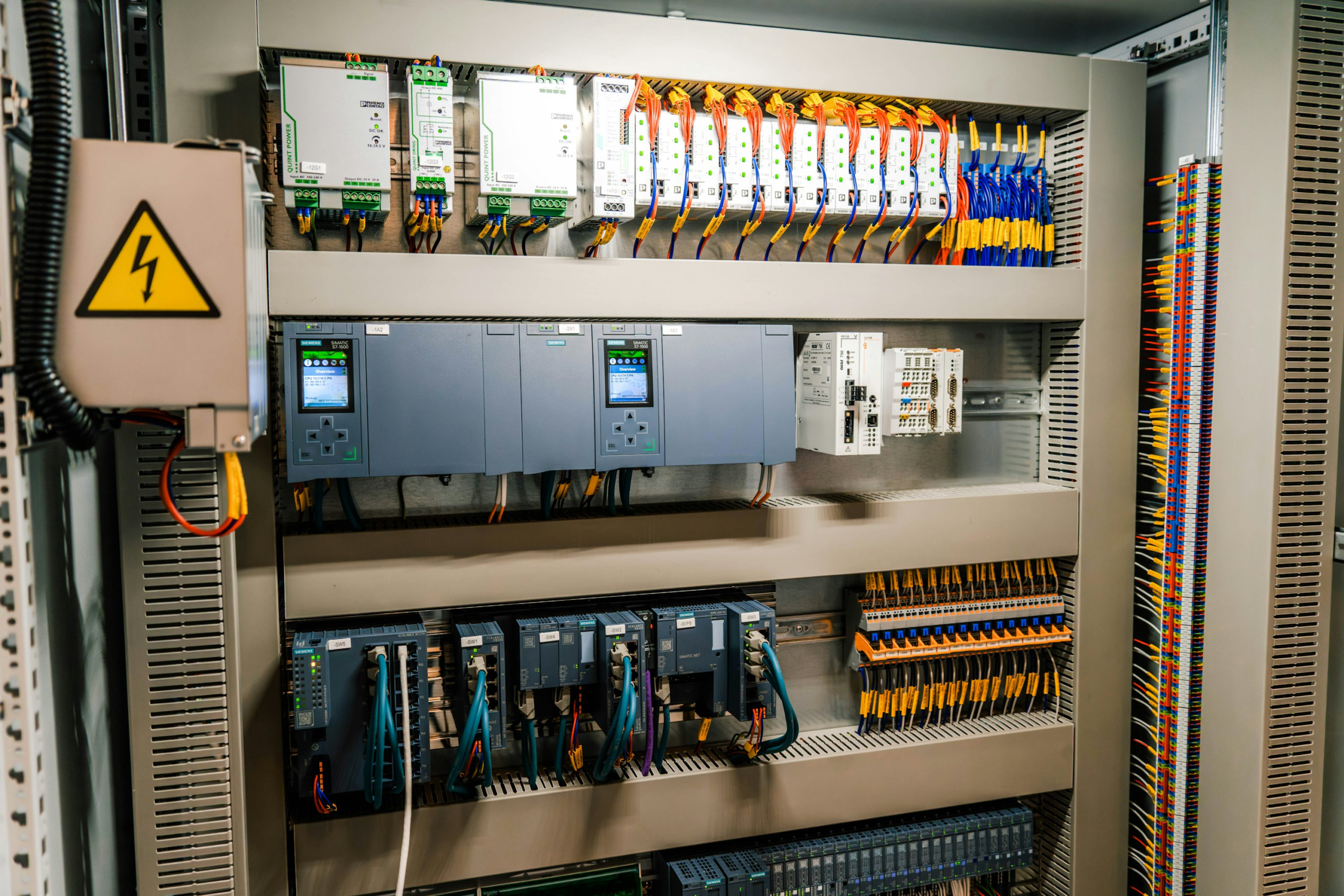
The sites will manufacture electrical systems used to distribute, monitor, and control power across complex data-centre environments. Siemens is not building semiconductor fabrication plants or server factories; the investment is aimed at the electrical infrastructure that sits between grid connections and the computing equipment consuming the power.
That distinction matters as artificial-intelligence investment moves from chips and software into physical infrastructure. High-density computing requires substantial electrical capacity, with switchgear, protection, controls, monitoring, distribution, cooling, and building systems all having to scale alongside servers and networking hardware.
A data centre can secure processors and still miss its commissioning date if transformers, switchgear, distribution systems, or grid connections are unavailable. Electrical equipment is manufactured against industrial lead times, and demand from data centres is competing with factories, renewable-energy projects, grid reinforcement, transport electrification, and conventional commercial construction for some of the same products and engineering resources.
Siemens says the two factories form part of a wider increase in manufacturing capacity. In July, the company announced €300 million of investment in German plants to support growth associated with AI and data centres, meaning the latest US spending extends an industrial expansion already underway in Europe.
The demand behind that investment is visible in the company’s order book. Siemens reported triple-digit order growth in its data-centre business during the first nine months of its current financial year, with orders reaching around €6 billion. Converting that level of demand into revenue requires considerably more than sales contracts: equipment has to be engineered, manufactured, tested, shipped, installed, and commissioned in the required sequence.
Power distribution becomes more complicated as computing density increases. Incoming electricity may pass through several voltage levels before reaching individual systems, while protection equipment has to isolate faults without unnecessarily interrupting unaffected loads. Monitoring and control systems provide the information needed to manage changing consumption and identify problems before they threaten availability.
Redundancy adds further hardware. Operators frequently design critical data centres so that individual electrical components or supply paths can be maintained or fail without taking computing capacity offline. That approach improves resilience but increases the amount of switchgear, control equipment, cabling, and associated infrastructure that must be manufactured and installed.
The growth of AI therefore creates an industrial supply problem as well as a computing one. Manufacturers need sufficient factory capacity, skilled labour, electrical components, copper, steel, electronic controls, and test facilities to meet demand. Building more factory space addresses only part of that chain if critical components or qualified workers remain constrained.
Siemens’ location choices put the new plants in two states experiencing substantial industrial and digital-infrastructure development. The company has not disclosed how the more than $200 million will be divided between Georgia and Texas or provided a detailed production-capacity figure for either site, so assumptions about individual factory output would be premature.
The broader strategy nevertheless reflects a shift in where the AI investment cycle is creating industrial demand. Semiconductor capacity attracted much of the early attention, but accelerated computing cannot operate without reliable electricity. Transformers, distribution equipment, controls, cooling infrastructure, grid software, and building systems increasingly sit on the same critical path as computing hardware.
For electrical manufacturers, the attraction is obvious. Data centres require highly engineered systems, reliability is commercially critical, and customers are building at a scale that supports investment in additional production. The risk is equally familiar: capacity added during a rapid demand cycle has to remain productive if project schedules change or the pace of infrastructure investment eventually moderates.
Siemens is placing more than $200 million behind the view that the requirement will persist. The two factories will add physical manufacturing capacity to a business already carrying around €6 billion of data-centre orders, while more than 1,500 additional employees will have to be recruited and integrated into production.
AI development is often described in terms of processor performance and software capability, but neither can operate without electrical hardware made in factories. Siemens’ latest investment is a reminder that accelerated computing has an electrical backbone — and that somebody still has to manufacture it.