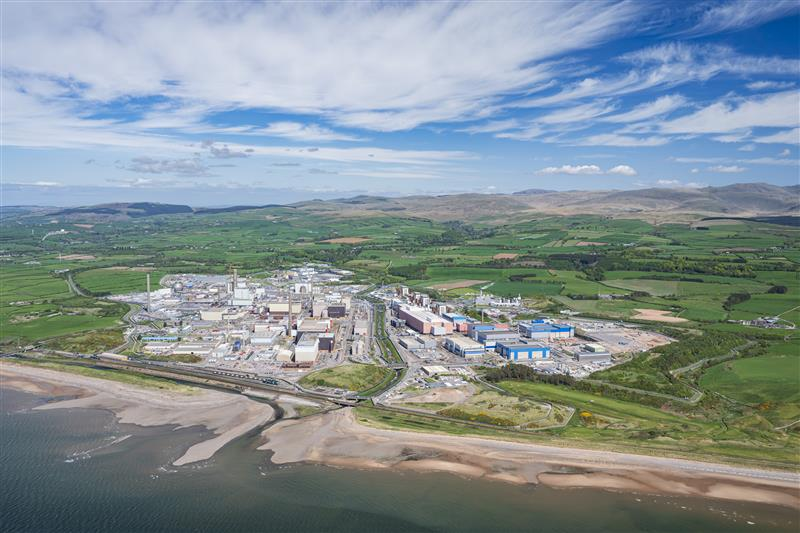
Sellafield Ltd has awarded two engineering contracts to Cumbria Operations and Maintenance Engineering Services Ltd (COMS) to assess the condition of site assets and review maintenance arrangements. The assignments cover different parts of engineering assurance at the nuclear complex, where equipment must support ongoing operations alongside waste management and decommissioning work.
The first contract involves facility walkdowns and condition assessments to identify issues and inform maintenance plans. The second covers a review of existing maintenance arrangements, including their effectiveness and legal compliance. Sellafield said both contracts were awarded through its Dynamic Purchasing System, a procurement route for suppliers qualified to undertake specified work. It has not identified the particular facilities or equipment covered by either assignment.
Physical inspection and maintenance assurance answer different questions. Engineers conducting a walkdown can compare installed assets with drawings, registers and known operating conditions, recording visible deterioration or discrepancies that need further investigation. A maintenance review then examines whether tasks, intervals, records and responsibilities reflect the equipment’s duties and risks. Neither activity, by itself, constitutes a finding that a plant is unsafe or a particular system has failed.
Facility walkdowns are physical examinations carried out by engineers who compare installed equipment and site conditions with available records and maintenance expectations. They can help identify deterioration, inaccessible components, discrepancies in asset identification or issues requiring closer investigation. Sellafield has not published the precise equipment lists, survey methods or facility boundaries under these contracts, so the announcement does not establish that a particular system has been found defective.
The condition data can be used to decide where more detailed examination is warranted, which components need repair and whether an established maintenance interval remains suitable. Criticality is relevant: the consequences of losing a supporting service may justify closer monitoring even if the component shows limited visible deterioration. Any changes to maintenance tasks must be assessed against operating needs, the asset’s condition and applicable safety requirements.
The second assignment focuses on how maintenance is specified, authorised, completed and recorded. A programme may need to be revised when equipment is modified, its duty changes or new inspection evidence becomes available. Sellafield has not identified a specific statutory breach, outstanding defect or mandated corrective action behind the award. The contract is therefore best described as an assessment of existing arrangements, rather than the remediation of a disclosed compliance failure.
Sellafield’s operational context makes this work more complex than a routine inspection programme at a recently commissioned factory. The site must safely manage nuclear materials and waste, retrieve legacy inventories and maintain facilities whose roles and remaining service lives can change as decommissioning progresses. Some equipment continues to support active operations while other installations are being prepared for modification, isolation or eventual removal.
The Nuclear Decommissioning Authority’s current business plan covers hazard reduction, the retrieval and safe management of nuclear materials, and work needed to maintain the estate. Those activities rely on supporting services as well as the principal treatment and retrieval plant. Reliable asset records and appropriately planned maintenance help the operator prioritise intervention where a loss of equipment availability would interrupt scheduled work or create additional operational constraints.
Sellafield said the contract awards have enabled the Cumbrian business to recruit two full-time members of staff and add commercial support capacity. The operator did not state a combined contract value or detailed delivery timetable in its public account. The confirmed employment impact should therefore be kept separate from any estimate of the wider financial benefit to the contractor or the region.
The purchasing route also distinguishes these awards from Sellafield’s larger construction and asset-care programmes. COMS has been commissioned for specialist assessment and maintenance engineering services, rather than a new facility or an equipment supply package. Individual assignments of this kind can draw on the expertise of smaller regional contractors while remaining subject to the site’s procurement and technical requirements.
Paul King, Sellafield’s head of commercial, has emphasised the use of the purchasing system to access specialist expertise and support local communities. The awards provide a regional supplier with work on a complex industrial site, but any conclusion about the commercial impact on the contractor beyond the stated jobs would require further financial information.
The immediate deliverables are condition information and assessments of the maintenance arrangements used across the relevant facilities. Sellafield will then be able to consider findings within its existing engineering and operational decision processes. Any measurable improvement in equipment availability or reduction in maintenance risk will depend on subsequent actions, not on the award of the contracts alone.