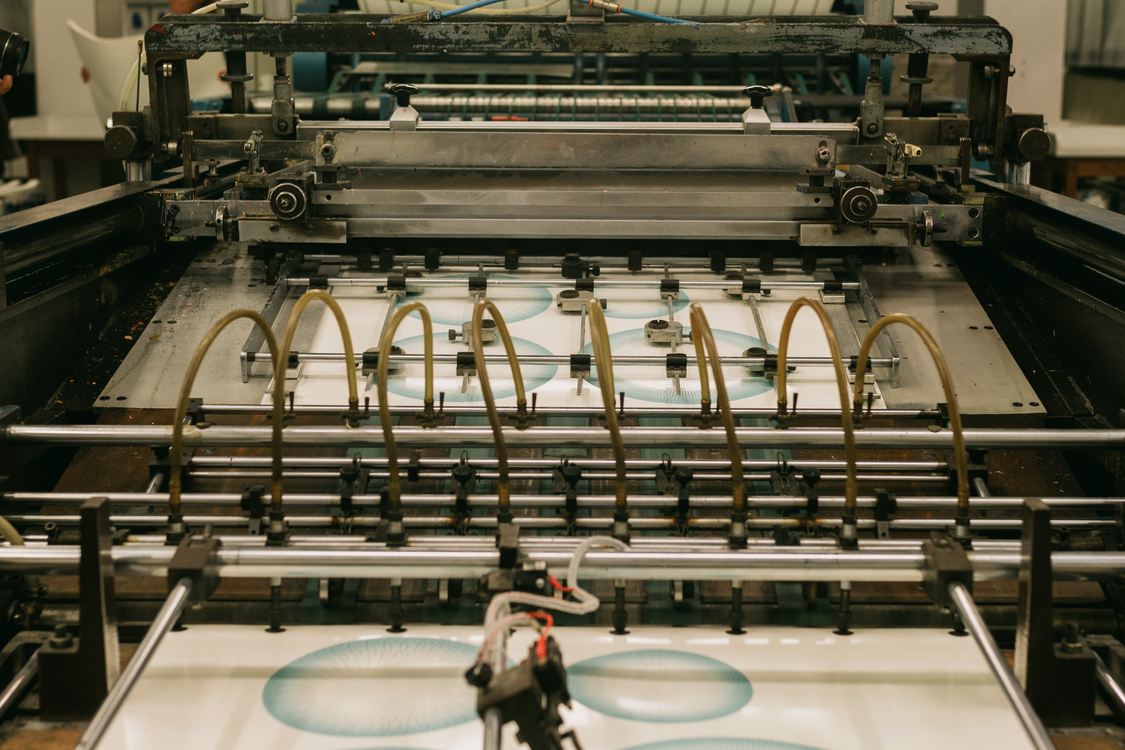
Printed Cup Company has installed a six-colour dry offset printing machine at its Clitheroe factory in Lancashire, substantially increasing the rated capacity for printing onto formed plastic cups. The new equipment entered production in September 2026 and was disclosed in a 22 October update on the company's manufacturing investment programme.
The machine is designed to print up to 3,000 cups per hour, compared with approximately 280 cups per hour on the earlier equipment used for this work. That is more than ten times the stated hourly rate, although it represents a machine capability comparison rather than verified growth in total factory output, annual sales or the number of completed customer orders.
The investment is described as a six-figure expenditure and follows the purchase of the business by entrepreneur Oliver Alcock. The company has not specified the machine manufacturer, model, final installation cost or the proportion of its packaging orders that will move to the new line. It says the additional capacity will allow larger runs to be produced in-house and improve the flexibility of its customer delivery schedules.
The machine prints directly onto recyclable plastic cups used for cold drinks, smoothies, milkshakes, ice cream and other frozen desserts. Up to six colours can be applied, enabling branded packaging to be manufactured in larger quantities than were previously practical using the older production arrangements.
Dry offset printing transfers an inked image through intermediate surfaces before applying it to the product. For cups, the image must be registered correctly on a container that is already formed rather than on a flat substrate. The cup's position and movement through the machine consequently influence the repeatability of the finished design.
At higher speeds, the feeding system, print transfer and downstream handling need to work together. Inconsistent feeding can affect registration, while unsuitable ink transfer or handling can create defects that require rejection or rework. The source material does not identify the specific registration controls, drying system or inspection equipment installed at Clitheroe, so those technical features cannot be assigned to the new line.
A machine rated for 3,000 units an hour will only approach that output when sufficient work is available and the necessary product, inks and production settings have been prepared. Cleaning, changeovers, maintenance and checks between jobs all affect usable output during a shift. The company has not reported sustained output data or overall equipment effectiveness since the September commissioning.
Six-colour printing capacity may widen the range of decoration requirements that can be produced on the line, but the available evidence does not establish that every possible cup material or geometry is compatible. Machine tooling, container dimensions and ink formulations must be suitable for the specific product. Those constraints are particularly relevant to bespoke packaging, where designs and order sizes can change frequently.
Francine Kenyon, commercial director of Printed Cup Company, said the installation had enabled the business to move away from a much more manual process and handle jobs at a different speed and scale. She also identified improved flexibility when customers request higher volumes or shorter delivery times. The company has not quantified the resulting reduction in average lead times.
The investment forms part of a broader effort to increase UK-based production at Clitheroe. The business supplies bespoke printed packaging and has existing operations serving customers seeking different cup formats and production volumes. Faster plastic cup printing adds capacity alongside those services rather than replacing every aspect of the company's earlier product range.
In-house production can give a packaging supplier greater control over scheduling, particularly where customers need a consistent appearance across several runs. That benefit still depends on the availability of raw cups, appropriate tooling and other input materials. If one stage of production or fulfilment becomes constrained, increasing the printing machine's hourly rate will not necessarily increase completed deliveries by an equivalent amount.
The recyclable description of the cups also requires careful interpretation. A plastic container's ability to enter a recycling process depends on its material and the collection and processing facilities available after use. The October announcement does not identify the polymer grade or provide evidence of collection or recycling rates for cups produced using the new equipment.
Printing quality has to remain consistent at greater speed. Colour alignment, legibility of customer designs and the condition of the printed surface can all influence acceptance. The company says its production team continues to prioritise quality, but it has not supplied audited defect rate comparisons between the old and new manufacturing methods.
The company expects the new installation to accommodate larger and more urgent customer requirements while reducing the production constraint created by its older machines. With the equipment operating since September, the next measurable indicators will be sustained throughput, order lead times and the amount of additional volume delivered from the Clitheroe factory.