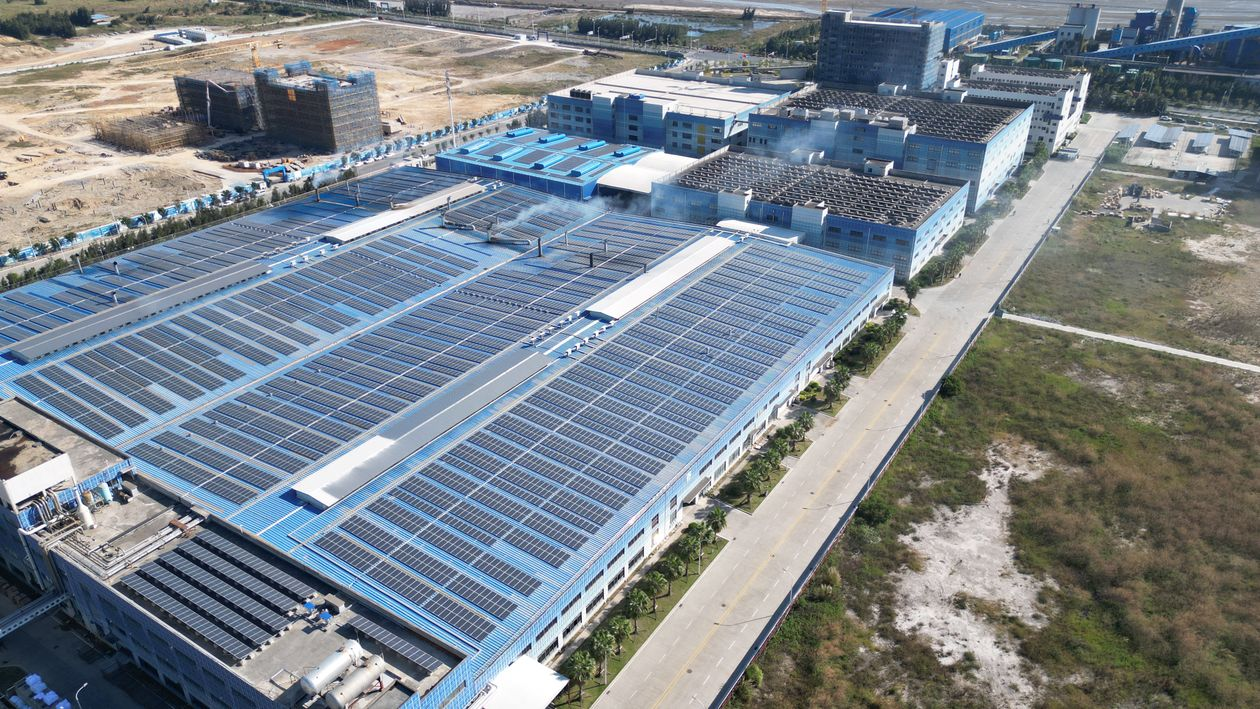
Piramal Pharma Solutions is installing a 4.3MWp ground-mounted solar plant at its integrated drug-substance and drug-product manufacturing site in Morpeth, Northumberland. The project will add on-site generation to a pharmaceutical operation with continuous requirements for controlled utilities, process equipment and regulated production environments.
The installation will use around 6,200 solar panels across 16 acres and is expected to generate approximately 3,950MWh of electricity each year. Piramal says that output would meet about 22% of the Morpeth site’s annual electricity demand, reducing the amount of power purchased from the grid without making the facility electrically independent.
The project is being delivered under a power purchase agreement with Alight UK BTM1 Limited and will operate behind the meter. Electricity generated on site can therefore be consumed directly by the manufacturing operation before residual demand is met from external supplies. Piramal expects the plant to begin operating during the first quarter of 2027.
The proportion of annual electricity demand covered is more informative for an industrial site than the installed generating capacity in isolation. Solar output varies with daylight and weather, while pharmaceutical production loads can extend throughout the day and year. The 22% figure consequently describes expected annual contribution rather than the proportion of time in which the facility can operate using solar power alone.
Piramal estimates that the project will avoid around 20,000 tonnes of carbon dioxide equivalent over 25 years. The investment forms part of a wider target to reduce Scope 1 and Scope 2 greenhouse-gas emissions by 42% by the company’s 2030 financial year.
On-site solar addresses only part of that objective. Scope 2 emissions are associated with purchased energy, while Scope 1 covers sources controlled directly by the company. Manufacturing heat, process utilities and fuel use therefore require measures beyond electricity generated by the new array.
Morpeth is an integrated contract development and manufacturing site supporting drug-substance and drug-product work. Pharmaceutical production relies on tightly controlled conditions and equipment including ventilation, environmental control, compressed gases, laboratories and process utilities. Those systems have to remain available irrespective of variations in solar generation.
A behind-the-meter project can nevertheless alter the economics of part of that demand. Producing electricity next to the load reduces the volume purchased directly from the grid during generating periods and can give the site a more predictable cost structure for that portion of its long-term energy requirement.
The investment is different from Piramal’s recent capacity additions elsewhere in its manufacturing network. In August, the company added a contained peptide spray-drying suite at its Turbhe facility in India, expanding a production process rather than supporting infrastructure. Morpeth’s solar project instead targets the energy base required to run an existing pharmaceutical operation.
Ground-mounted generation gives the company more space than a typical rooftop scheme but creates its own engineering and land requirements. Panel rows, inverters, electrical protection, cabling and grid interfaces must be integrated around a live regulated site while maintaining access for inspection and maintenance throughout the plant’s operating life.
Piramal has not disclosed the capital value of the installation. The power purchase agreement also changes the appropriate commercial comparison because the site is procuring electricity under a long-term arrangement rather than simply buying and depreciating generation equipment as a conventional capital project.
The scheme will not remove Morpeth’s exposure to external energy markets. Solar production remains variable and the facility will continue to rely on the grid for most of its annual electricity requirement. The project does, however, convert part of that demand into locally generated power with a defined physical asset located beside the manufacturing load.
Piramal Pharma operates 17 development and manufacturing facilities globally, but replication will depend on the conditions at each site. Land availability, irradiance, electricity profiles, planning requirements and local power-market structures can make the economics of a 4.3MWp ground-mounted installation very different from one manufacturing location to another.
The next practical milestone is construction and commissioning. Integrating 6,200 panels into an operating pharmaceutical site will require the electrical installation to be completed without compromising production continuity or regulated operations.
Once the system is running, measured output will provide the clearest assessment of the project. Performance against the expected 3,950MWh annual generation and 22% contribution to site electricity demand will show how effectively the proposed capacity translates into lower grid consumption at Morpeth.