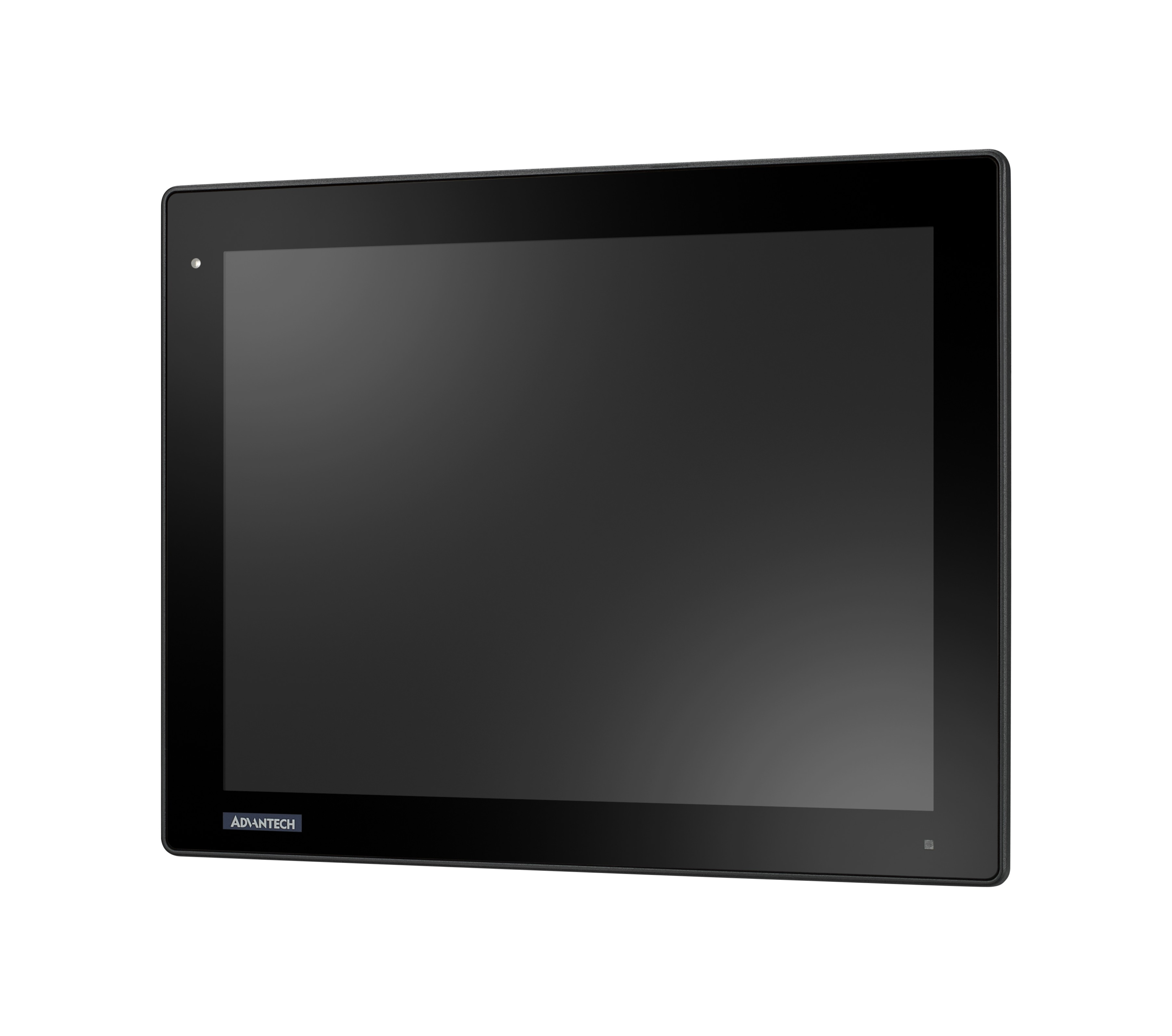
Advantech has expanded its industrial display portfolio with the FPM-300S range, combining high-brightness touchscreens, ruggedised front panels, optical bonding, and wide-temperature operation for equipment installed outdoors or in exposed industrial environments.
The family covers 12.1in, 15in, 15.6in, and 21.5in formats and is aimed at applications including EV charging equipment, transport terminals, ports, energy infrastructure, outdoor kiosks, and other systems where a conventional indoor monitor can become difficult to read or vulnerable to weather and repeated handling.
Brightness varies according to model rather than every display operating at the headline 1,800-nit figure. The range is designed for sunlight-readable operation, with automatic dimming used to adapt screen output to ambient conditions instead of running the backlight continuously at maximum intensity.
That distinction matters because brightness alone does not guarantee a usable outdoor display. Reflections from a cover surface can reduce apparent contrast even where the backlight is powerful, while a panel configured solely for midday sunlight can be unnecessarily bright when equipment is used at night or inside a partially enclosed installation.
Advantech combines its high-output panels with anti-glare surface treatment and an anti-UV coating intended to limit yellowing and degradation during prolonged exposure to sunlight. Optical bonding joins the cover glass, touch layer, and LCD into a more integrated stack, reducing internal reflections and the air gaps where moisture can contribute to fogging.
Humidity and temperature cycling are persistent problems for outdoor electronics. A display can cool overnight, heat rapidly after sunrise, encounter rain or cleaning water, and then continue operating while moisture remains trapped inside the surrounding enclosure.
A screen does not have to suffer an electrical failure to become unusable. Condensation between optical layers, excessive glare, or degraded cover material can remove the operator’s ability to read alarms and control equipment long before the underlying industrial computer stops working.
The FPM-300S range uses an IP66-rated front-panel design, providing protection against dust and water jets from the front when the monitor is correctly installed. Advantech also specifies IK08 impact resistance for applications where the display may be exposed to public use, routine physical contact, tools, or incidental impacts.
The stated operating-temperature range extends from -20°C to 70°C. That span is relevant to unconditioned cabinets, charging points, terminals, and outdoor control systems because the temperature inside an enclosure can move well beyond the surrounding air temperature once direct solar loading and heat from internal electronics are added.
The monitors use projected-capacitive touch technology and are offered with different resolutions and brightness specifications according to screen size. Connectivity includes conventional display and USB interfaces, while selected configurations support a USB Type-C arrangement capable of simplifying power, touch, and video connections.
Reducing the number of cables can be useful where the monitor is mounted on a panel, pedestal, machine door, or movable assembly. It does not remove the need to consider cable length, locking, electromagnetic compatibility, host power capacity, and service access, but it can simplify installation compared with separate power, video, and touch wiring.
Selected FPM-300S configurations are also intended for Class I, Division 2 environments. That extends the family towards process and energy installations where flammable gases or vapours may occasionally be present, although suitability depends on the exact model and the certification requirements of the installation rather than the series name alone.
Advantech identifies ports and container terminals as another target environment. Displays in those applications can face direct sunlight, humidity, contamination, high levels of physical use, and long operating periods while serving as the local interface for logistics, weighing, gate, crane, or yard systems.
EV charging introduces a different operating profile but similar display requirements. The user interface sits outside, may be exposed around the clock, and has to remain legible to drivers and technicians even when the charger’s power electronics and communications systems are functioning normally.
The same principle applies across wider edge-computing installations. More processing is moving into equipment positioned close to machines, infrastructure, and field assets, increasing the amount of operational information that can be presented locally.
Advantech has also been updating its industrial edge-computing platforms, adding processing and interface capability for automation and data-acquisition workloads. Rugged displays provide the human-facing part of that architecture where equipment cannot be installed in a protected control room.
The FPM-300S engineering emphasis remains physical rather than computational. Protection against sunlight, moisture, impact, temperature, and repeated touch input determines whether the interface remains available long enough for the software behind it to be useful.
Advantech says the range is available now. Different applications will favour different elements of the specification, from maximum brightness for exposed sites to larger widescreen panels, hazardous-location configurations, or simplified Type-C integration.
For equipment manufacturers, the relevant measure will be long-term field performance rather than initial visual quality. Outdoor displays accumulate ultraviolet exposure, thermal cycles, moisture, physical contact, and contamination over years of operation. The FPM-300S range is built around keeping the local industrial interface readable and functional through those conditions.