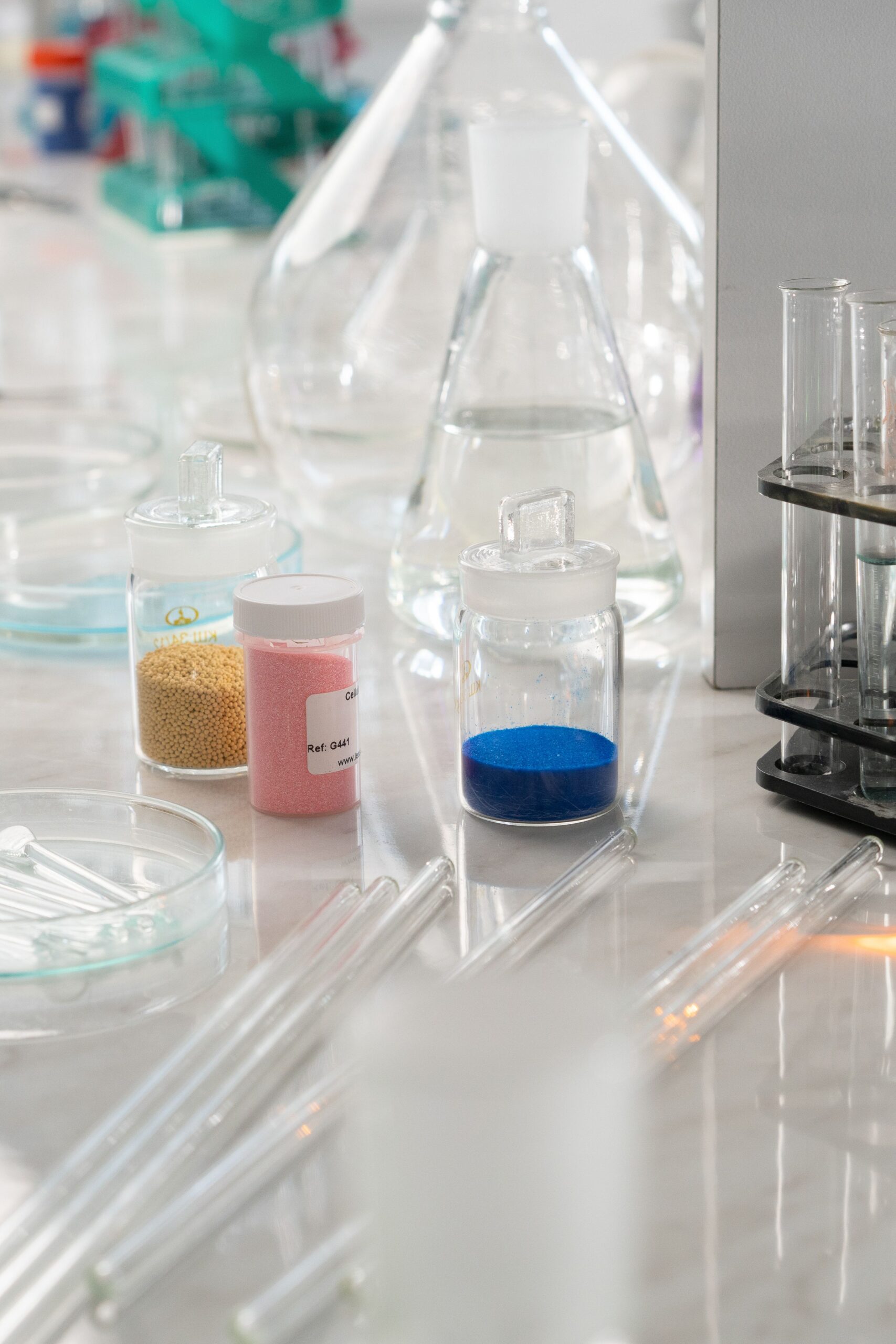
newcleo has opened a €10 million nuclear fuel engineering and testing centre at Chusclan in southern France, establishing dedicated facilities for developing mixed oxide fuel manufacturing processes. The FASTER centre has seven operational test installations covering activities from powder dosing and pellet handling to fuel pin assembly and inspection.
The facility provides a non-nuclear environment where manufacturing equipment can be developed, tested and improved before its proposed installation in licensed fuel production plants. It supports newcleo’s wider programme to manufacture mixed oxide fuel, commonly known as MOX, for its planned lead-cooled fast reactors and potentially other customers.
FASTER stands for Fuel process Assembly Storage Training and Enhanced Reality. Located close to the Marcoule nuclear site in the Occitanie region, it combines engineering workspaces, prototype testing and training facilities for a company fuel development team comprising approximately 100 engineers and specialists.
The centre is designed to shorten the distance between equipment design and practical evaluation. Engineering concepts can be translated into physical test assemblies, assessed under representative operating conditions and modified before the company commits to equipment intended for a nuclear manufacturing facility.
Mixed oxide fuel is produced using a combination of uranium and plutonium oxides. It has an established history of use in commercial nuclear reactors, although the fuel composition, geometry and manufacturing requirements differ according to the reactor design and the conditions under which the fuel will operate.
newcleo’s programme is intended to support fuel for lead-cooled fast reactors. These systems use a fast neutron spectrum and lead coolant, introducing particular requirements for the fuel, its cladding and the operating environment within the reactor.
The company aims to use recycled nuclear materials within a fuel cycle that can return suitable recovered material to new fuel production. Achieving that objective depends on the reactor technology, reprocessing arrangements and the facilities needed to manufacture material that meets the required fuel specifications.
FASTER does not carry out commercial MOX production. Its purpose is to develop the machinery and operating procedures needed for future facilities, allowing mechanical processes and equipment layouts to be evaluated without introducing nuclear fuel materials into the testing environment.
Powder dosing is among the first stages represented by the new test installations. Manufacturing a consistent fuel product requires controlled quantities of material to enter subsequent processing operations, with equipment able to manage particle behaviour, flow conditions and the precision of each measured dose.
Powders can behave differently depending on particle size, bulk density and surface characteristics. Some flow readily, while others tend to accumulate, compact or adhere to equipment surfaces. These properties influence the design of hoppers, valves and transfer systems intended to produce repeatable dosing.
Equipment tested at FASTER can be assessed for its ability to deliver specified quantities under controlled conditions. Repeated trials allow engineers to examine variability, identify interruptions in flow and change the mechanical arrangements before the process is incorporated into a more complex manufacturing line.
Pellet pressing and handling introduce additional requirements. Powder is formed into compact fuel pellets, which must meet the geometric and material specifications established for the intended design. Subsequent operations need to move the pellets without introducing damage or changes that would prevent them meeting acceptance criteria.
The behaviour of pressing equipment depends on the material, tooling and applied forces. Variations in filling or compaction can influence the dimensions and density of the resulting product, making production consistency an important consideration when designing equipment intended for repeated industrial operation.
After manufacture, fuel pellets are assembled into cladding tubes to form fuel pins. The components must be positioned and joined according to the fuel design, with inspection used to establish that relevant dimensions and assembly features satisfy the required specifications.
FASTER includes equipment for evaluating pin assembly, decontamination, pellet inspection and helium filling. Each operation addresses a separate part of the manufacturing sequence, with the test installations providing opportunities to identify handling and equipment constraints before they affect an integrated production line.
Helium filling requires control of the gas introduced into a fuel pin and the conditions within the finished assembly. The intended gas quantity and pressure are determined by the fuel design, while inspection and measurement equipment must provide evidence that the relevant assembly requirements have been met.
Developing those operations outside a nuclear production environment allows mechanical performance to be examined independently of the radiological controls needed when actual nuclear fuel materials are present. It does not replace the testing, licensing or safety demonstrations required before the machinery can be used in a nuclear installation.
Glovebox design is another focus of the centre. Enclosed working environments used in nuclear fuel processing must provide suitable separation between hazardous materials and their surroundings while permitting equipment operation, inspection and maintenance.
The location of controls, access points and internal components affects how work can be carried out. Poorly positioned equipment can complicate maintenance or increase the effort required to perform a repeated operation, making physical mock-ups and operator trials useful during the design stage.
FASTER provides a setting for evaluating these arrangements before they become part of a licensed plant. Engineers can examine access, work sequences and equipment interfaces while developing the procedures needed to support future operators.
The seven operating installations are at different points within the wider engineering programme, with additional facilities under development. Their operation confirms that testing capability is available at Chusclan, rather than establishing that an integrated commercial fuel production process has completed qualification.
newcleo’s industrial partners are contributing specialist capabilities to the programme. Its subsidiary S.R.S. Servizi di Ricerche e Sviluppo brings engineering experience, while French precision weighing equipment manufacturer Bonifait Pesage provides relevant metrology expertise.
The proposed acquisition of Bonifait Pesage had not completed at the time of the announcement and was expected to close during the fourth quarter of 2026. The company should therefore not be described as an already acquired subsidiary.
Manufacturing development at Chusclan is connected to newcleo’s plans for an advanced MOX fuel fabrication facility in France’s Aube department, near Nogent-sur-Seine. The proposed plant is intended to manufacture fuel for future reactors, subject to the necessary engineering development, financing and regulatory authorisations.
In July 2026, the French Nuclear Safety and Radiation Protection Authority issued an overall satisfactory evaluation of the proposed facility’s safety options. That preliminary assessment provides feedback for the project but does not constitute a licence to construct or operate the nuclear fuel plant.
The company is using the French development programme to inform its early engagement with the US Nuclear Regulatory Commission. Experience from testing and regulatory assessment may support future applications, although authorisation in one jurisdiction does not automatically satisfy requirements in another.
Stefano Buono, founder and chief executive of newcleo, has described the centre as part of the company’s approach to transferring research and engineering into industrial facilities. Its contribution will be assessed through the performance of the test equipment and the extent to which the resulting manufacturing processes can progress towards use in licensed production plants.
With €10 million invested and seven test installations operating, FASTER establishes dedicated engineering capability for newcleo’s fuel programme. The next steps will involve refining equipment, extending process testing and incorporating the evidence generated into designs for future fuel manufacturing facilities, which remain subject to separate development and regulatory decisions.