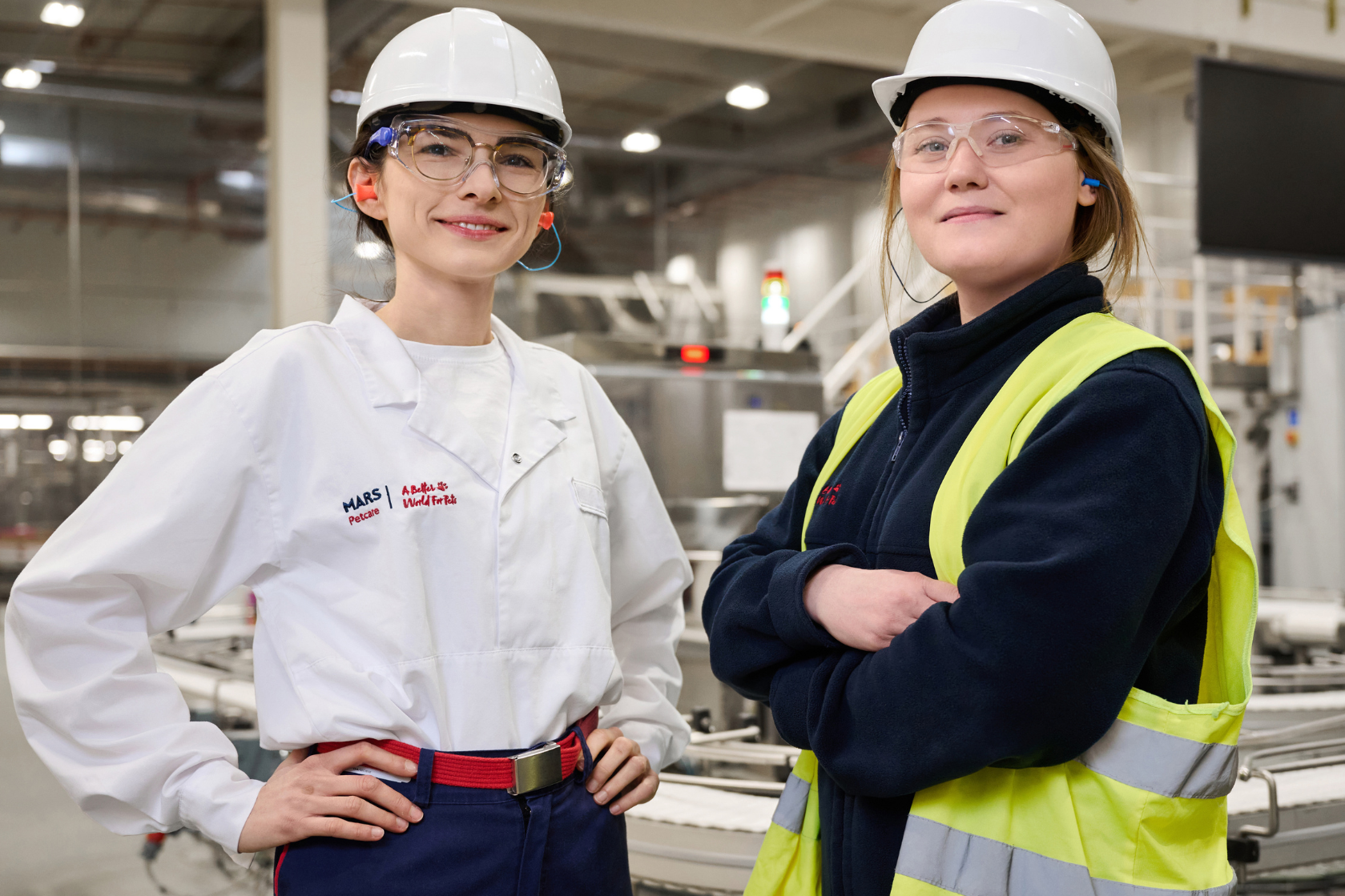
Mars is investing £161 million in its pet nutrition factory at Melton Mowbray, Leicestershire, with new production lines, automated inspection technology and utility upgrades planned for a site that has manufactured pet food for 75 years.
The programme will introduce high-speed pouch lines capable of producing flexible packs made from a mono-polypropylene material structure. Smart optical sorting equipment is intended to reduce production waste by more than 50%, while improvements to factory utilities form another part of the modernisation. Mars has not specified a schedule for commissioning the individual lines.
Melton Mowbray is an established manufacturing centre for Mars’s pet nutrition products, including Whiskas. The new equipment will be introduced into an established production operation, where manufacturing continuity and finished-product quality must be maintained as the site changes its packaging processes.
Moving towards a mono-polypropylene pouch structure addresses one of the technical obstacles associated with conventional flexible packaging. Pouches often combine layers of different polymers and barrier materials to satisfy sealing, shelf-life and mechanical requirements. Where different materials cannot readily be separated, recycling becomes more difficult. A predominantly single-polymer construction can improve compatibility with suitable recycling streams, although actual collection and processing depend on the facilities available to consumers and waste operators.
Those packaging changes must also be accommodated by the filling and sealing machinery. Film handling, seal integrity, the protection of food during processing and throughput all remain production requirements regardless of material selection. Mars has identified high-speed pouch lines as a central element of its investment, but has not disclosed their rated output or equipment supplier. The material change will have to be qualified against sealing and handling requirements before sustained production.
The site will also install smart optical sorting equipment. Optical systems inspect material or product using captured visual information and defined rejection criteria, helping isolate items that do not meet the specified standard. Mars expects the new smart optical sorting capability to cut production waste by over half. The company has not supplied a baseline waste figure or broken down how much of that anticipated reduction will come from inspection, equipment efficiency or other improvements.
The utility upgrades will sit alongside the production changes. Pet food manufacturing requires consistent supplies of process energy, water and other factory services, and increased line speed can change the demands placed on those systems. Mars describes the work as waste-reducing but has not yet disclosed detailed energy, water or emissions savings attributable to the Melton Mowbray programme. Measured resource consumption and reject rates after commissioning will establish how the upgrades perform in service.
More than 30 additional skilled technical and engineering positions are expected to be created during the first year. The company will also increase the site’s permanent apprenticeship cohort from 26 positions to 33 by 2027. That recruitment will accompany the introduction of more sophisticated production and inspection equipment, adding to the requirement for plant maintenance, process control and manufacturing engineering capability.
Across its UK operations, Mars reports having more than 140 apprentices and says its training now includes artificial intelligence, digital systems and data analytics. It reports that 97% of apprentices completing its programmes receive offers of permanent employment. The placement figure covers the wider UK apprenticeship programme and should not be taken as a forecast for the new Melton Mowbray positions.
Nick Foster, general manager for Mars Pet Nutrition in Northern Europe, described the UK as central to the group’s pet care business and said the investment would strengthen the factory’s position within the European manufacturing network. The investment is intended to strengthen supplies to British pet owners within the group’s European network. Mars has not published the output volumes expected from the upgraded site.
The £161 million commitment takes Mars’s reported UK capital investment since 2021 to £661 million. Other recent projects include £190 million of investment in its chocolate operation at Slough, where machinery, digital systems and utilities are being upgraded, and a £1.2 million improvement programme at its Birstall pet nutrition research facility. The Slough and Birstall programmes are separate from the £161 million committed to Melton Mowbray.
The Slough work includes planned digital twin capabilities and AI-supported production data analysis, illustrating the company’s broader move towards more closely monitored manufacturing systems. Mars has not stated that exactly the same technologies will be installed at Melton Mowbray, and the new pet food factory equipment should be assessed against its own declared capabilities.
With eight manufacturing sites across Britain, the group operates several distinct production networks involving different products, process requirements and supply chains. At Melton Mowbray, the critical test will be whether new packaging materials, sealing equipment and optical inspection can operate consistently at the intended production rate. Throughput and measured waste reductions will provide the clearest assessment once the new systems are operating.