magniX has outlined a wider strategy to apply its electric aerospace technology to mission-critical energy and power applications beyond aircraft propulsion.
The company, known for flight-tested electric powertrains for aircraft, will broaden the use of its batteries, inverters, power distribution units, and motor-generator technology across data centres, energy storage, defence, mobility, and space. Board changes accompany the move, with Neil Perry, Head of Clermont Capital at parent company Clermont Group, joining as Executive Chairman. Sean Gardiner, Managing Director at Clermont Capital, becomes Executive Director.
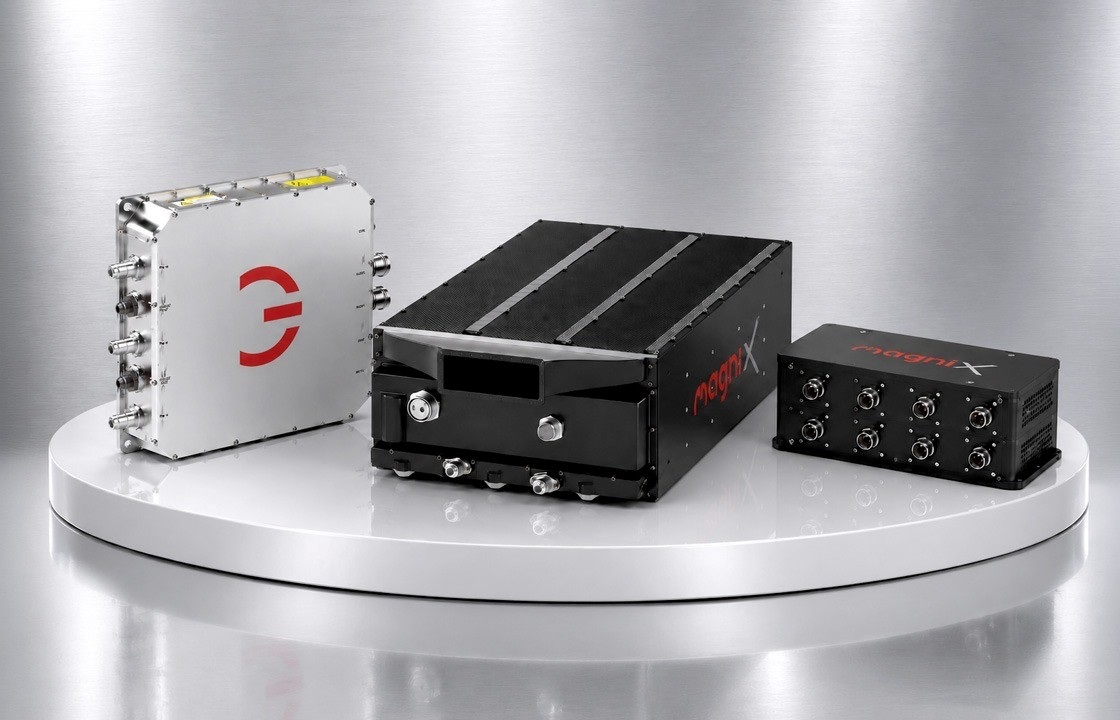
magniX says it remains committed to electric aerospace, where its electric engines have powered more than 200 flights across six airframes. Its product line includes Samson batteries, magniDrive power electronics, and PDX800 power distribution units, built around an 800V architecture. The company is also working toward the first flight of the Bye Aerospace eFlyer 2 using Samson batteries.
The strategic shift reflects the growing overlap between aerospace electrification and high-reliability power systems. Equipment developed for flight has to meet demanding expectations around weight, reliability, safety, thermal performance, and power density. Those same attributes are increasingly valuable in ground-based and space-based applications where power failure, overheating, or unstable distribution can carry serious operational consequences.
Data centres are one of the most visible target markets. AI infrastructure is driving rapid growth in electrical demand, while operators face pressure to secure grid connections, manage peak loads, improve resilience, and support higher-density racks. Batteries are no longer viewed only as short-duration backup devices. They are becoming part of wider power architectures that include grid support, peak management, renewable integration, and resilience in locations where electrical infrastructure is constrained.
The connection between aerospace-grade power systems and data centre infrastructure is becoming more practical as voltage, density, and reliability requirements rise. High-density computing requires power conversion, distribution, protection, thermal management, and safety systems able to operate under intense loads. Work on 800V data centre power architectures and protection challenges shows how higher-voltage systems are moving into the design conversation as AI infrastructure changes the electrical stack.
Defence and space also provide natural extensions for compact, high-reliability power systems. Tactical platforms, uncrewed systems, mobile power units, satellites, launch support equipment, and remote operations need systems that can combine weight control, robustness, fault tolerance, and maintainability. Technologies proven under aerospace constraints can offer advantages where conventional industrial systems are too heavy, too bulky, or insufficiently resilient.
The move also reflects the longer development path for parts of electric aviation. Electric propulsion remains active, but aircraft certification, battery energy density, charging infrastructure, route economics, and fleet adoption have made the market more complex than early enthusiasm suggested. Expanding into adjacent power markets gives magniX additional growth routes while keeping its aerospace platform in development.
Broadening across several markets brings its own risk. Data centres, defence, mobility, space, and energy storage have different customers, qualification routes, sales cycles, safety requirements, and service models. A product architecture developed for aircraft will need adaptation for stationary systems, military platforms, and space-related applications. The company will need focused product definitions rather than assuming aerospace performance translates automatically into every market.
The direction nevertheless reflects a wider industrial trend. Electrification is erasing boundaries between sectors that once had more separate supply chains. Batteries developed for aviation influence mobility and defence. Power electronics developed for vehicles influence energy storage and industrial drives. Higher-voltage distribution concepts developed for data centres influence equipment design in other markets.
The board changes suggest that magniX is preparing for a broader commercial phase. Moving from aircraft demonstrations into multiple mission-critical markets will require capital discipline, manufacturing scale, product focus, and qualification strategy. The opportunity is significant, but customers buying high-reliability power systems tend to be unforgiving when availability is the selling point.
If magniX can adapt aerospace-grade safety and performance to sectors facing urgent power constraints, the company could take on a wider industrial role. The electric age is not only about vehicles and aircraft. It is about how dense, reliable, and controllable power systems are designed wherever electrical demand becomes mission-critical.