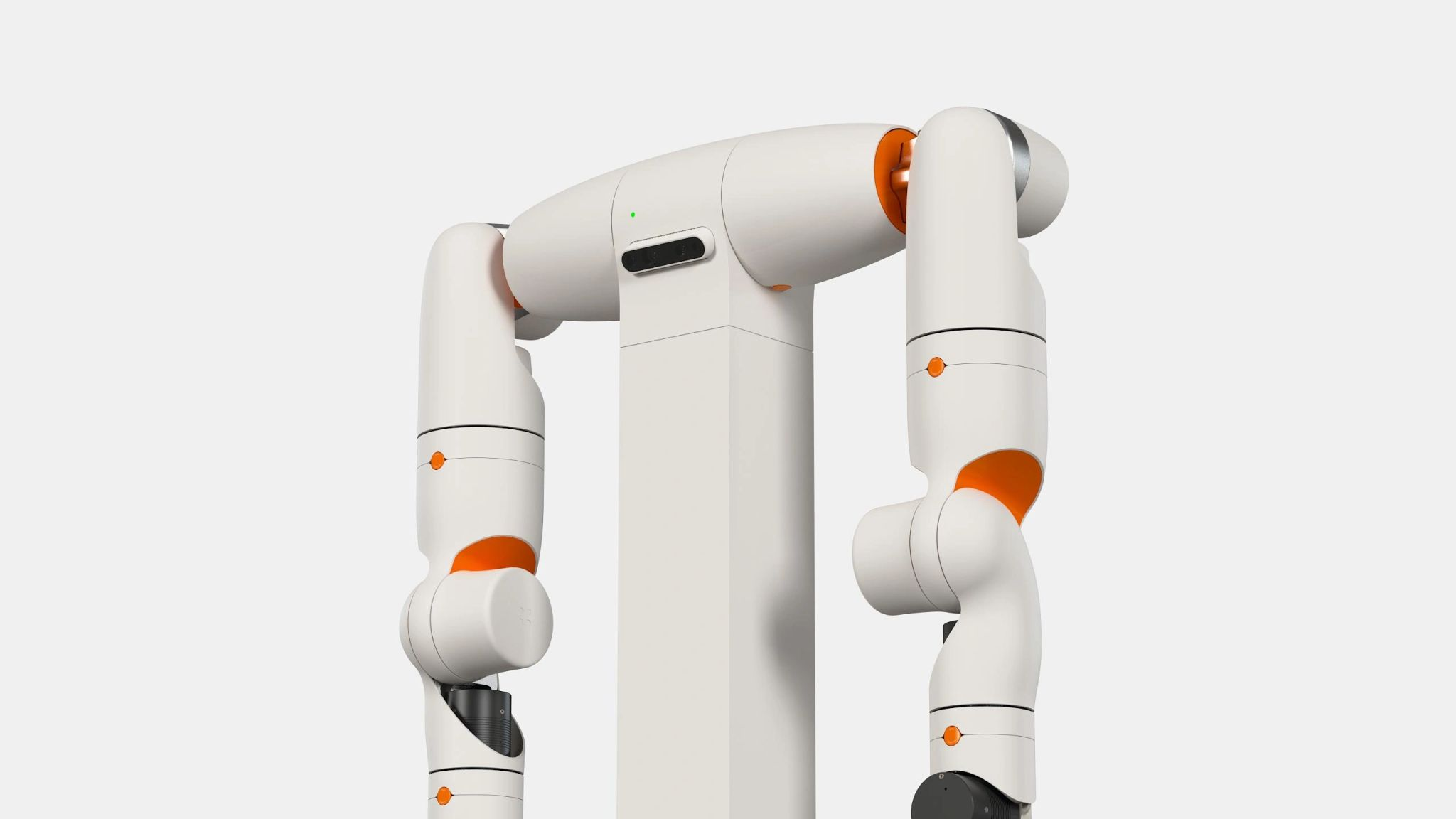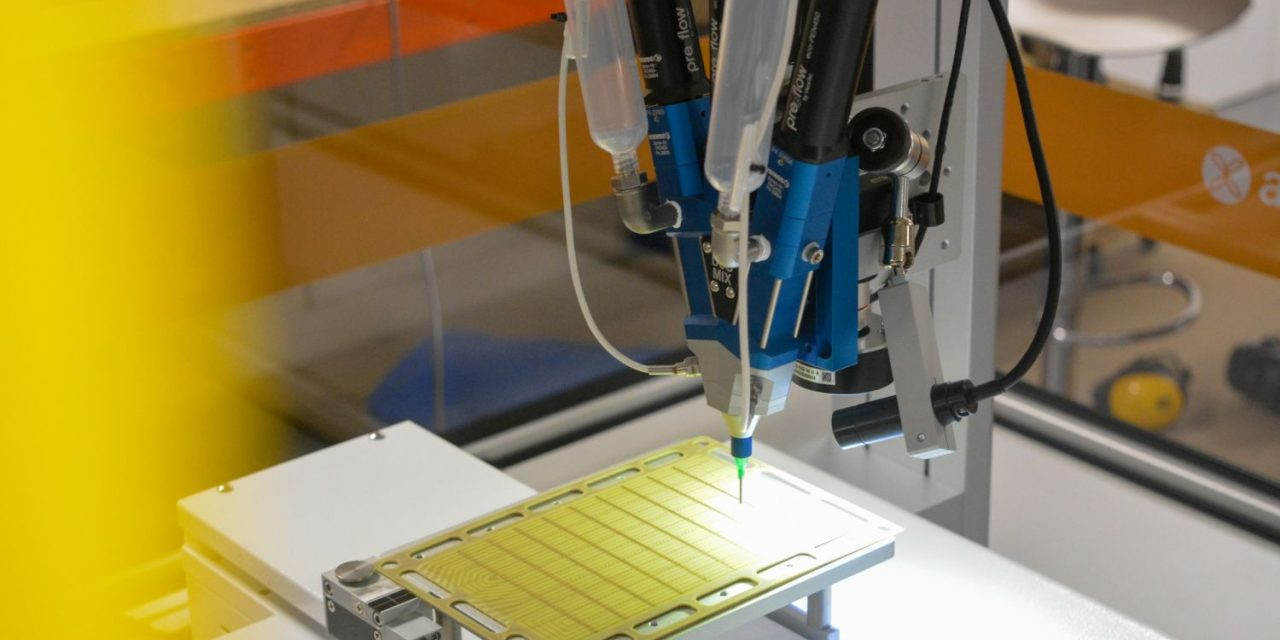
Intertronics will demonstrate robotic dispensing technology at Robotics and Automation 2026 at the Manufacturing Technology Centre in Coventry, with systems designed to improve repeatability in adhesive, coating, sealing, and material application processes.
The Oxfordshire-based company will use the 16–17 June event to show how dispensing robots can support electronics, medical device, aerospace, automotive, and wider manufacturing operations. The systems are intended to provide controlled material placement where manual application is variable, labour-intensive, or difficult to document consistently.
Dispensing remains one of the manufacturing tasks most exposed to operator variation. Adhesive beads, potting compounds, sealants, lubricants, and masking materials are often applied by hand or through semi-automated fixtures, even in plants that already use advanced machinery elsewhere. That approach can hold up at low volumes, but it becomes harder to manage when components become smaller, tolerances tighten, and quality records must withstand closer scrutiny.
Robotic systems bring controlled speed, position, dispense volume, and path repeatability into those operations. Better control reduces variation between shifts and operators, while consistent material placement helps protect joint strength, sealing performance, cure behaviour, and long-term product reliability.
In regulated and high-reliability sectors, traceability carries as much weight as output. Medical device assemblies, aerospace electronics, automotive modules, and specialist industrial components often require proof that a process was completed within defined limits. A robotically controlled dispense path can make that evidence easier to capture and easier to defend.
The Manufacturing Technology Centre gives the demonstration a practical setting. Robotics and Automation 2026 is centred on deployable systems rather than remote factory theory, and many manufacturers still face uncertainty over cost, integration time, skills, and payback. A targeted dispensing cell can be introduced around a known bottleneck, refined within an existing process, and expanded only when the performance case is clear.
That staged route is becoming more common across automation. Plants are often gaining the most from cells that remove one constrained manual step, rather than from attempts to automate an entire line at once. Once a site proves that one repeatable process can be automated safely and profitably, the next candidate becomes easier to challenge.
The same logic runs through other factory automation developments, including AI-assisted robot handling for mixed-product environments. Manufacturers are not simply chasing robots for their own sake; they are looking for ways to control variation, protect quality, and use skilled labour where judgment is actually required.
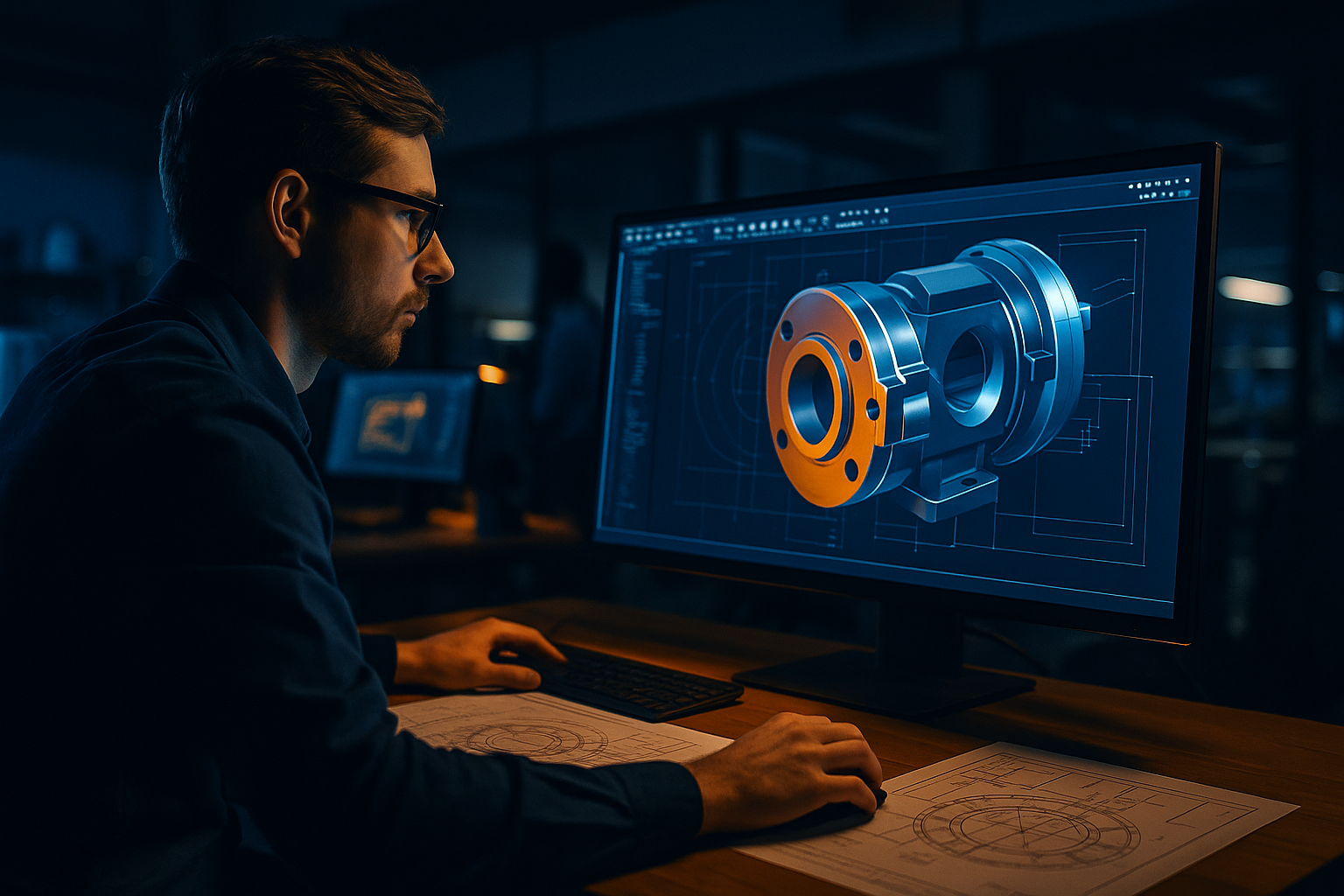
Adhesive and material dispensing also has a direct relationship with product design. Engineers increasingly use adhesives and sealants for lightweighting, vibration control, electronics protection, environmental sealing, and assembly simplification. Once bonding becomes part of a product’s performance, the method of application becomes part of the engineering specification.
Lower-volume, higher-mix manufacturing is especially exposed to dispensing variability. Flexible robots can support product variants without requiring a dedicated high-volume line, giving manufacturers better process control without forcing them into automotive-scale automation economics.
Robotic dispensing will not remove the need for good fixturing, material control, cure validation, or operator training. It does, however, move a sensitive manual process into a more repeatable operating window. In manufacturing environments where rework, scrap, and warranty risk are already expensive, that improvement can carry more value than a simple cycle-time calculation suggests.