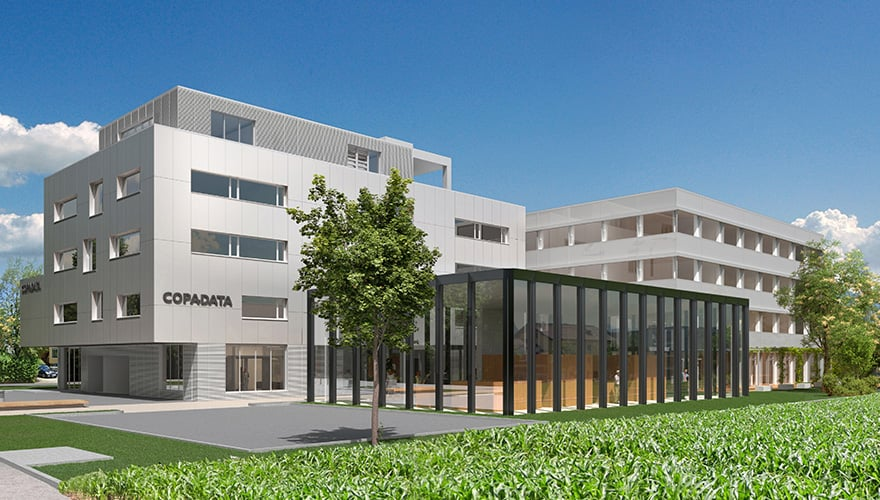
COPA-DATA is investing €15 million in an extension to its Salzburg headquarters as the industrial software developer expands research, development, and customer capacity.
The approximately 3,000m² building will provide room for around 150 additional employees and connect with an existing office completed in 2022. Construction is expected to finish during the third quarter of 2027, coinciding with the company’s 40th anniversary.
COPA-DATA develops the zenon software platform for industrial automation, energy management, production monitoring, and operational data. The company serves manufacturers, utilities, infrastructure operators, and other businesses requiring control and visualisation across production assets.
Following revenue growth of more than 20% during 2025, COPA-DATA now employs over 500 people worldwide, including around 270 at its Salzburg base, where approximately half of the workforce is involved in research and development.
New facilities will include workspaces for software development, areas for customer collaboration, and additional staff amenities. The company also plans lounges, fitness space, and expanded bicycle facilities as it competes for engineers and software specialists.
Because the extension will also serve as an operating technology site, its energy and building controls include geothermal systems, thermally activated building components, and an integrated photovoltaic facade.
The company’s zenon platform will manage parts of the building automation, providing an operational site for applying the software to energy flows, environmental conditions, equipment status, and facility performance.
Industrial software development is closely tied to physical engineering because platforms must communicate with control systems, drives, sensors, energy meters, production equipment, databases, and enterprise applications installed across plants of widely differing ages.
Development teams need access to representative hardware, test environments, simulation, cyber security expertise, and engineers who understand the operating consequences of software decisions rather than treating the factory as a generic source of data.
The expansion also reflects growing demand for plant digitalisation beyond the largest manufacturers. Programmes that have unlocked investment in manufacturing technology show smaller businesses adopting connected equipment, data platforms, automation, and digital production tools when funding and implementation support are available.
As the market broadens, software suppliers must support a varied installed base. A new factory can be designed around common data models and modern networks, while an established site may contain machinery, programmable controllers, field devices, and databases spanning several decades.
Since manufacturers cannot replace complete production systems whenever software changes, compatibility and migration carry as much weight as new functionality, and unplanned downtime can outweigh the benefit of a new analytical or visualisation feature.
Cyber security requires sustained research as industrial software connects production data with remote services, cloud platforms, mobile devices, and business systems. Each connection can improve visibility while expanding the pathways that must be authenticated, monitored, maintained, and recovered after an incident.
As energy prices, carbon reporting, and grid constraints become more prominent, manufacturers need detailed information about electricity, gas, compressed air, steam, cooling, and production loads, keeping energy management high on the software development agenda.
Software can reveal consumption patterns and inefficient operating states, but savings still depend on engineering work. A dashboard cannot repair a leaking compressed air system, alter a production schedule, or replace an inefficient motor without investment and operational follow through.
Additional development space should also support testing across several versions of operating systems, controllers, network equipment, and third party applications. Industrial customers expect software to remain stable through long asset lives, even as the surrounding information technology environment changes more quickly.
The company works through 14 subsidiaries and more than 500 certified partners, so the expanded research base must support training, documentation, localisation, and integration beyond Austria. Consistency across that network will influence whether new functions reach operating plants as supported industrial systems.
Recruitment will be as important as construction because industrial software requires specialists who can work across control engineering, data architecture, user experience, regulation, and plant operations. Competition for those skills remains strong across automation suppliers, manufacturers, utilities, and technology companies.
Laboratory space and customer test environments should allow integrations to be proven before deployment, reducing commissioning work and production risk at live sites.
Completion in 2027 will increase COPA-DATA’s capacity while manufacturers seek greater visibility and control without accepting unnecessary integration risk. The investment indicates continued confidence in demand for industrial digitalisation across established and new production sites.