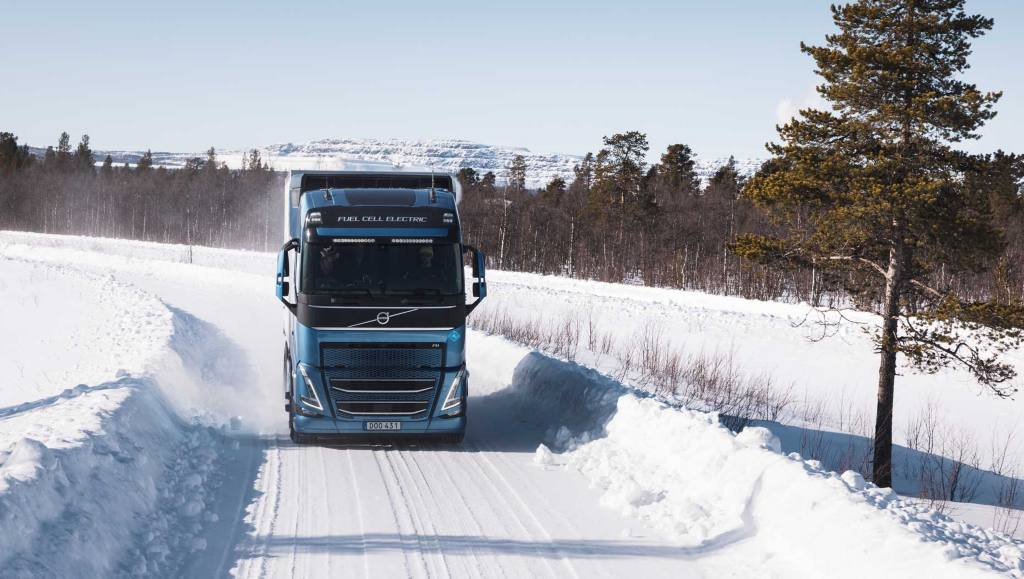
Volvo Group, Daimler Truck, Toyota, Bosch, Air Liquide, TotalEnergies, and other companies are forming a German initiative intended to coordinate hydrogen-powered heavy trucks with fuel supply and refuelling infrastructure towards 2030.
The group also includes TEAL Mobility and MB Energy, bringing vehicle manufacturers together with fuel-cell technology, industrial gases, energy supply, and station operators. Full details are due to be presented at IAA Transportation in Hanover on 15 September.
No firm truck numbers, station totals, corridor list, hydrogen volumes, investment commitments, or commercial fuel-price targets have yet been disclosed. The current announcement establishes the participants and operating model rather than a completed deployment programme.
The companies intend to develop refuelling stations along strategic European freight corridors in coordination with hydrogen-powered truck fleets. They are also targeting hydrogen pricing that would allow operators to reach a competitive total cost of ownership.
Synchronising those elements addresses one of the more persistent obstacles facing hydrogen road transport. Fleet operators have little incentive to order expensive vehicles if dependable refuelling is unavailable, while infrastructure providers struggle to justify stations without enough vehicles passing through them to produce acceptable utilisation.
A technically capable truck does not solve that problem alone. Commercial fleets are managed around acquisition cost, finance, payload, fuel or electricity cost, driver time, vehicle utilisation, service coverage, residual value, and the availability of energy at locations that match actual routes.
Hydrogen has attracted particular interest for heavier and longer-distance duties because fuel-cell vehicles can combine long range with comparatively rapid refuelling. That can be attractive where high daily utilisation makes lengthy charging stops difficult or where the battery required for a given range would impose a substantial weight penalty.
The disadvantages sit elsewhere in the energy chain. Hydrogen must be produced, conditioned, transported or piped, stored, compressed, and dispensed before a fuel cell converts it back into electricity onboard the vehicle, creating conversion losses and infrastructure costs that battery-electric systems avoid.
The new initiative is therefore positioning hydrogen as complementary to battery-electric trucks rather than as a universal replacement. That distinction reflects the variety of heavy-vehicle duty cycles rather than a neat technology hierarchy.
A truck returning to the same depot every evening has a different energy problem from an international vehicle operating across several countries. Regional distribution, refrigerated transport, construction, high-payload work, and long-haul freight can place substantially different demands on energy storage, refuelling, charging, and route planning.
Germany provides a significant test environment because it sits at the centre of major European freight flows while also hosting truck manufacturing, automotive suppliers, chemical production, energy infrastructure, and logistics operations. A corridor-based network there could connect with wider European routes rather than operate as a national island.
The European regulatory framework is already pushing heavy vehicles towards lower-emission powertrains. Infrastructure rules require continued deployment of high-power charging and hydrogen refuelling across the trans-European transport network, creating minimum geographical coverage without guaranteeing that individual sites will attract enough commercial demand.
Station utilisation is where regulatory deployment and commercial deployment diverge. A refuelling site can meet a geographical requirement and still operate poorly if too few vehicles use it, while fleet operators can lose productive hours if stations are unavailable, poorly located, or unable to deliver hydrogen at the rate required during busy periods.
Concentrating early fleets around known corridors can improve those economics by increasing throughput while giving operators greater confidence that fuel will be available along repeated routes. It also allows infrastructure investment to follow actual freight demand rather than an assumption that every motorway location needs equal capacity immediately.
Fuel price remains a more difficult variable. Electricity prices, electrolyser utilisation, natural-gas and carbon costs where applicable, storage, compression, transport distance, station utilisation, and the scale of production all affect the price eventually paid at the dispenser.
The participating companies cover much of that chain. Air Liquide and TotalEnergies provide hydrogen and energy capability, TEAL Mobility is developing heavy-duty refuelling infrastructure, Bosch supplies vehicle and fuel-cell technologies, and the truck manufacturers bring vehicle programmes and access to commercial fleet customers.
Cooperation among several of the manufacturers is already developing further upstream. Volvo Group, Daimler Truck, and Toyota signed a binding agreement in July for Toyota to join cellcentric as an equal shareholder, subject to regulatory approval, creating a three-way ownership structure around heavy-duty fuel-cell development and manufacturing.
The September initiative broadens the problem from the fuel-cell stack to the complete operating ecosystem. Competitive vehicles have limited commercial value if hydrogen production, station deployment, and fleet orders evolve on separate timetables.
There is no guarantee that coordination removes the underlying cost challenge. Stations still need sufficient utilisation to recover investment, and fleets cannot carry a permanent fuel-price premium simply to make infrastructure economics work.
The reference to competitive total cost of ownership acknowledges that constraint. Hydrogen trucking will be judged by delivered transport economics and operational reliability rather than the number of industrial logos attached to an initiative.
The 15 September announcement at IAA Transportation should provide the first opportunity to assess the scale of the proposed programme against that standard. Until fleet quantities, station commitments, corridor locations, and fuel-price assumptions are visible, the initiative remains a coordinated attempt to solve the chicken-and-egg problem rather than evidence that the bird has finally crossed the motorway.