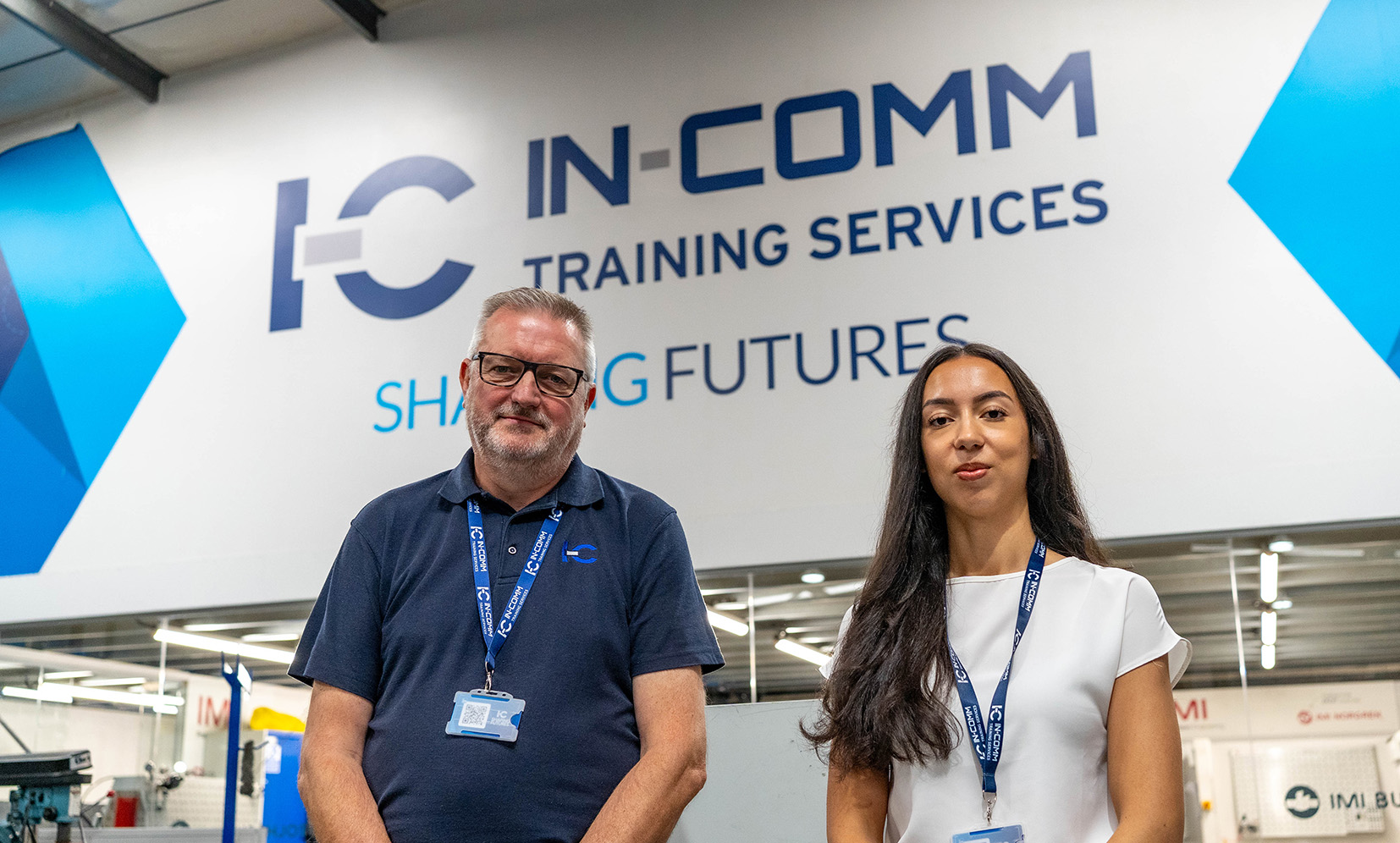
In-Comm Training is recruiting engineering professionals to expand its tutor and assessor workforce across technical academies in Aldridge and Telford, with up to ten part- and full-time vacancies covering disciplines where course demand is outpacing available teaching capacity.
The specialist training provider is targeting experienced engineers and manufacturing professionals who can move into education without already holding teaching qualifications. In-Comm will provide mentoring and professional training leading to a Level 3 Award in Education and Training and a Level 3 Certificate in Assessing Vocational Achievement, with further development towards qualified teacher status also available.
The recruitment campaign covers fluid power, general maintenance, mechatronics, electrical engineering, and other technical disciplines. Current vacancies also include CNC programming instruction at Aldridge, extending the requirement beyond classroom teaching into roles that combine practical demonstration, coaching, assessment, and vocational programme delivery.
Dutch Holland, Human Resources and Learning & Development Manager at In-Comm Training, said: “Demand for our courses outpace the supply of qualified tutors able to deliver them, so, alongside our current available jobs, we also want to build a pipeline of engineers who may not be ready to move now but want to know what a future teaching career could look like.”
The model is built around bringing industrial experience directly into technical education rather than requiring candidates to retrain completely before joining. Experienced engineers can begin with the practical knowledge acquired in factories, maintenance departments, engineering offices, or military technical roles and develop the teaching and assessment qualifications alongside the job.
More than 40 tutors and assessors are currently employed by In-Comm, with most coming from industry and averaging more than 20 years of experience. Their backgrounds include automotive, aerospace, construction, defence, nuclear, and renewables, bringing practical knowledge of production equipment, maintenance systems, quality control, fault finding, and industrial operating requirements into apprenticeship training.
Jon Spruce is among those who have made the transition. After spending much of his career in engineering management and completing a Level 4 HNC in mechanical and production engineering, he moved into assessment when he wanted to continue using his technical experience without remaining in the same type of industrial role.
Spruce said: “It is a massive switch, but one I’m really pleased I made.” He described structured onboarding, induction, training, and mentoring as central to the move, and has since qualified as an engineering assessor after around a year with the organisation.
Former armed forces personnel provide another recruitment route. Cerys Ives joined In-Comm after six years with the Army, including training at MOD Lyneham and operational duty at 32 RA LAD Larkhill. She brought a Level 3 qualification in mechatronics into her assessor role and is now studying towards vocational assessment and safeguarding qualifications while shadowing experienced colleagues.
The requirement for more trainers sits alongside a much larger demand for technical labour. Skills England’s 2026 assessment of advanced manufacturing estimates that around 148,000 workers will be required in priority occupations by 2035. Around 47,000 represent additional jobs, while approximately 101,000 will be needed to replace people leaving those occupations.
That replacement requirement creates a second problem for training providers. Experienced technicians, maintenance engineers, machinists, and other specialists carry knowledge accumulated over decades, but much of it can leave industry when they retire or move away from operational roles. Technical teaching provides one route for retaining that experience within the workforce pipeline.
The government’s assessment also found that 71% of priority advanced manufacturing occupations are in critical or elevated demand across the wider economy. Electrical engineers, engineering technicians, mechanical engineers, production and process engineers, welding trades, and metalworking maintenance fitters are among occupations competing for labour across several sectors.
Training capacity therefore depends on many of the same people employers are trying to recruit themselves. A maintenance engineer with sufficient industrial experience to teach hydraulics, pneumatics, electrical systems, or fault diagnosis is also valuable on a production site, creating a recruitment tension between immediate industrial requirements and the need to train future employees.
Government workforce projections already point to a 148,000-worker advanced manufacturing requirement, with replacement demand outweighing net employment growth. Expanding the number of technically experienced trainers is part of the less visible infrastructure needed to turn apprenticeship places into qualified workers.
In-Comm’s approach lowers one barrier by funding the teaching and assessment qualifications required by suitable recruits. It is also seeking to create a pipeline of engineers who may consider the move later rather than relying only on candidates ready to change careers immediately.
The current vacancies span both academies and several engineering disciplines. With course demand already exceeding teaching capacity in parts of the organisation, the recruitment drive now depends on persuading experienced industrial specialists that their next technical role could be in front of apprentices rather than another production line.