The European Commission and the government of New Caledonia have signed a strategic partnership intended to develop sustainable raw materials value chains, with nickel among the territory’s most important resources. The memorandum of understanding was signed in Nouméa on 20 October and sets out cooperation on investment, extraction, processing, infrastructure, workforce development and research. It establishes a policy framework, rather than a binding purchase agreement or an announcement that new mining and refining plants have secured financing.
The agreement was signed by European Commission Executive Vice-President Stéphane Séjourné, New Caledonian government president Milakulo Tukumuli and Alcide Ponga, the government member responsible for energy and mines. New Caledonia is a French Pacific territory with its own institutional arrangements and extensive nickel operations. According to the Commission, it accounted for 3.1% of global nickel production in 2024. The agreement is the EU’s seventeenth strategic partnership on raw materials since 2021.
Industrial integration is the first of five agreed areas. The Commission and New Caledonia intend to identify projects of common interest and explore access to funding from European institutions, EU member states and private investors. Those commitments describe work to develop investment opportunities; they do not establish a financing package, identify project sponsors or impose a purchase obligation on European manufacturers. Neither the capital required nor the planned capacity of any future industrial facility is specified.
The second area addresses how mineral operations contribute to development within New Caledonia. The Commission identifies local value creation, environmental and social safeguards, responsible extraction and the rehabilitation of former mining sites. Ore production alone does not determine how much processing income and employment remain in the territory. Greater value capture would require viable industrial operations and qualified workers, while new mining and refining schemes would still be subject to their own technical, environmental and financial assessments.
Energy and transport infrastructure form the third part of the proposed work. Mines and processing plants require reliable electricity, suitable roads and port capacity, maintenance services and dependable movement of inputs and products. New Caledonia relies heavily on imported fossil fuels for industrial energy, according to the Commission, adding an energy cost and emissions dimension to any processing expansion. The memorandum identifies infrastructure cooperation, but does not fund a generating plant, transmission connection or port upgrade.
The remaining two areas cover skills and technical development. Education, vocational training and industrial research organisations are expected to cooperate on capabilities needed along the value chain. The research agenda spans prospecting, exploration, extraction, refining and recycling, together with material substitution and methods for closing or restoring mine sites. Bringing these subjects into the same programme may help identify where a lack of trained personnel, suitable processes or supporting infrastructure would prevent mineral resources from becoming dependable industrial supply.
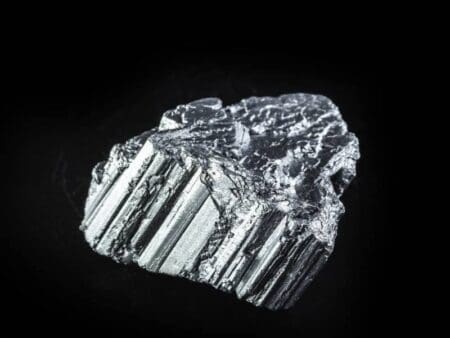
Nickel enters several industrial value chains, including corrosion-resistant alloys and selected battery chemistries. Its chemical form, impurity profile and processing route affect which buyers can use it: production of nickel-bearing ore is not automatically equivalent to delivery of battery-grade compounds or certified metal products. Some grades require additional concentration, smelting, refining and quality assurance stages before they can enter manufacturing supply chains. Cobalt and other resources may also be relevant, although this memorandum does not quantify supplies or certify the commercial feasibility of new processing schemes.
The Commission places the partnership alongside the Critical Raw Materials Act and the RESourceEU action plan, both intended to improve the resilience and diversity of mineral supply chains. The memorandum is a separate political instrument. It neither confers Critical Raw Materials Act strategic-project status on any particular scheme nor shortens a project’s permitting process by itself. A mine, refinery or recycling plant would require its own business case, permissions and investment decision.
Following the signature, the Commission and New Caledonia intend to prepare a joint roadmap in consultation with EU member states, the European Investment Bank, industrial organisations and other participants. The roadmap is expected to translate the cooperation areas into specific measures. Until those measures and individual projects are agreed, the amount of additional material available to European buyers, its processed form and the timing of any deliveries remain unknown.
The 20 October memorandum creates a framework for identifying investment and technical cooperation across the mineral value chain. A change in actual supply will require projects to move through financing, engineering, permissions, construction and operating qualification. None of those milestones was completed by the signing itself.