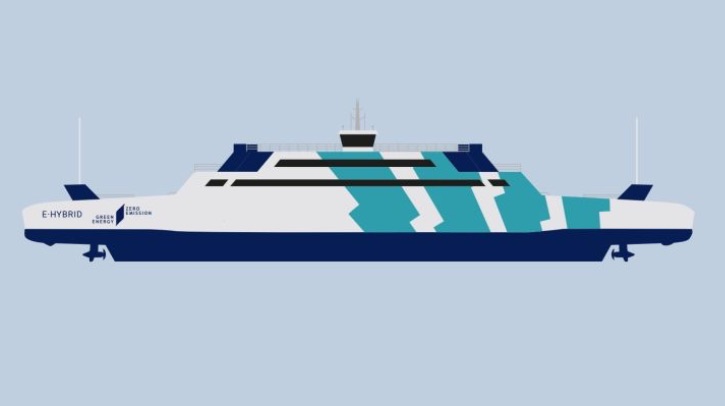

Estonian State Fleet has launched a call for tender for the design and construction of a new, battery-powered electric ferry to serve the main islands in Estonia. The updated design concept for the new ferry focuses on maximizing energy and cost-efficiency while ensuring passenger comfort.
Sustainable maritime technologies
Estonian minister of infrastructure, Vladimir Svet, commented, “I’m proud to see Estonia leading the way in adopting environmentally sustainable technologies in the maritime sector to achieve this. The new ferry will be similar in size and capacity to the existing vessels but will be significantly more economical and environmentally sustainable.”
The new ferry will primarily be powered by green electricity, sourced from the shore and stored in the ship’s onboard batteries. In addition, biodiesel-powered auxiliary generators will be available for use during extreme ice conditions or other special circumstances.
Sander Sääsk, director of development services at Estonian State Fleet, added, “The project’s funding criteria require the new ferry to be at least 66% more energy-efficient than the reference vessel, and this standard has been fully integrated into the current tender.”
“The proposed size of the vessel allows for quicker loading, which will help operators maintain the current ferry schedules,” Sääsk noted. “The overall length of the ferry must fall within the range of 100-114m, considering the specific characteristics of the Kuivastu and Virtsu harbors. The ferry must also meet Ice Class 1B as defined by the Finnish-Swedish ice class regulations.”
Passenger amenities
The new ferry will also have a modern onboard restaurant, retail shop, lounge areas and crew cabins. Care has been taken to ensure full accessibility for passengers with disabilities, including those with mobility and visual impairments. The ferry will accommodate up to 500 passengers and around 130 vehicles.
The new ferry is planned to be the main vessel for the Virtsu-Kuivastu route in Estonia but will also be suitable for the Rohuküla-Heltermaa route if necessary. The deadline for submission of tenders for the construction and design of the vessel is December 10, 2024. The ferry is scheduled for completion by February 2027, with operations set to commence later that spring.
The ferry project is financed by the European Modernisation Fund and revenues from CO2 emissions trading.
In related news, Incat recently lifted the final passenger deck module of the Incat Hull 096 into place, signaling the structural completion of what the company states is the world’s largest electric ferry. Click here to read the full story.