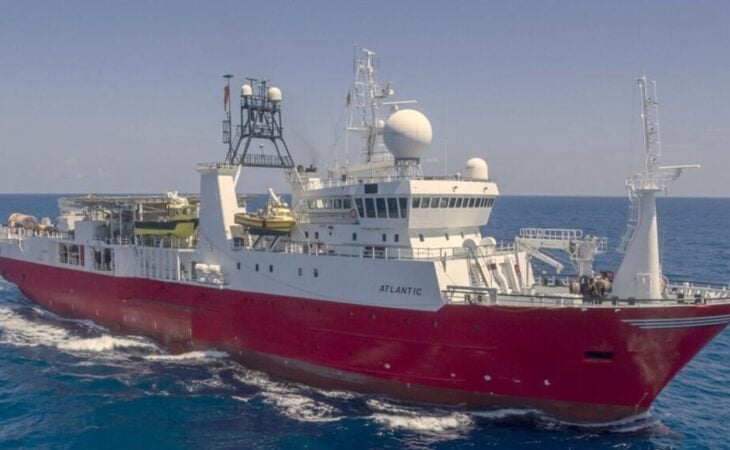
EMGS is rigging the vessel Atlantic for controlled-source electromagnetic operations offshore Norway, following newly signed contracts with a combined value of approximately $6 million.
The vessel Atlantic, formerly known as Sanco Atlantic, is being prepared in collaboration with Sea Shipping, the vessel’s owner. Rigging and mobilisation work is being carried out at Green Yard, with Sea Shipping supporting EMGS on vessel capability and marine operations. The work marks a new operational phase for EMGS under new ownership and reinforces the company’s focus on marine CSEM services.
Controlled-source electromagnetic surveying is used in offshore exploration and reservoir assessment by measuring how electromagnetic fields interact with subsurface formations. The technique can help identify resistive bodies beneath the seabed, which may indicate hydrocarbon-bearing structures when interpreted alongside seismic and geological data. It does not replace seismic work, but it adds another layer of information for exploration decisions.
Offshore survey capability remains relevant even as European energy policy shifts towards renewables, carbon capture, and infrastructure transition. Oil and gas operators continue to assess prospects, optimise mature basins, and use higher quality data to manage risk. In the Norwegian offshore sector, technical survey work remains part of an operating environment shaped by energy security, mature asset management, emissions pressure, and disciplined capital spending.
The mobilisation also reflects a broader pattern in offshore engineering, where vessels are being adapted, repurposed, and reconfigured for specialised work scopes. Vessel capability is rarely fixed. Survey spreads, deck equipment, power systems, data acquisition hardware, winches, handling arrangements, and crew competence determine whether a vessel can perform a campaign safely and efficiently.
Offshore asset adaptation and operational reliability run through much of the sector’s current work. ABB’s control and safety system modernisation on the Buzzard platform reflects the pressure to keep mature offshore assets reliable, while Saipem’s jacket sail-away for Neptun Deep shows that new offshore gas infrastructure continues to progress in Europe’s wider energy system. EMGS’ campaign sits in the survey and subsurface evaluation part of that chain.
The use of Atlantic also highlights the importance of vessel availability. Offshore campaigns can be constrained by suitable tonnage, mobilisation windows, weather, port access, crew planning, and equipment readiness. A survey contract worth several million dollars can still be affected by practical marine details, including deck layout, system installation, and the vessel’s ability to operate efficiently in the planned area.
CSEM has specific value where exploration teams are trying to improve confidence before committing to higher-cost activity. Offshore wells remain expensive, and tolerance for dry holes has reduced as capital discipline has tightened. Additional geophysical data can improve prospect evaluation, particularly when integrated with seismic interpretation and regional geological understanding.
Norway remains one of Europe’s most technically sophisticated offshore markets. Operators and service companies continue to use advanced survey, subsea, digital, and production technologies to support exploration and field management. That does not remove the commercial risk of offshore work, but it does sustain demand for specialised companies able to provide data that supports better decisions.
For EMGS, the campaign represents both revenue and renewed operational momentum. A focused CSEM company depends on maintaining credibility with operators, vessel partners, and technical teams. Successfully mobilising Atlantic and delivering the Norwegian campaign would reinforce its position in a market where exploration spending is selective, but high quality subsurface data remains valuable.