The UK government has identified eight Robotics Adoption Hubs intended to help businesses and public services evaluate and deploy automation. Announced on 9 October, the network brings together organisations offering practical demonstrations, specialist advice and connections to integrators and technology suppliers across applications ranging from manufacturing and food production to public-space services and surgery.
The emphasis is on adoption rather than developing basic robotics research. Industrial users often understand the potential of automation but still face difficult decisions about which operations to change, how equipment will interact with existing machinery, and whether investment will deliver a measurable operational return. The hubs are intended to help organisations work through those decisions before they commit to a full production installation.
One of the eight announced initiatives is the Greater Southwest Robotics Adoption Hub, which brings together regional research and industrial partners. The National Composites Centre has described the practical role of advising businesses about suitable robotics applications. Funding allocations to individual partners and measured adoption outcomes should be assessed against their own programme records rather than inferred from the national announcement.
The government identified eight Robotics Adoption Hubs on 9 October, setting out a support network rather than eight completed automation installations. Their work is intended to include business engagement and adoption advice. Actual production improvements will depend on later company decisions, suitable application engineering and the outcome of individual trials. None of those results is quantified in the initial hub announcement.
The programme also encompasses surgical robotics through the SHARP national hub. Its objective is to support the evaluation and implementation of clinical robotic systems with an emphasis on evidence and safe practice. The requirements of a hospital operating theatre differ fundamentally from those of a factory, but both must establish whether proposed systems can be integrated reliably and used by suitably trained teams.
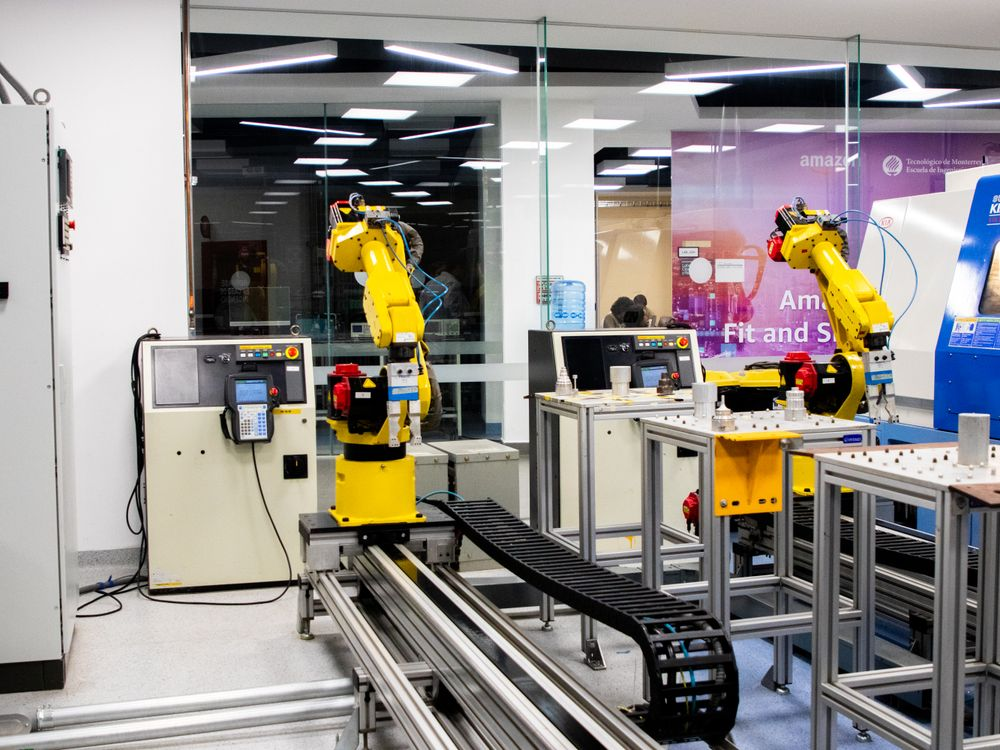
Robotic systems depend on much more than the manipulator or mobile platform visible in a demonstration. A factory installation may need material presentation, guarding, gripping equipment, sensors, communications with production systems, and planned recovery procedures when a part or workpiece is out of position. An apparently straightforward handling task can become difficult when product dimensions vary or upstream machines do not supply material at a predictable rate.
Deployment costs also complicate purchasing decisions for smaller manufacturers. A supplier can quote the price of a robot, but the complete cost of deployment includes engineering, tooling, validation, safety assessment, training, software integration and maintenance. The payback calculation therefore needs a realistic cycle-time estimate and a clear understanding of how frequently the task will change.
Demonstration and feasibility activity can reduce some uncertainty before production equipment is specified. Trials may reveal whether machine vision can identify the necessary workpiece features, whether a gripper can handle mixed products, or whether a mobile system can safely navigate a congested site. They may also show that process redesign or simpler mechanisation is more appropriate than adding a robot.
The network structure is intended to connect industrial adopters with specialist expertise already present in universities, catapults and technology businesses. TWI and Anglia Ruskin University have announced a central convening project, AURA, to coordinate the eight hubs and share expertise. The resulting collaboration is meant to reduce the risk that individual regions repeat the same work while organisations elsewhere face similar challenges.
Actual implementation will nevertheless depend on each site’s engineering and economic conditions. Automation benefits are easier to achieve when production volumes, part presentation and maintenance arrangements are understood. They may be harder to sustain in highly variable operations, where changing products require new tooling or programming. Organisations will also need to decide which staff will operate, maintain and improve the systems after integrators have completed commissioning.
The government’s announcement does not represent eight completed robot installations or guarantee productivity increases. It establishes support infrastructure intended to help users progress from consideration to trials and, where justified, purchasing decisions. The practical measure of success will be whether businesses that receive advice can deploy appropriate equipment, maintain its availability and show improvements under their normal operating conditions.
The hubs are expected to begin their practical support activity through regional networks, demonstrations and targeted advice. The breadth of the programme should provide evidence about where robots offer dependable benefits and where integration costs or process variability still limit adoption.