The European Investment Bank and Crédit Agricole CIB have agreed a financing structure intended to expand the banking capacity available to European manufacturers supplying equipment for electricity-grid investment.
The EIB will provide up to €300 million of counter-guarantees, enabling Crédit Agricole CIB to commit an equivalent amount and build a portfolio of bank guarantees worth up to €600 million. The institutions expect the resulting financing capacity to help mobilise as much as €2.4 billion of real-economy investment.
The mechanism is aimed at manufacturers of equipment used to reinforce and modernise electricity networks across the European Union rather than at one specific transmission or distribution project.
Its industrial importance lies in a less visible constraint facing equipment suppliers: a manufacturer can have sufficient factory space and technical capability to accept another large order while lacking the banking headroom needed to provide the guarantees demanded by the customer.
Major contracts commonly require advance-payment, performance, delivery, or warranty guarantees. These protect utilities and project developers if a supplier fails to meet agreed obligations, but the guarantees consume part of the manufacturer’s available credit capacity for as long as the underlying exposure remains open.
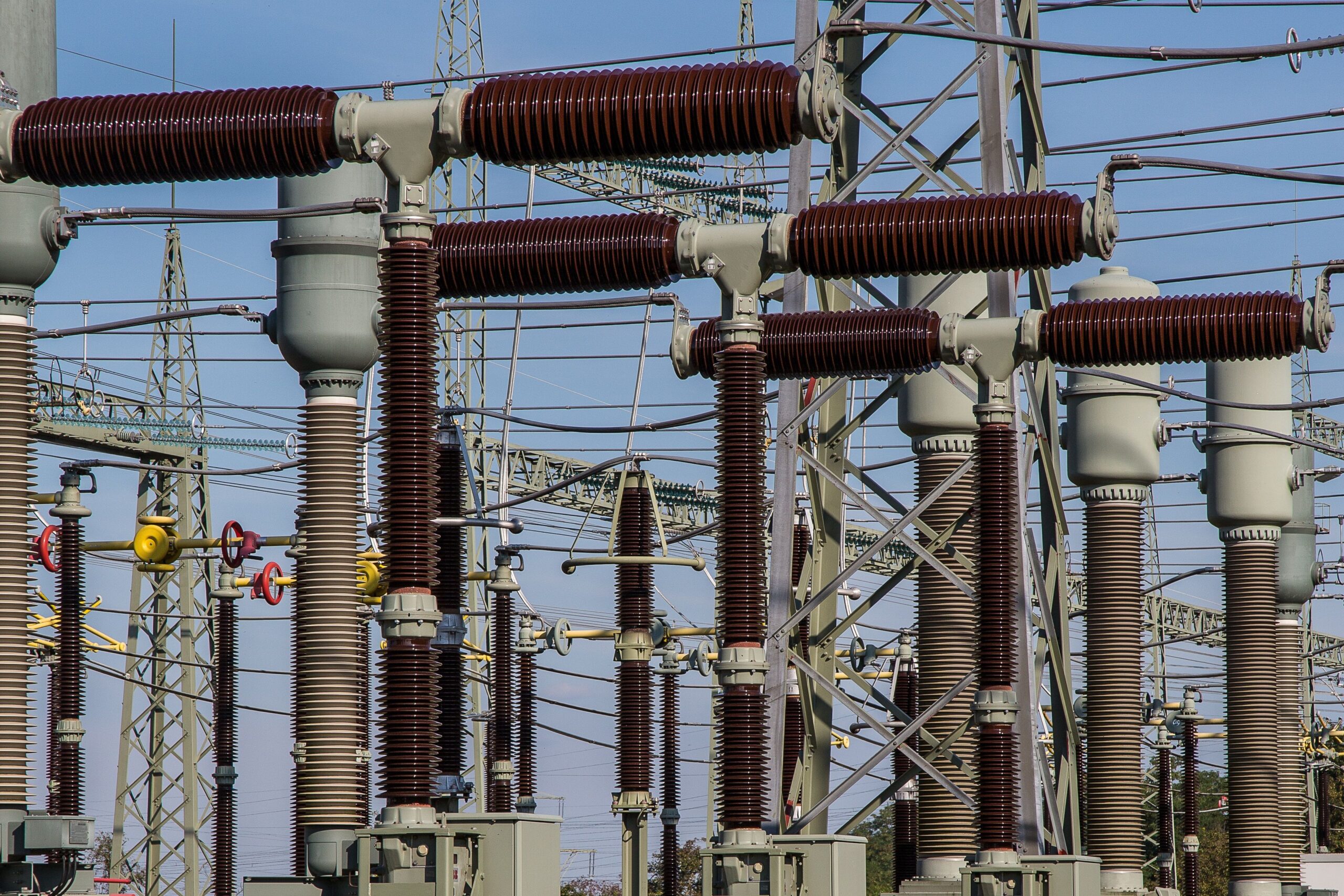
That can become material for businesses producing transformers, high-voltage cables, switchgear, substations, connection equipment, and other long-lead electrical hardware. Manufacturing cycles can extend over months or years, while the contract value tied up behind one guarantee may be substantially larger than the supplier’s short-term cash requirement.
The EIB’s counter-guarantee allows part of that risk to be shared, giving Crédit Agricole CIB more scope to issue guarantees on behalf of qualifying manufacturers without carrying the entire exposure itself.
The structure therefore supports factory activity indirectly. It does not purchase machinery or build production lines, but it can allow manufacturers to sign contracts that justify more procurement, labour, working capital, and investment in capacity.
That distinction matters as Europe accelerates network expansion. Electricity demand from industrial electrification, data centres, electric transport, hydrogen production, and heat is increasing at the same time as wind, solar, and storage are adding new power flows to networks designed around older generation patterns.
The resulting investment requirement has become a manufacturing problem as much as a utility-planning problem. New substations cannot be commissioned without transformers and switchgear, while transmission upgrades remain dependent on cable, protection, control, steelwork, connection, and insulation supply chains.
Several of those product groups are already associated with extended lead times. Large power transformers, for example, require specialist electrical steel, copper or aluminium windings, insulation systems, bushings, cooling assemblies, precision manufacturing, and extensive factory testing before shipment.
High-voltage cable production presents its own barriers. Manufacturing lines are capital-intensive, qualification cycles are lengthy, and capacity cannot be increased overnight simply because another utility places an order.
European suppliers have consequently been investing in additional production. Those factory programmes are easier to justify when manufacturers can see multi-year demand from grid operators, but order visibility does not remove the financial requirements attached to accepting each contract.
The EIB arrangement forms part of its €1.5 billion Energy Grids Package and is supported by InvestEU. The package is designed to strengthen the European supply base supporting network expansion rather than limiting public finance to the grid owners commissioning infrastructure.
That represents an increasingly explicit recognition that infrastructure programmes can be delayed by weak industrial capacity even where project finance and regulatory approval are available. A transmission operator may have permission and funding to build, but still face a multi-year schedule if critical equipment cannot be manufactured in time.
The approach also follows financing structures used elsewhere in the energy supply chain. Guarantee programmes for wind-equipment manufacturers have sought to address the same imbalance between large order books and the amount of financial security required before those orders can move into production.
The leverage figure of up to €2.4 billion should not be read as €2.4 billion of direct EIB spending. It is an estimate of the wider investment that the guarantee structure could support if the full portfolio is used and allows manufacturers to take on contracts with a larger total value.
Nor will additional guarantee capacity solve every industrial bottleneck. Factory expansion still depends on skilled labour, materials, permitting, equipment, energy, qualified suppliers, and sufficient demand to justify investment over many years.
What the arrangement can remove is one financial constraint between a manufacturer and a contract already available to it. For suppliers carrying several large projects simultaneously, that difference can determine whether the next order is accepted, delayed, or passed to a competitor.
The value of the programme will therefore be measured less by the headline size of the guarantee portfolio than by what appears downstream: additional contracts signed, equipment produced, factories expanded, and network projects receiving hardware on schedule.