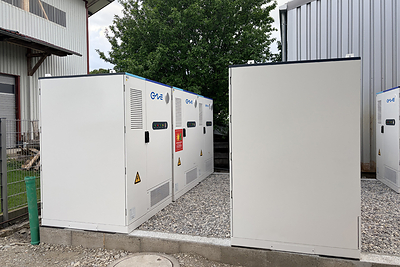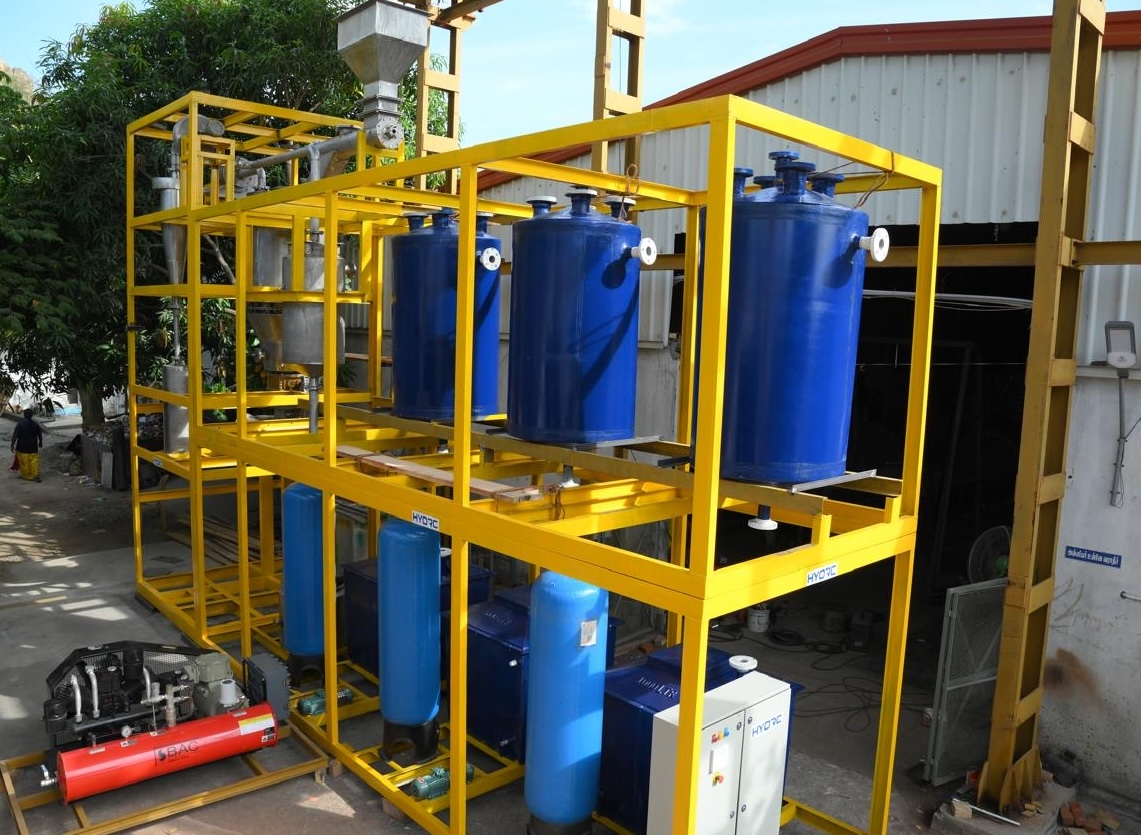
HyOrc has completed off-site fabrication and assembly of its first commercial waste-to-methanol module, with the skid-mounted process plant now preparing for factory testing before shipment to Portugal.
The system is designed to process approximately three tonnes of refuse-derived fuel each day and produce up to one tonne per day of chemical-grade methanol. It is intended for deployment in Porto as the first commercial unit in a broader modular production programme.
HyOrc’s approach moves much of the process-plant construction into a factory environment. Gasification, syngas cleaning and conditioning, and methanol-synthesis equipment are packaged into integrated skid assemblies before they reach the final site.
That changes where project risk is managed. Pipework, vessels, instrumentation, controls, electrical interfaces, structural frames, and mechanical assemblies can be installed and inspected before transport rather than being fabricated individually after arrival.
The completed module still has several stages to pass before it can be considered an operating commercial plant. Factory testing comes next, followed by transport, site installation, connection to utilities and feed systems, commissioning, and sustained operation on real refuse-derived fuel.
That distinction matters because waste-to-fuel projects can accumulate ambitious claims well before the first product leaves the plant. HyOrc has now produced physical equipment at commercial scale, but it has not yet demonstrated continuous methanol production from the Porto installation.
The process begins with refuse-derived fuel generated from residual municipal and industrial waste left after recyclable material has been removed. Gasification converts the carbon-bearing feed into a synthesis gas containing components including hydrogen and carbon monoxide.
That raw gas cannot simply be sent into methanol synthesis. Contaminants, particulates, tars, sulphur compounds, and variations in composition can damage catalysts or push the final product outside specification, making gas cleaning and conditioning a central part of the process.
HyOrc says the underlying conversion pathway has been tested with Bureau Veritas witnessing and independently verifying the programme with zero non-conformities. The qualification supports the process route but does not substitute for operating data from the final commercial installation.
Waste feedstock itself creates one of the larger engineering challenges. Unlike natural gas or another relatively controlled chemical input, RDF can vary in moisture, plastics, paper, biomass, ash, and other constituents depending on how the waste stream was sorted.
Those changes alter the thermal behaviour of gasification and the composition of the resulting syngas. A commercial process therefore has to manage variability without repeatedly interrupting production or allowing methanol quality to drift.
The modular architecture is intended to address scale through replication rather than by building one increasingly large process train. Once a standardised unit has been demonstrated, future plants can theoretically add capacity by reproducing an established manufacturing package.
That approach is familiar elsewhere in process engineering. Modular plants can reduce site labour and compress installation schedules where the design is sufficiently repeatable, while factory assembly gives engineers more control over welding, wiring, inspection, and functional testing.
It does not eliminate site engineering. Feed preparation, storage, utilities, foundations, electrical supply, emissions management, fire systems, product storage, loading facilities, and permitting still have to be matched to each location.
Nor is every waste stream interchangeable. Changes in feed specification may require different preprocessing or operating parameters even where the core module is nominally identical.
HyOrc’s Portuguese joint venture has secured approval for a €6.7 million grant under the EU STEP programme to support a larger second phase. That programme is targeting approximately 35 tonnes per day of RDF input and around eight tonnes per day of methanol production.
The current unit is considerably smaller, which gives the partners an opportunity to prove the manufacturing and operating model before multiplying it across a larger installation.
HyOrc has identified a number of European ports as potential future locations, including Immingham, Rotterdam, Antwerp, Genoa, Marseille, Gothenburg, and others. Those remain prospective targets rather than contracted plants.
The port strategy is linked to growing interest in methanol as a marine fuel. Shipping companies are ordering methanol-capable vessels, creating demand for lower-carbon methanol production close to bunkering infrastructure.
Whether waste-derived methanol can compete at scale will depend on more than the chemistry. Feedstock availability, gate fees, plant utilisation, process efficiency, electricity demand, logistics, product specification, carbon accounting, and regulation will all affect the economics.
The completed first module is nevertheless a useful industrial milestone because it shifts the project from engineering documentation into manufactured equipment. The next question is whether the advantages claimed for off-site fabrication survive transport, installation, and commissioning.
Factory testing will provide the immediate evidence. After that, the harder measures will be operating hours, RDF tolerance, syngas cleanliness, methanol specification, maintenance requirements, and realised conversion efficiency once the plant is working in Portugal.