Ofgem has opened a Strategic Innovation Fund competition offering up to £30 million for projects addressing technical and operational challenges across Britain’s gas and electricity networks.
The Round 5 Discovery competition opened on 21 September and closes on 21 October 2026. Innovate UK is delivering the programme in partnership with Ofgem as the first stage of a four-phase process covering Discovery, Alpha, Beta, and Deployment.
Individual Discovery projects can request up to £200,000 excluding VAT and must include a minimum 10% private contribution towards total project costs. Projects are expected to begin after 1 January 2027 and finish by 31 May 2027, leaving a maximum five-month period to establish the technical case and route into further development.
Lead applicants must be licensed gas distribution or transmission operators, electricity transmission or distribution operators, or the National Energy System Operator. Each project must include at least one partner, allowing network companies to combine operational access with specialist engineering, software, academic, or technology expertise.
The competition is organised around seven challenges: advanced energy transmission and networks; dynamic modelling; integration of high-energy-demand sites; consumer-centric grid expansion; enhanced system visibility and control; green gas; and whole-system optimisation.
The technical scope ranges from physical power equipment to software. Competition material identifies advanced semiconductors, superconducting transmission, wireless power, grid simulation, digital modelling, automated monitoring, demand forecasting, flexibility, connection management, and methods for moving more power through constrained infrastructure.
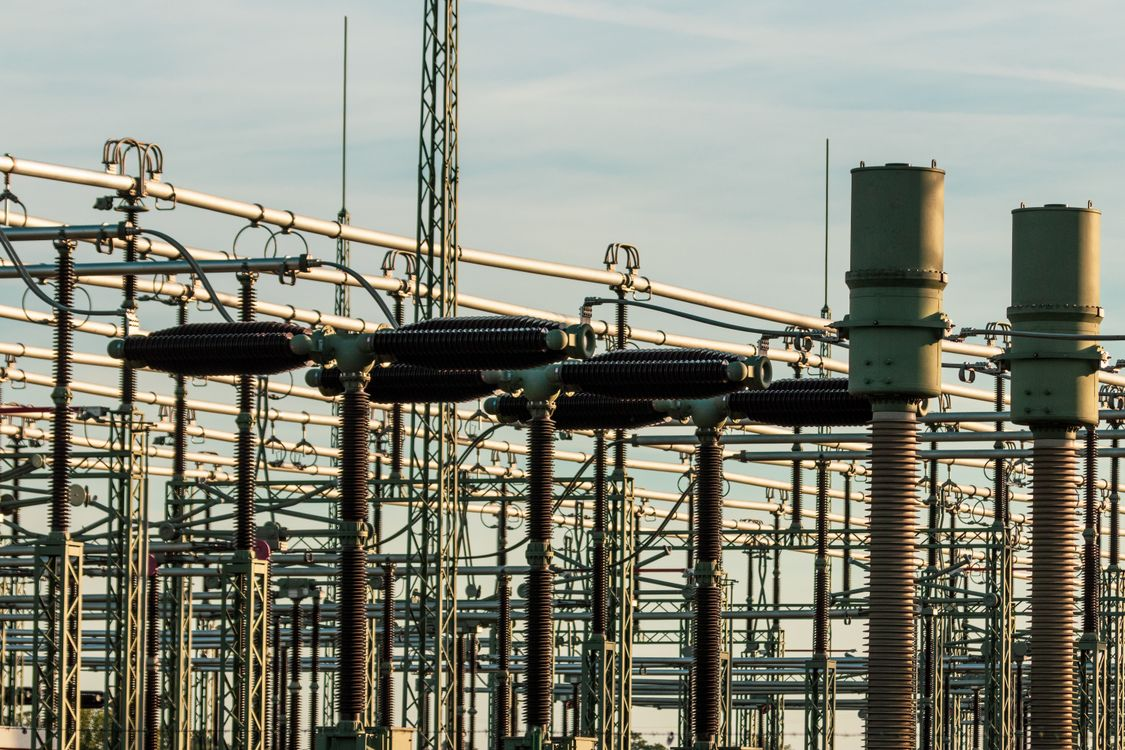
Britain’s network expansion increasingly requires both approaches. New cables, transformers, switchgear, and substations remain necessary, but operators are also using monitoring and control to extract more capacity from assets already installed.
That combination has become more important as connection queues grow. Data centres, industrial electrification, hydrogen production, electric transport, renewable generation, and storage can all introduce large changes in demand or generation at particular points on the system.
Traditional reinforcement can take years because it requires planning, equipment procurement, construction, outage coordination, and commissioning. Flexible connections, improved forecasting, and active network management can sometimes release usable capacity sooner, although they do not remove the requirement for physical reinforcement where the underlying network remains inadequate.
Advanced transmission technologies form another part of the competition. Higher-capacity conductors, power electronics, superconducting systems, and alternative transmission approaches may increase the amount of power carried through constrained corridors, but network adoption depends on protection behaviour, maintainability, interoperability, reliability, and lifecycle cost rather than laboratory performance alone.
Digital projects face a similar qualification hurdle. Network operators already hold substantial volumes of operational data, but models only improve decision-making when underlying asset information is accurate and communications remain sufficiently dependable for the intended application.
Digital twins and dynamic simulation can be used to test operating scenarios or infrastructure changes before they are applied to the live network. Their value depends on whether the model continues to represent the physical system closely enough as loading, generation, topology, and asset condition change.
The Discovery stage provides a relatively small amount of funding for establishing those foundations before larger development commitments are made. Successful projects can seek progression through Alpha, Beta, and Deployment stages, although advancement is competitive rather than automatic.
Placing licensed network operators at the centre of each consortium also gives technology developers access to real engineering requirements. A promising technology still has to fit network standards, safety rules, maintenance practices, cyber requirements, procurement processes, and the physical limitations of existing infrastructure before it can be deployed.
For smaller suppliers, that operational access can be as important as the initial grant. Utility qualification frequently takes longer than prototype development because critical-network operators need evidence that unfamiliar equipment or software will remain supportable for years rather than perform successfully in one demonstration.
The one-month application window leaves prospective consortia relatively little time to agree scope and partner arrangements. The £30 million envelope is large enough to support a broad Discovery portfolio, while the £200,000 project ceiling keeps the opening phase focused on tightly defined technical questions.
The resulting projects will not rebuild Britain’s power networks by themselves. Their purpose is to determine which technologies justify the more expensive engineering, trials, and deployment stages that follow, filtering a wide field of hardware and digital ideas before operators commit them to regulated infrastructure.