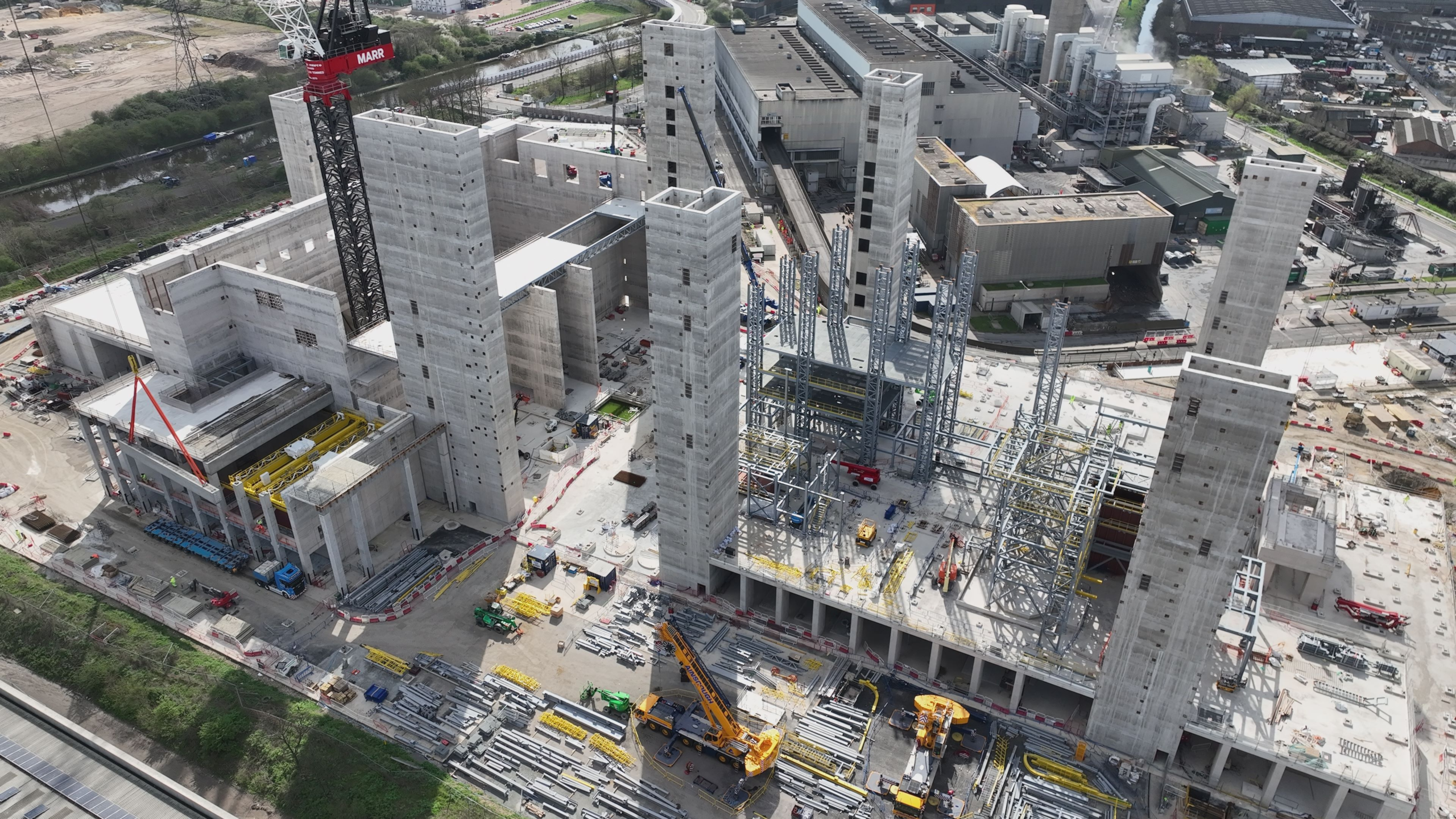
North London Waste Authority (NLWA) has reached revised terms with Acciona for completion of the energy recovery facility at Edmonton EcoPark, agreeing a contract price of £1.25bn and a December 2029 completion date. Acciona will assume additional delivery risk previously borne by the authority. The agreement establishes new contractual arrangements for a publicly owned plant intended to replace existing residual waste treatment capacity serving seven north London boroughs; it does not signify that construction or commissioning is complete.
The authority says £700m has already been spent on the energy recovery facility, which is now more than 60% complete. That expenditure figure describes the project position at the time of the decision; it should not be added to the £1.25bn revised contract price to calculate an overall cost. The revised agreement establishes the basis for the contractor to finish construction and commissioning rather than announcing that the plant is ready to receive waste.
The facility forms part of the wider North London Heat and Power Project, which also includes infrastructure for recovering reusable and recyclable materials. Its design treatment capacity is up to 700,000 tonnes of residual waste annually, after opportunities for separation and recovery upstream. The resource recovery operation at EcoPark is a distinct part of the programme: material passing through its recycling processes should not be counted as waste treated by the energy recovery boilers.
The proposed energy process involves combustion of suitable residual waste in controlled boilers. Heat recovered from the process produces steam that drives electricity generation, while the design also accommodates supply of useful heat to a local network. Flue-gas treatment and continuous process controls are integral to the plant’s environmental performance. The stated treatment capacity is a design figure, not evidence of the volumes the facility will handle immediately after commissioning or a guarantee of a particular annual power output.
Shortages of specialist mechanical and electrical subcontractors have been central to the programme’s difficulties, according to NLWA. The affected work includes boilers and flue-gas treatment systems, where progress depends on the installation of pressure equipment, process piping, electrical distribution, instrumentation and coordinated control functions. These packages are interdependent: delayed pipework or access to an equipment area can obstruct the next contractor’s installation and postpone testing of connected systems.
According to the authority, the project has faced inflation, higher interest rates, rising material costs and labour shortages since construction began in 2022. Those pressures created disputes and affected the contractor’s ability to maintain its programme. NLWA says collaboration with Acciona has improved this year, supported by a significant increase in the number of skilled workers on site. More than 400 are now working there daily, compared with about 200 at the beginning of 2026, and the turbine has been installed.
The turbine’s installation and the increase in skilled labour are evidence of construction progress, rather than confirmation that the plant has been commissioned. Mechanical completion must be followed by testing of individual equipment, integrated operation of the boilers and turbine, control and protective systems, and verification of emissions treatment. The revised programme is intended to make the remaining sequence and contractor obligations more transparent. NLWA has called for enhanced reporting and independent scrutiny while that work proceeds.
Councillor Jacob Cable, Chair of NLWA, said members had examined the position and concluded that finishing the facility was in the public interest. In the authority’s account, cancellation would leave councils with a substantial funding problem and require alternative arrangements to manage north London’s waste. NLWA estimates that cancelling the project would cost boroughs an additional £100m a year by 2030/31 and generate about 30,000 extra annual lorry journeys to off-site treatment or disposal facilities. These are its counterfactual estimates, not costs already incurred.
Financing and waste service charges also require careful distinction. NLWA estimates that, once the project is completed, its combined waste and recycling services will cost about £1.50 per resident per week. This is not a tariff for power generated by the Edmonton plant. The authority says the figure includes collection and disposal, access to eight reuse and recycling centres, education programmes and community grants, as well as the operation of the wider waste system.
Air pollution control will have to operate alongside reliable waste combustion and power generation. The new plant is designed with flue-gas cleaning and monitoring systems, although their eventual performance must be demonstrated in commissioning and monitored under applicable environmental controls. The waste hierarchy remains relevant to the tonnage entering the boilers: reducing waste generation and recovering recyclable materials upstream affects both the volume and composition of the residual stream.
Members of the authority have requested further analysis of the assumptions behind borough levies and closer independent oversight of delivery. The next contractual milestone is completion in December 2029, but construction progress, commissioning tests and regulatory requirements will determine when sustained operations can begin. The revised agreement gives NLWA a clearer allocation of project risk without removing the technical work or expenditure still required.