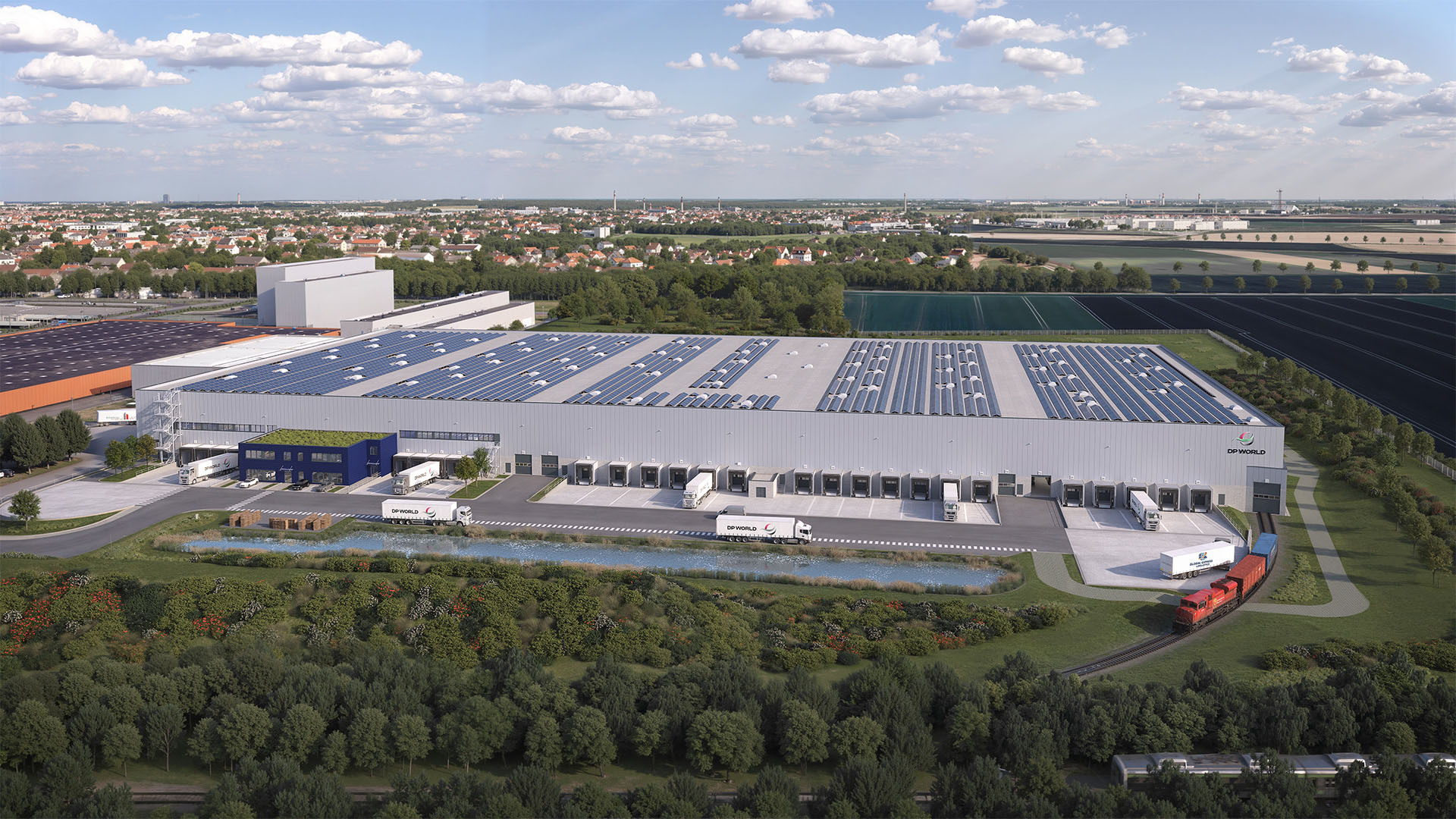
DP World has started a €50 million expansion of its chemicals logistics operation in Wolfenbüttel, Germany, adding a 30,000m² warehouse designed for lithium-ion battery storage alongside a new rail terminal.
The development will broaden an existing chemicals site into a larger multimodal logistics operation serving established agricultural-sector customers while expanding support for automotive supply chains. DP World expects the investment to create up to 80 jobs, with the new facilities scheduled to open next year.
Chemicals logistics has been carried out at Wolfenbüttel since 2008, with the operation becoming part of DP World in 2022. The latest project substantially increases both the physical capacity and the range of materials the site can handle.
The new battery warehouse reflects the growing logistics requirements surrounding European electric vehicle production. Lithium-ion cells and batteries require more specialised handling than conventional automotive components, with storage operations having to account for dangerous-goods classification, product condition, segregation, fire protection, documentation, and emergency procedures.
Those requirements become increasingly significant as battery volumes grow. Cells can move through several stages between manufacture and installation, while returned, damaged, prototype, or replacement products may need different handling arrangements from new production material.
Wolfenbüttel will add that capability to an operation already accustomed to regulated chemical products. The new warehouse forms part of a wider dangerous-goods facility for which German regulators granted an amended operating permit in July.
The rail terminal adds another layer to the project. DP World says it will be the first facility of its type in the region designed for dangerous-goods transport, giving customers direct access to rail alongside the existing road network.
An enclosed loading interface will allow rail cargo to move directly into the building under cover. The arrangement reduces additional handling between the warehouse and railway while making loading less dependent on weather conditions.
For chemicals companies, direct rail access can be particularly useful where material moves in larger volumes or across long distances. Road freight remains essential for flexible collection and delivery, but rail provides another option where dangerous-goods restrictions, driver availability, emissions requirements, or repeated high-volume movements make an entirely road-based operation less attractive.
The value lies in integrating the modes rather than treating them as competing systems. A logistics operator able to receive material, store it under the appropriate regulations, and transfer it to road or rail from the same site can remove intermediate handling stages that otherwise create cost and another opportunity for delay.
DP World is also incorporating lower-energy building systems into the development. Plans include rooftop heat pumps, a large photovoltaic installation, and no fossil-gas connection, while office and welfare areas will use green roofing. The project is intended to meet German Sustainable Building Council standards and EU taxonomy criteria.
Those measures have an operating consequence beyond certification. Large warehouses carry continuous electrical and thermal loads from lighting, ventilation, material handling, fire-protection systems, IT infrastructure, and other services. Specialist chemical and battery storage can add monitoring and environmental-control requirements on top of the ordinary building demand.
The site preparation has already involved substantial civil engineering. Around 90,000m³ of soil was moved before the building work, while archaeological finds, difficult weather, and wider disruption affecting construction complicated the preparatory programme.
General contractor List-Bau is delivering the expansion. The permitting and groundworks demonstrate why industrial logistics capacity cannot be measured simply in square metres of warehouse space: dangerous-goods approvals, rail interfaces, utilities, traffic movements, fire strategy, drainage, structural design, and operating procedures all have to be resolved before a facility can accept its first customer stock.
Once completed, Wolfenbüttel will remain one of 19 chemicals warehouses operated by DP World across Europe. The company expects the expanded site to become its leading European chemicals storage facility and part of its growing German network for lithium-ion battery logistics.
The investment also aligns with DP World’s broader move deeper into contract logistics and specialist warehousing rather than relying solely on ports and terminals. Chemical and automotive customers increasingly expect logistics providers to connect storage, inland transport, customs, and distribution across a wider part of the supply chain.
For Wolfenbüttel, the engineering challenge is now converting a relatively complex design into an operation capable of serving conventional chemicals and a growing battery workload without adding delay or unnecessary handling. The €50 million price tag creates the capacity; utilisation, safe operation, and dependable multimodal throughput will determine whether it earns its keep.