Over the past 15 years, industrial digitalisation has grown up and the stakes have increased fast. The next phase is less about shiny pilots and more about whether factories, warehouses, and utilities can actually run as coherent, data-driven systems without falling over under their own complexity.
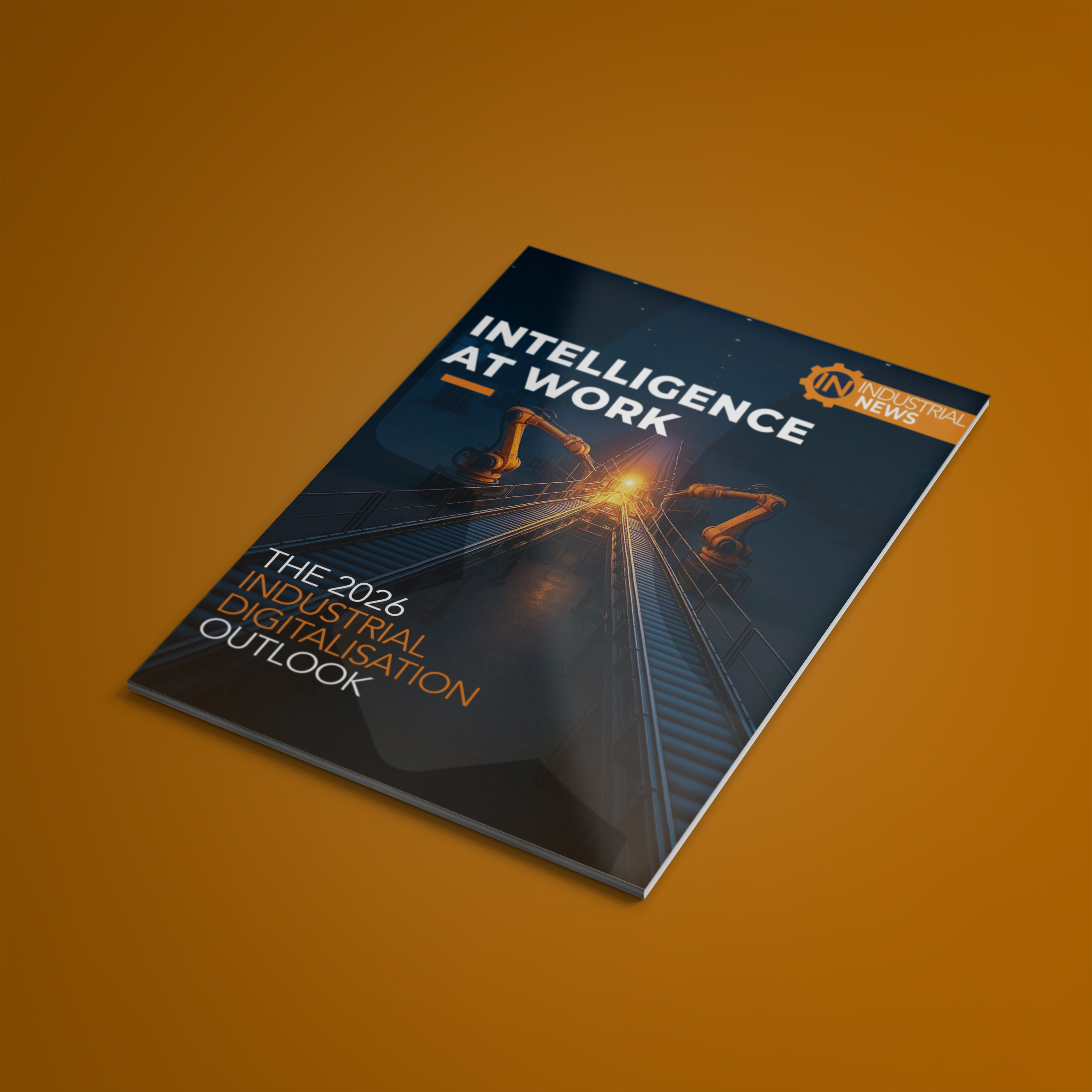
Industrial News’ new “Industrial digitalisation 2026” outlook takes that question head-on. Across manufacturing, logistics, energy, and critical infrastructure, the report tracks a clear pivot from experimentation to operating discipline — where AI, private 5G, edge computing, and industrial IoT only matter if they integrate cleanly with legacy systems, security, and the workforce expected to keep them running.
The analysis follows the whole stack. On the factory floor, it charts the move from deterministic automation to agentic AI, predictive twins, and closed-loop control. In connectivity, it looks at how private 5G and industrial edge are becoming the real production backbone, even as OT exposure and brittle software stacks quietly raise systemic risk. Further downstream, it examines digital logistics, AI forecasting, and compliance-driven visibility, where “end-to-end” remains more marketing claim than operational reality.
Crucially, the report is not written from the sidelines. It brings together insight from Philippe Bartissol, Industrial Equipment Vice President at Dassault Systèmes; Felix Gonzalez, CEO and co-founder of FounderNest; Aadil Kazmi, Head of Artificial Intelligence at Infios; Ian Cairns, Sales Director at TalkTalk Business; Simon Chassar, Interim COO at e2e-assure; and Andrew Power, Head of UKI at Tricentis. Perspective features from Eva Rudin, VP Telecom, IoT & Automotive Cybersecurity at Thales Group, and Richard Jones, VP North EMEA at Confluent, widen the lens to national resilience and data-driven safety on the factory floor.
The result is a grounded view of where digitalisation is genuinely delivering and where 2026 will expose who has built durable capability, and who has simply layered technology on top of old problems.