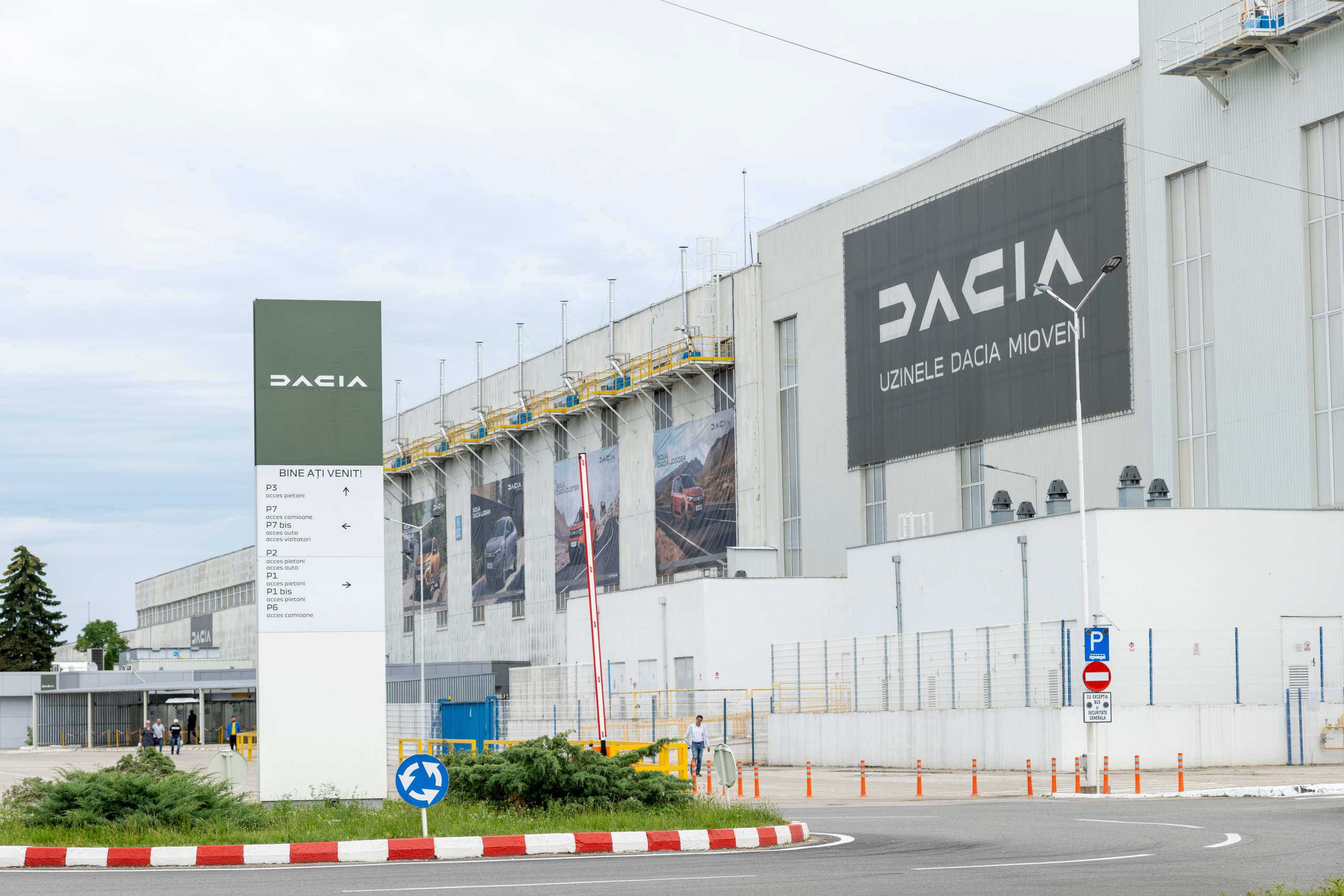
Automobile Dacia is developing an 8.5MW photovoltaic installation at its Mioveni manufacturing complex in Romania, adding on-site renewable generation intended to supply part of the factory’s own electricity demand.
The project has a total stated value of 58.3 million lei including VAT, with almost 10 million lei provided as non-repayable funding through the EU Modernisation Fund. Dacia will fund the remaining investment from its own resources.
The solar plant is expected to generate an average of approximately 9,094MWh a year, equivalent to around 8% of the Mioveni factory’s electricity requirement. All of the generated power is intended for self-consumption within the industrial site.
Across an estimated 20-year operating period, Dacia projects total generation of more than 181,800MWh. Annual greenhouse-gas savings are estimated at approximately 5,565 tonnes of carbon-dioxide equivalent.
The company plans to commission the installation by the end of 2026, although the funding arrangements allow the implementation period to be extended to the end of 2028 if required.
The project is modest compared with utility-scale solar developments, but its industrial significance lies in matching generation directly with a large, comparatively continuous electrical load. Vehicle production consumes electricity across assembly, machining, welding, paint operations, compressed air, ventilation, lighting, logistics, and other plant services.
A factory operating through daylight hours can therefore consume a substantial proportion of photovoltaic output as it is generated rather than relying on export to the wider power market. That can reduce purchased electricity and provide some protection against future power-price volatility.
The stated 8% contribution also puts the limits of on-site renewables into perspective. An 8.5MW solar project represents a sizeable installation, yet more than 90% of Mioveni’s annual electricity demand will still have to be supplied from elsewhere.
Solar generation also varies by time of day, season, and weather, while vehicle-production schedules cannot normally follow the movement of cloud cover. The plant’s internal electrical system therefore has to integrate variable generation without compromising processes where a power disturbance can stop equipment, interrupt automation, or affect product quality.
Energy-management systems can improve that fit by matching flexible electrical loads to periods of higher renewable output. Battery storage could shift generation further into periods when factory demand remains high, although Dacia has not announced a storage element as part of this project.
The economics consequently depend on more than the nominal cost of the panels. Grid tariffs, electricity prices, internal demand profiles, transformer and switchgear requirements, inverter performance, maintenance, module degradation, and the utilisation of generated power will all affect the financial return across the asset’s life.
Mioveni is one of Romania’s most important manufacturing complexes and sits within a wider automotive supply network involving components, logistics, engineering, and services. Energy investments at a site of this scale therefore have a direct operating-cost effect alongside the emissions benefit.
Solar power only addresses part of the factory’s environmental footprint. Vehicle manufacturing also carries emissions from materials, heat, paint processes, inbound components, logistics, and the production of steel, aluminium, plastics, and batteries. On-site electricity generation is one engineering measure among many rather than a complete decarbonisation strategy.
Its advantage is maturity. Photovoltaic technology can be deployed using established equipment and predictable operating methods, while the resulting electricity is immediately useful to a factory whose electrical demand already exists.
The Modernisation Fund contribution improves that investment case by reducing the capital Dacia has to recover from electricity savings. Financed through the EU emissions-trading framework, the mechanism is intended to support energy-system modernisation and lower-carbon investment in eligible member states.
Construction still requires more than installing modules. Inverters, transformers, switchgear, protection, metering, cabling, structural work, and the connection into Mioveni’s internal electrical network must all be commissioned without disrupting vehicle production.
Dacia’s own forecast provides clear performance measures once the plant is operating: roughly 9,094MWh of annual generation, around 8% of factory electricity demand, and approximately 5,565 tonnes of avoided carbon-dioxide equivalent each year. Those numbers will ultimately show whether the installed system performs as designed rather than merely adding another renewable-energy capacity figure to the factory gate.