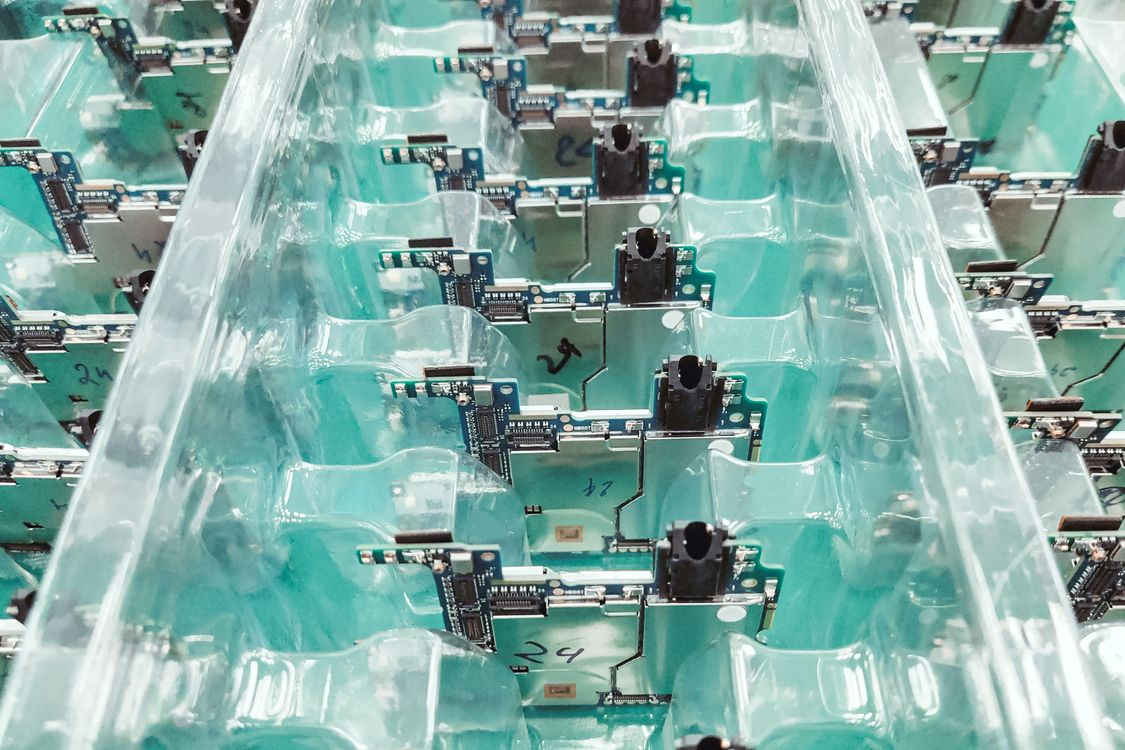
Cicor has secured two multiyear defence manufacturing programmes for production at its facilities in France and the United Kingdom, adding work to its European aerospace and defence operations.
One of the awards comes from a new customer. Cicor expects the two programmes to contribute revenue approaching CHF20 million during 2027, based on current customer programme forecasts, but has not disclosed their total contract values or individual durations.
The company has not identified the customers, the defence equipment involved or the specific electronic assemblies to be manufactured. Its projections therefore establish an expected annual revenue contribution rather than the full value of the programmes over their lifetimes.
The awards expand Cicor’s presence in European defence manufacturing, where complex electronic assemblies commonly require controlled procurement, repeatable assembly processes and documented testing. The exact requirements will depend on the product and the contractual specifications agreed with the customers.
Cicor’s business combines electronics development, manufacturing and supply chain services for customers in aerospace and defence, medical technology and industrial markets. Its European facilities support the production of assemblies designed for a wide range of operating environments.
Defence electronics may be exposed to vibration, temperature changes, mechanical shock or long periods of service. Components and assemblies must therefore be designed and manufactured to satisfy the specific environmental and performance requirements of the intended application.
Production assurance begins with the control of purchased components and materials. Part identification, approved sourcing routes and records of component batches can be important where assemblies must remain traceable over a long service life.
Assembly processes introduce further variables, including soldering conditions, handling, inspection and functional testing. A manufacturer needs to demonstrate that these operations are repeatable and that departures from an approved process can be investigated.
Electronic assemblies may also require configuration management. A design revision or component substitution must be assessed against the approved specification, particularly when equipment is installed across multiple vehicles, aircraft or other defence systems.
Maintaining such records can become more difficult when a programme runs for several years. Components can become unavailable or enter end-of-life status, while the customer may require a controlled route for approving alternatives without changing the intended performance.
Cicor has not stated which technical standards apply to its latest awards, whether new manufacturing lines will be commissioned or how the planned output is divided between its French and British operations. Those details cannot be inferred from the sector in which the customers operate.
The programmes follow earlier aerospace and defence awards that expanded the company’s manufacturing work in Europe. They are separate contracts rather than extensions that have been confirmed to involve the same customer or product platform.
Orders received exceeded recognised sales during the first nine months of 2026, with Cicor reporting a book-to-bill ratio of 1.17. The measure compares the value of incoming orders with sales over the period and provides an indication of the group’s order position.
A book-to-bill ratio above one does not guarantee that orders will be delivered on schedule or at a particular margin. Revenue depends on customer call-offs, production activity and delivery conditions, while profitability is influenced by material costs, manufacturing performance and the terms of each agreement.
The projected CHF20 million contribution during 2027 will require production to progress in line with the current programme expectations. Cicor has not supplied a quarter-by-quarter timetable or the number of assemblies expected to be delivered.
The company has also completed the acquisition of a manufacturing site in Senai, Johor, Malaysia. That transaction expands Cicor’s production network in Southeast Asia but is not identified as a manufacturing location for the two newly awarded European defence programmes.
Alongside the Malaysian acquisition, Cicor has entered into a strategic supply agreement with EDMI, which it expects to generate annual revenue exceeding US$50 million. The EDMI revenue projection relates to a separate commercial arrangement and should not be added to the European defence programme figure as though it were a combined contract value.
Further investment is planned at the Senai facility as Cicor integrates the operation into its international manufacturing network. The company has not published the detailed equipment programme or investment timetable for that site.
A manufacturing network operating across several countries can offer customers different production and sourcing options. Transferring an established electronics programme between locations is not automatic, however, because process validation, quality approvals, technical data controls and material availability may restrict the choice of facility.
Defence contracts may also be subject to national controls on the transfer of technology or equipment. The new French and British awards should therefore be considered independently of the Malaysian expansion unless the company discloses a specific operational connection.
Cicor has described the European awards as supporting its strategy of expanding aerospace and defence activities. Chief executive Alexander Hagemann linked the new customer relationship and the completed Senai acquisition to growth across the group’s manufacturing operations.
Cicor expects production deliveries under the two awards to contribute revenue approaching CHF20 million in 2027. The customer identities, total contract values and longer-term manufacturing volumes remain undisclosed.