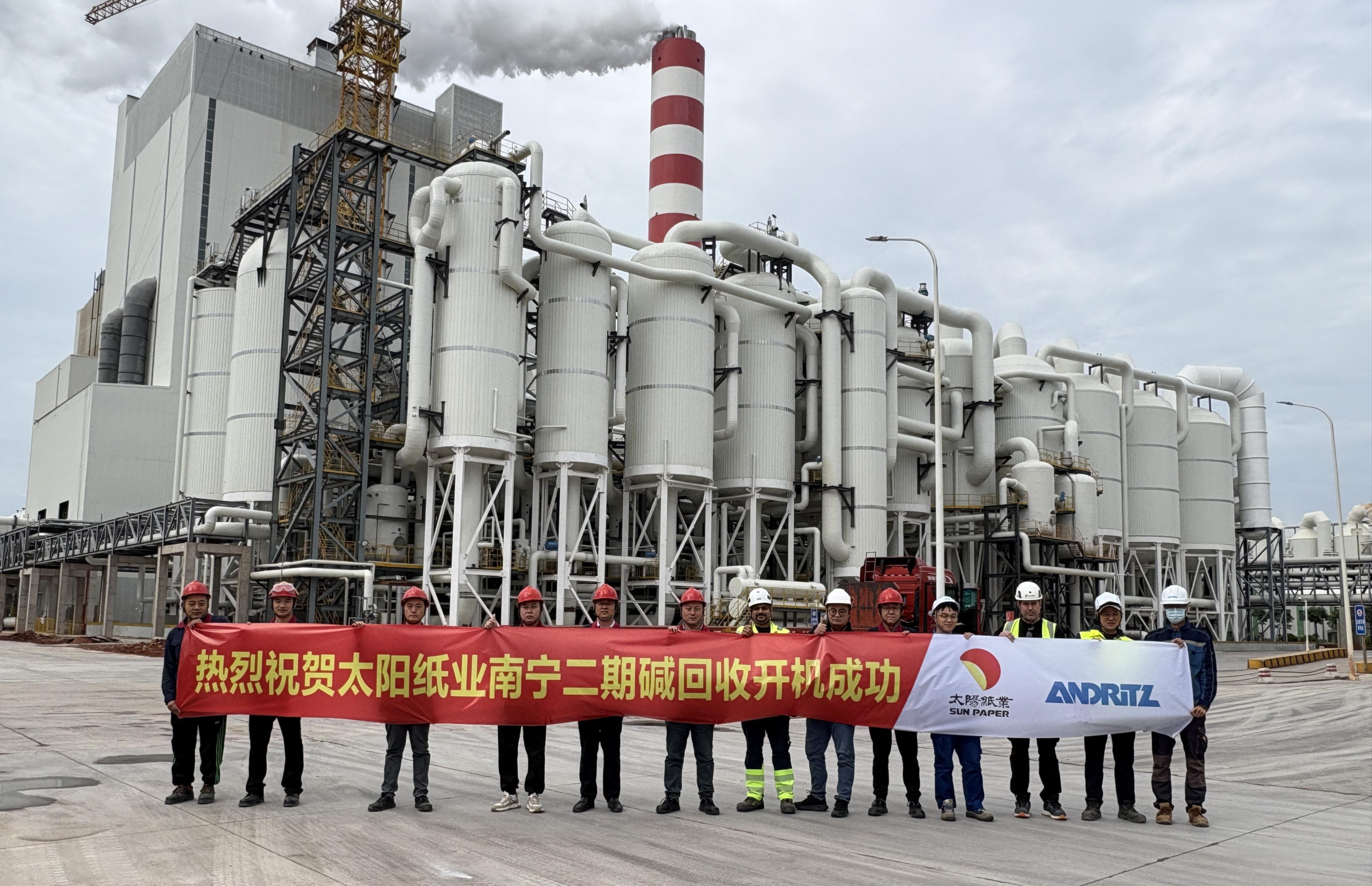
ANDRITZ has secured repeat orders worth a mid-double-digit-million-euro sum to supply process technology for Nanning Sun Paper’s third pulp production line and its new PM21 paper machine in Guangxi, China.
Start-up is scheduled for mid-2027, with the orders already included in ANDRITZ’s second-quarter 2026 intake. The package covers wood-chip handling, fibre processing, chemical recovery, refining, screening, stock preparation, approach flow, and broke handling, making it a multi-process mill project rather than a single equipment delivery.
At the front of the pulp line, ANDRITZ will provide three 360-degree stacker reclaimers and four gyratory chip screens. These systems are intended to maintain a homogeneous and continuous chip supply into the fibre process, where variations in chip size, moisture, and feed consistency can influence cooking performance further downstream.
The main fibreline is designed for high-kappa pulp and will have stated capacities of 1,500 air-dry tonnes per day for softwood and 2,200 air-dry tonnes per day for hardwood. The process includes chip feeding, continuous cooking, refining, screening, and multiple washing stages using drum-displacer, wash-press, and vacuum-drum technologies.
Washing performance is commercially important because pulp leaving the cooking process contains dissolved organic material and spent process chemicals that need to be separated from the fibre before subsequent stages. Effective washing can reduce freshwater demand and chemical losses while lowering the load placed on evaporation and recovery equipment.
The chemical-recovery package is substantial in its own right. ANDRITZ will supply a recovery boiler with a black-liquor firing capacity of 2,500 tonnes of dry solids per day, operating at steam conditions of 105 bar(g) and 515°C. The boiler is designed to recover process chemicals while converting energy in concentrated black liquor into steam and electricity.
A white-liquor plant with an integrated circulating fluidised-bed gasifier is also included. ANDRITZ says the gasifier will enable fossil-free operation of the lime kiln, alongside recausticising and other systems used to regenerate cooking chemicals for reuse in the pulp process.
That integration illustrates why a modern pulp mill is as much a chemical and energy facility as a fibre-processing plant. Wood passes through the visible production route, but site economics also depend on recovering cooking chemicals, managing water, using process residues effectively, and balancing steam and electricity across a continuously operating system.
The PM21 portion of the order adds advanced refining and screening technology together with complete approach-flow and broke-handling systems. Approach-flow equipment conditions and delivers stock to the paper machine under stable operating conditions, while broke systems recover usable fibre from material generated during sheet breaks, grade changes, and other interruptions.
These systems are less conspicuous than the paper machine itself but can influence fibre yield, product consistency, and machine stability. At industrial scale, relatively small variations in stock cleanliness, flow, or recovered fibre can accumulate into significant material and operating-cost differences over a full year.
Nanning Sun Paper was established in 2022 to develop an integrated forest, pulp, and paper industrial park with planned annual capacity of 5.25 million tonnes. The latest equipment package therefore sits within a much larger manufacturing complex rather than representing a stand-alone mill upgrade.
ANDRITZ already has a substantial installed base at the site, making the latest award a repeat order rather than a first engagement. The supplier previously delivered fibreline, lime-kiln, chemical-recovery, wood-processing, and stock-preparation equipment for earlier stages of the Nanning programme.
Repeat supplier relationships can reduce some integration risk because operating and maintenance teams already understand equipment architecture, controls, spares, and service arrangements. They can also deepen dependence on one technology provider, increasing the importance of lifecycle support, component availability, and long-term compatibility as the installed base grows.
The recovery boiler and gasified lime-kiln arrangement are particularly relevant to the industry’s energy balance. Pulp mills already recover substantial energy from black liquor and biomass residues, so further reductions in fossil-fuel use increasingly depend on the performance of specific process islands and how effectively they are integrated into the wider steam and power system.
Scale amplifies those engineering decisions. At fibreline capacities measured in thousands of tonnes each day, marginal reductions in water, chemicals, steam, fibre losses, or downtime can become significant annual figures. The reverse is equally true: a recurring bottleneck in one process area can restrict output from equipment worth far more than the component creating the constraint.
ANDRITZ has framed the supplied technologies around efficiency, availability, and lower consumption, but those remain supplier performance expectations until the new line is operating. The immediate industrial fact is a sizeable repeat equipment order spanning most of the pulp and stock-preparation chain, with commissioning now scheduled for mid-2027.
Once the equipment is in service, Sun Paper will have a more useful test than the catalogue specifications provide. Wood handling, fibre processing, recovery, refining, stock preparation, and PM21 will have to perform as one plant, where a highly efficient component offers limited comfort if the process immediately upstream or downstream cannot keep pace.