UK manufacturing output grew at its fastest pace in 27 months during November, with new demand associated with artificial intelligence data centres, defence spending and food production supporting activity despite weaker growth across the wider private sector.
The flash survey compiled by S&P Global recorded a manufacturing output index of 54.2, up from 53.6 in October and its highest reading since August 2024. The headline manufacturing purchasing managers’ index edged down from 52.8 to 52.7, reflecting differences between production performance and the other components used to calculate the wider index.
Some manufacturers attributed stronger sales to the construction of facilities supporting AI computing. Other respondents reported increased orders associated with defence expenditure and greater demand from food and drink customers. The survey did not quantify the contribution made by each market, but the combination provided a source of industrial activity while service sector growth slowed.
The manufacturing output index measures whether production is increasing or decreasing across the businesses surveyed. A reading above 50 indicates expansion compared with the preceding month; it does not describe the percentage change in physical production or the total value of goods manufactured. November’s figure therefore indicates a broader and faster improvement in reported factory output, rather than a 4.2% increase in production volumes.
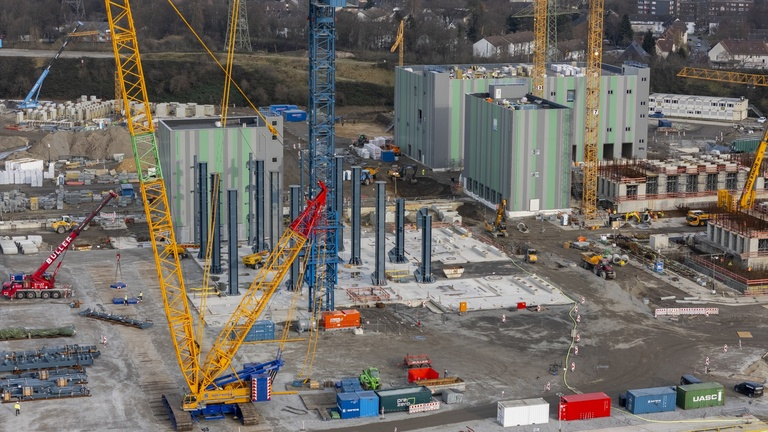
Investment in AI computing creates requirements extending well beyond the purchase of processors and server equipment. Data centres need electrical distribution infrastructure, power conversion equipment, cooling machinery, protective systems and building services capable of supporting installations with substantial and relatively continuous electricity demand. Manufacturing contracts for these products can be placed during construction, well before the completed computing facilities enter service.
Large electrical systems require several stages of industrial production and testing. Switchgear, transformers, control assemblies and associated equipment must be manufactured to the relevant specifications before being incorporated into site electrical networks. Their delivery schedules also depend on component availability, factory capacity and the time needed for inspection and acceptance testing.
Thermal management introduces a separate set of engineering requirements. Servers convert a large proportion of their electrical input into heat, which must be removed to maintain suitable operating conditions. Cooling plant, heat exchangers, pumps and control systems therefore form part of the physical infrastructure associated with new computing capacity. The survey does not identify which of these products accounted for the reported increase in orders.
Defence procurement can support another group of manufacturing activities, including machining, fabrication, electronics, specialist materials and the assembly of complex equipment. Production associated with defence programmes often involves long planning horizons and qualification requirements, although the November flash PMI does not provide a separate measure of defence manufacturing output.
Demand from food and drink manufacturers can likewise support producers of processing equipment, ingredients, packaging materials and other industrial products. The survey identifies the sector as another source of stronger sales but does not distinguish between orders for production machinery and purchases of materials consumed during normal manufacturing operations.
The improved factory performance contrasted with softer activity in services. The UK composite output index, covering manufacturing and services, declined from 52.9 in October to 52.3 in November. The services business activity index fell from 52.8 to 52.0, its weakest reading for five months, although it remained above the threshold indicating contraction.
Business respondents cited pressure from living costs, borrowing expenses and subdued property market demand. Services businesses also reported weaker export orders, including reduced sales to European customers. Manufacturing consequently accounted for an increased share of the momentum visible in the overall private sector survey.
Employment did not follow the improvement in production. Staffing across the surveyed private sector declined in November after a tentative rise in October, with job reductions concentrated in services. Respondents identified labour costs and efforts to improve productivity as reasons for leaving some vacancies unfilled. Some also referred to increased automation and AI adoption when explaining staffing decisions.
Higher production alongside weaker employment does not by itself establish that factories have achieved a particular productivity improvement. Businesses can increase output by making greater use of existing capacity, changing shift patterns or completing orders that have been delayed. The PMI provides an indication of changing activity rather than a direct measure of output per employee.
Nevertheless, the divergence between production and hiring illustrates the operating choices facing companies with substantial fixed assets. Once machinery, facilities and engineering teams are in place, additional orders can sometimes be processed without an equivalent increase in staffing. That relationship depends on available capacity, labour requirements, material supplies and the ability of equipment to operate reliably at higher utilisation.
Cost pressures remained significant. Businesses continued to report increases in energy, fuel, raw material, technology and wage expenses, although the overall rate of input cost inflation eased to its lowest since August. Prices charged to customers also rose more slowly than in recent months, while remaining elevated compared with longer-term survey norms.
For manufacturers, the relationship between input costs and selling prices influences the commercial benefit of higher production. A stronger order book does not automatically improve margins where additional output requires expensive materials, increased energy consumption or premium transport arrangements. The ability to recover those costs depends on contracts, market conditions and the characteristics of the products being supplied.
S&P Global’s assessment of the October and November surveys indicated that the UK economy was on course for approximately 0.6% growth during the fourth quarter. The estimate is based on historical relationships between PMI readings and economic output; it is not an official GDP result, and performance in December could change the final quarterly picture.
The November data consequently show a manufacturing sector benefiting from identifiable areas of capital investment while other parts of the economy face weaker demand. The final manufacturing PMI and subsequent production statistics will provide further evidence of whether the improvement can be sustained and how widely it extends beyond the industrial suppliers currently benefiting from data centre, defence and food-related orders.