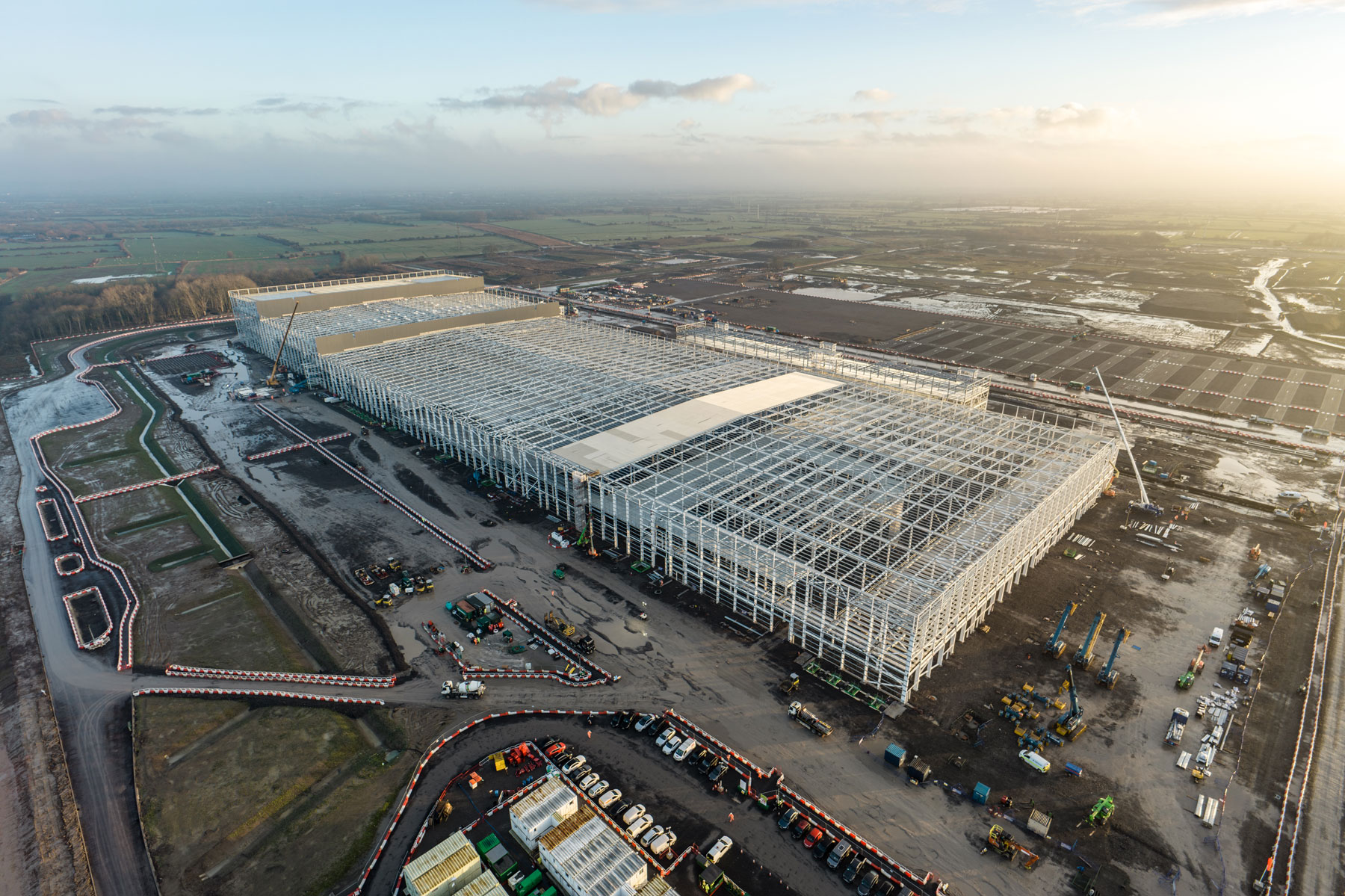
Agratas faces a further change to the construction arrangements for its £5.2 billion battery gigafactory near Bridgwater, Somerset, after reports that principal contractor TSL has decided to withdraw from the project.
TSL is expected to leave within approximately two to three months following unsuccessful negotiations over commercial terms, according to three sources familiar with the development cited by the Guardian. The reported decision has not been formally confirmed by both contracting parties.
The contractor replaced Sir Robert McAlpine in June 2026, meaning its expected withdrawal would represent the second change of principal contractor within approximately five months. The project is now approaching a stage where building works, mechanical and electrical installation, and preparation for manufacturing equipment must be closely coordinated.
NG Bailey, which is already involved in mechanical, electrical and plumbing work, has been identified in construction industry reporting as a possible successor. The company declined to confirm whether it would assume responsibility for completing the wider project, referring questions to Agratas.
Neither a new principal contractor appointment nor the full scope of any prospective transfer has been formally established. Agratas maintains that the project remains on course to meet its customer commitments and has not announced a further revision to the planned production timetable.
The factory is being developed by the Tata Group-owned battery company as a major source of cells for electric vehicles. Jaguar Land Rover and Tata Motors are intended to be its initial customers, linking the project to the group’s automotive manufacturing operations.
Agratas has previously outlined an eventual annual production capacity of approximately 40GWh at Somerset. That figure describes the intended scale of the completed gigafactory rather than capacity currently available for commercial manufacturing.
The plant was initially expected to begin production in 2026. Its timetable was subsequently revised, and January 2028 is now the latest reported target for the start of battery production. A further delay has not been formally announced following the contractor reports.
Constructing a battery gigafactory involves a combination of conventional industrial building work and specialised manufacturing installation. The building structure must accommodate production equipment, material handling systems and services required to support the selected cell manufacturing processes.
Cell production introduces demanding operating requirements. Electrode preparation, coating, drying, assembly, electrolyte filling and subsequent testing depend on controlled processes, with the exact machinery and environmental conditions varying according to the battery chemistry and cell format.
Electrode coating, for example, requires material to be applied consistently to a metallic current collector before drying and further processing. Variation in the coating or its treatment can influence the performance of the electrode and affect the quality of cells manufactured later in the process.
Other production stages require careful handling of materials and components. Battery assembly and electrolyte-related operations can impose particular requirements for cleanliness and moisture control, depending on the technology being manufactured.
These requirements affect the building services installed around the production machinery. Electrical distribution, ventilation, environmental control, process cooling and other utilities must be designed and commissioned to support equipment operating within its specified conditions.
The installation sequence is consequently important. Manufacturing equipment cannot always be positioned and connected until the relevant building areas, structural provisions and services have reached an appropriate stage of completion.
Changes to the main construction contractor can complicate this process because responsibility for work packages, documentation and outstanding activities may need to be transferred between organisations. The effect depends on the contractual arrangements, the condition of completed works and the extent of any overlap between outgoing and incoming contractors.
A handover may involve reviewing inspection records, identifying incomplete work and confirming which organisation is responsible for resolving defects. Equipment installation plans and commissioning schedules may also need to be reconciled with the revised construction arrangements.
Those activities become more demanding as the number of specialist contractors working on a site increases. Production machinery suppliers, electrical contractors, ventilation specialists and construction teams may require access to the same areas at different stages of the programme.
Failure to coordinate that work can restrict access or delay equipment commissioning even where individual suppliers are ready to proceed. The consequences depend on the actual stage reached by each part of the Somerset development, which has not been fully detailed in the latest reporting.
Construction progress has continued at the site. The main building structure has advanced, while National Grid has undertaken work on electrical infrastructure intended to support the substantial power requirements of the completed factory.
Progress on those assets does not establish when the production machinery will be ready to operate. A battery factory must still complete installation, testing and process qualification before it can supply cells that meet a vehicle manufacturer’s required specification.
Manufacturing qualification involves demonstrating that equipment and procedures can produce consistent results, not simply that machinery can complete an individual production cycle. Inspection, traceability and testing arrangements must support decisions about whether each manufactured product meets the customer’s requirements.
Production ramp-up introduces additional challenges. Output may increase gradually as equipment settings are refined, staff develop operating experience and the proportion of acceptable cells produced by the manufacturing process improves.
The factory therefore cannot be assessed solely by the date on which its buildings are completed. Equipment commissioning, qualification and subsequent production performance will determine when cells become available to customers in the required quantities.
The UK government has committed financial support of up to £380 million for the development, reflecting its importance to domestic battery manufacturing. That commitment should not be treated as an amount already paid in full, and the latest contractor reporting does not establish a change to the funding arrangement.
The wider industrial objective is to create a British manufacturing source for batteries used in electric vehicles. Domestic production can reduce dependence on imported finished cells, although the extent of the supply chain benefit will also depend on the sourcing of battery materials and components.
Suppliers involved in construction and equipment installation require clarity over the remaining project schedule. Changes to contractual responsibility can affect the timing of manufacturing deliveries, site labour allocation and the completion of work that must precede equipment testing.
The next confirmed appointment for the main construction role will therefore be an important development. It will establish responsibility for coordinating the remaining building and installation activities and provide a basis for assessing the programme leading towards the current January 2028 production target.
For now, TSL’s expected departure remains a reported development rather than a completed transfer, and NG Bailey’s potential expanded role has not been confirmed. Agratas has not formally moved its production start date, leaving the effect of the contractor situation on the remaining construction and commissioning programme unresolved.