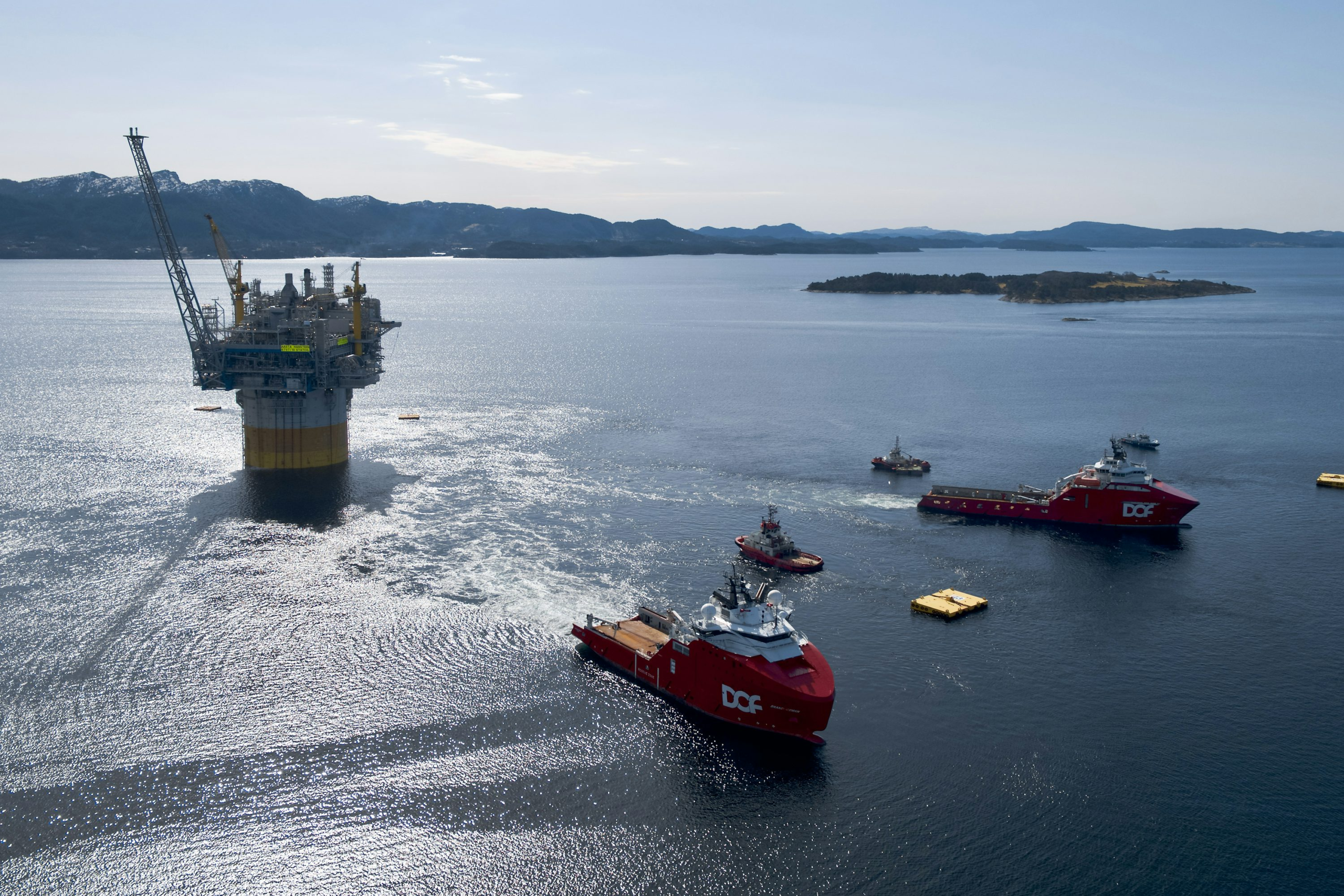
AF Offshore Decom and Heerema Marine Contractors have added another major UK Continental Shelf platform to their decommissioning workload, with a contract covering approximately 38,500 tonnes of topside facilities.
The engineering, preparation, removal, and disposal programme begins with offshore surveys before moving into detailed engineering and preparatory work over a period of up to six years. Heavy-lift removal will follow as a multi-year offshore campaign, after which the structures will be transported to AF Environmental Base Vats in Norway for dismantling, recycling, and disposal.
AF Gruppen describes the project as the second contract awarded to the consortium within a short period, giving AF Offshore Decom and Heerema a growing pipeline of large North Sea structures requiring both offshore construction expertise and substantial onshore dismantling capacity.
Engineering dominates the early years because ageing offshore installations cannot be removed simply by reversing their original construction sequence. Platforms may have undergone decades of modifications, repairs, equipment replacement, corrosion, additional pipework, structural changes, and alterations to operating systems since their original drawings were produced.
Survey teams therefore need to establish the actual condition and configuration of the installation before detailed removal engineering can be finalised. Weight, centre of gravity, structural integrity, lifting points, access, residual materials, and the condition of connections between modules all influence the eventual lift strategy.
That work can reveal large differences between historic design documentation and the structure that exists offshore. Decommissioning engineers consequently depend on laser scanning, structural survey, inspection data, engineering records, and physical verification to build a model accurate enough for cutting and lifting operations.
Preparatory work can include isolation, cleaning, removal of obstructions, structural reinforcement, installation of lifting points, cutting of connections, and modifications required to give heavy-lift equipment safe access. Performing that work while an installation remains offshore exposes the programme to vessel availability, weather, personnel logistics, and the cost of every additional day at sea.
Heerema’s heavy-lift vessels will carry out the eventual removal campaign. Very large lifts can reduce the number of offshore operations compared with dismantling a platform into many smaller pieces, but they demand precise engineering around load paths, crane capacity, lifting geometry, weather limits, and the structural behaviour of modules that may no longer match their condition when installed.
Once landed at Vats, the project becomes an industrial dismantling operation. Large steel structures have to be secured, cleaned where necessary, cut into transportable sections, and separated into material streams for recycling or controlled disposal.
AF Environmental Base Vats has developed around that reverse-production process. Instead of converting steel, equipment, and fabricated modules into an offshore asset, the facility receives complete installations and progressively reduces them into metals, reusable equipment, and waste streams that can be handled safely.
The economics depend heavily on material recovery. Offshore platforms contain large quantities of steel with established recycling routes, but they also contain cables, coatings, insulation, residual hydrocarbons, process materials, hazardous substances, and mixed equipment that require more controlled handling.
AF has built substantial experience processing offshore structures at the Norwegian base, while its repeated work with Heerema allows offshore removal planning to be linked directly with the capabilities of the dismantling yard. That continuity is useful because choices made during cutting and lifting affect how easily modules can subsequently be landed and broken down ashore.
North Sea decommissioning is developing into a long-duration industrial market as producing infrastructure reaches the end of its economic life. Stopping production does not end an operator’s engineering obligations: wells need to be abandoned, hydrocarbons removed, systems made safe, and infrastructure dismantled or otherwise dealt with under the relevant regulatory regime.
The resulting workload extends well beyond offshore vessel contractors. Structural engineering, surveying, fabrication, specialist cutting, marine logistics, waste handling, environmental services, heavy transport, recycling, and metals processing all form part of the decommissioning supply chain.
Long project durations also mean that contractors need yard capacity and specialist personnel well before the offshore lift campaign begins. A six-year engineering and preparation horizon can overlap with several other removal programmes, creating scheduling pressure around both heavy-lift vessels and dismantling facilities.
The latest verified project therefore adds more than 38,500 tonnes to a single contractor’s order book. It is another indication that the mature North Sea is creating a substantial engineering industry around taking infrastructure apart — a process that is neither quick nor simple merely because the asset has finished producing oil or gas.