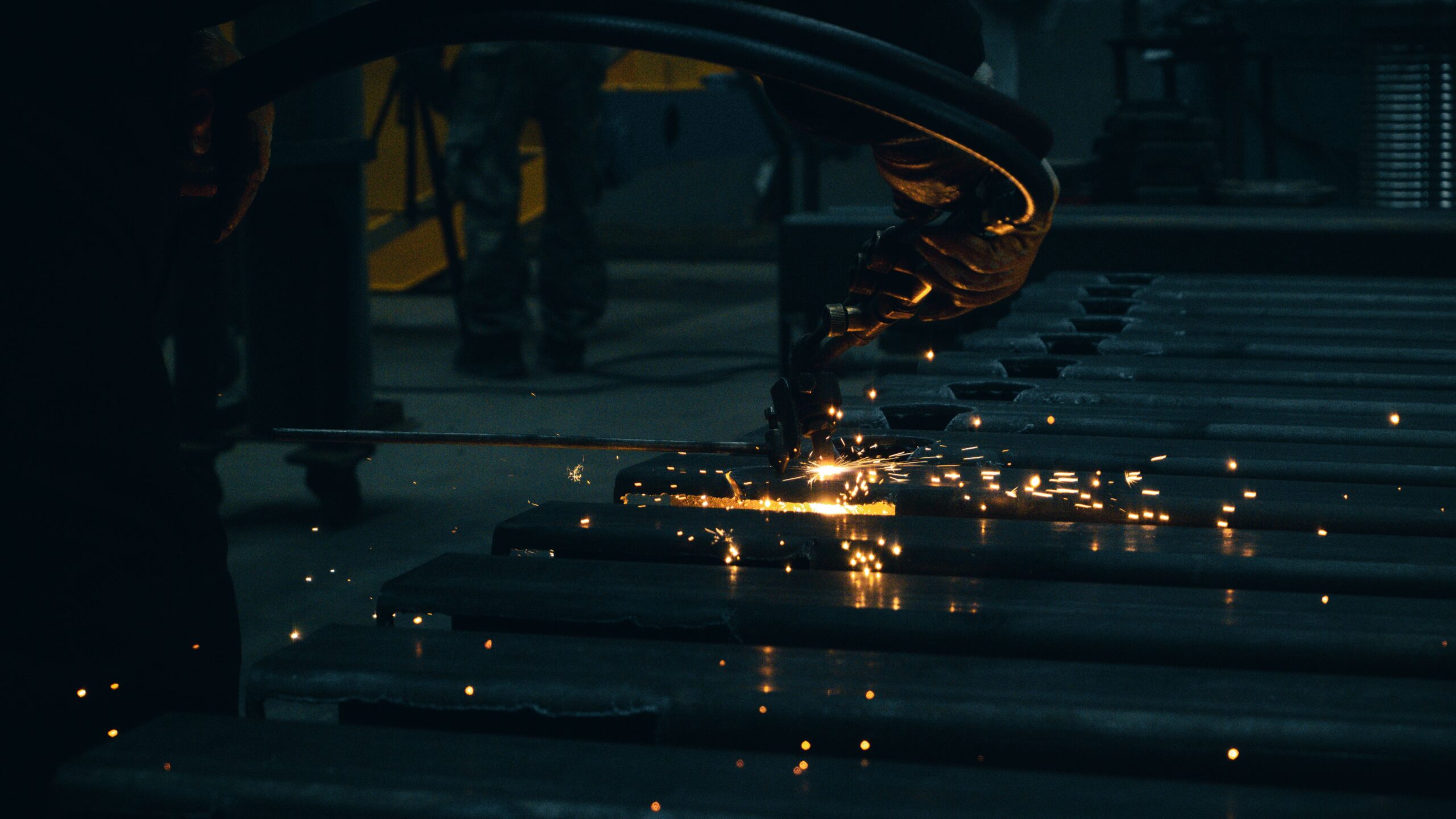
Mill Steel Company has acquired the assets of Chicago Steel and affiliate Lexington Steel, adding a 300,000 sq ft processing facility in Gary, Indiana, to its national network of flat-rolled metals operations.
The facility includes tension levelling, slitting and cut-to-length equipment, alongside temperature-controlled processing and storage areas. Daily road and rail shipping services connect the operation with steel producers and industrial customers across the American Midwest.
Mill Steel intends to operate the site as part of its existing service centre network, providing toll processing as well as its established distribution and material processing services. The transaction expands the company’s presence in northwest Indiana, close to major steel mills and manufacturing customers.
The acquisition concerns specified business assets, including the Gary processing operation. Mill Steel has not described the agreement as a purchase of every activity undertaken by the two former businesses, and financial terms have not been disclosed.
The centrepiece of the facility is a tension levelling line combining cleaning, edge trimming, levelling and re-oiling in a single processing sequence. The equipment is used to improve the shape and flatness of steel strip before it is delivered for downstream manufacturing.
Flatness affects the way material behaves when it enters stamping presses, automated cutting systems, roll forming machinery and other industrial processes. Steel strip containing waves, buckles or uneven shape can be difficult to feed consistently and may create problems where accurate positioning is required.
These defects can arise from differences in strain across the width of the material during rolling, cooling or later processing. Some areas of the strip may effectively be longer than others, causing the material to deviate from a flat shape when the stresses are released.
Tension levelling uses controlled tensile force and repeated bending to modify the distribution of strain. The material passes through a sequence of rollers while under tension, allowing the processing equipment to improve its shape within the mechanical limits of the steel being treated.
The achievable result depends on material thickness, strength, incoming shape and the operating conditions of the levelling line. A process suitable for relatively low-strength material may produce different results when the steel has a higher yield strength or requires greater force to deform.
Mill Steel specifies a flatness guarantee of five I-units for material with yield strength up to 40 ksi. That qualification is important: the company also identifies the line as capable of improving the shape of certain ultra-high-strength products, but the five I-unit guarantee must not be applied automatically to every grade processed at the facility.
I-units are a measure used in steel processing to describe flatness variation. They allow customers to specify requirements for strip shape rather than relying solely on visual assessment of whether the material appears flat.
The tension levelling equipment can process material between 0.010 and 0.135 inches thick, with widths up to 72.75 inches and coils weighing as much as 74,000 pounds. These limits describe the line’s stated handling range; suitable operating conditions still depend on the characteristics of the individual material.
Cleaning and re-oiling form part of the integrated sequence. Removing contaminants can prepare the surface for subsequent operations, while a controlled oil application may provide protection during storage and transport or support later processing, depending on the customer’s specification.
Edge trimming establishes the required strip width and removes material from the sides of the coil. Bringing these operations together can reduce the need to move material between several processing machines, although actual throughput and handling requirements depend on the production schedule.
The Gary facility also contains two slitting lines with a nominal width of 72 inches. Slitting converts wide coils into narrower strips by passing the material through rotary cutting tools positioned to produce the customer’s required widths.
One line incorporates a strand extension leveller and accepts material between 0.015 and 0.170 inches thick, with coil weights up to 77,800 pounds. Mill Steel specifies slit widths beginning at one inch and a tolerance of plus or minus 0.005 inches for that equipment.
The second 72-inch slitter processes material between 0.055 and 0.135 inches thick, with a maximum stated coil weight of 50,000 pounds. The different handling ranges allow material to be allocated according to dimensions, processing requirements and line availability.
Slitting quality depends on the cutting arrangement and material characteristics. Blade condition, cutting clearance, strip tension and recoiling behaviour can affect edge quality and dimensional consistency, particularly where customers require narrow tolerances for subsequent manufacturing operations.
A cut-to-length line provides a further processing option by converting coiled material into flat blanks. The Gary equipment can produce sheets between 16 and 192 inches long and up to 60 inches wide, within its specified material thickness range of 0.024 to 0.125 inches.
Cut-to-length processing involves uncoiling, straightening, measuring and cutting material before the finished blanks are handled or stacked. Customers can specify sheet dimensions suited to their machinery rather than undertaking all the conversion work after receiving a full coil.
The plant handles a broad range of flat-rolled products, including advanced high-strength steels, cold-rolled material, hot-rolled pickled and oiled steel, galvanised products, coated steels, stainless steel and aluminium.
Processing different products requires attention to their surface condition and mechanical characteristics. Equipment settings suitable for one material may need to change when the incoming coil has a different strength, thickness, coating or dimensional specification.
Temperature-controlled processing and storage provide additional facilities for managing material before and after conversion. Mill Steel has not disclosed the temperature set points or identified specific products for which controlled storage is required.
The location near the Greater Chicago steel industry offers transport advantages for customers in Illinois, Wisconsin and Iowa. Mill Steel expects the facility to support shorter regional lead times and more competitive freight arrangements, while making its processing capabilities available across the national customer network.
Toll processing forms part of the service model. Under these arrangements, a customer can retain ownership of its material while a specialist operator performs agreed manufacturing or finishing activities. This requires accurate inventory records, identification and traceability to maintain control of material passing through the facility.
The company has not disclosed additional employment commitments or the amount of annual processing volume expected from the acquired assets. The confirmed expansion consists of the Gary facility, its established machinery and its integration into Mill Steel’s processing and distribution operations.
The acquisition brings Mill Steel’s nationwide production footprint to eight facilities. Its next operational task will be to incorporate the Gary equipment, logistics and customer services into that network while maintaining the specific processing capabilities established at the Indiana site.