thyssenkrupp Steel has launched a revised hydrogen procurement tender for its direct reduction plant in Duisburg, seeking an initial supply of approximately 20,000–40,000 tonnes annually with deliveries planned to begin in 2031.
Potential suppliers have until 17 December 2026 to register for the process, after which the bidding stage will begin. The volume ultimately contracted will depend on the commercial terms offered and the steelmaker’s assessment of the available supply proposals.
The tender forms part of a changed strategy for introducing hydrogen into the company’s tkH2Steel decarbonisation project. Rather than relying on substantial hydrogen supplies from the plant’s initial commissioning, thyssenkrupp intends to begin operating the direct reduction process with natural gas and progressively introduce hydrogen from 2031.
The adjustment follows revised funding arrangements approved in October 2026, reflecting the slower development and high cost of the hydrogen market. The company has retained its longer-term objective of operating the plant on hydrogen while changing the initial procurement volumes and the timetable for replacing natural gas.
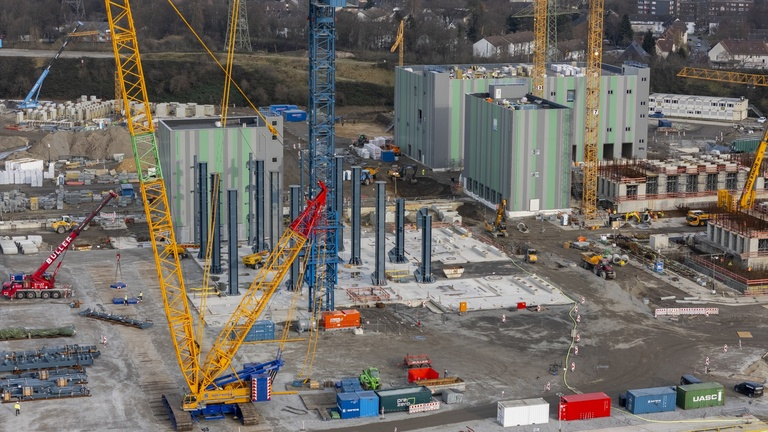
The Duisburg project involves construction of a direct reduction plant designed to produce approximately 2.5 million tonnes of direct reduced iron annually, together with two downstream smelters. The smelters are intended to produce around 2.3 million tonnes of hot metal each year for further processing within the existing steelworks.
This arrangement is designed to replace part of the site’s conventional blast furnace ironmaking capacity while retaining established downstream steel production facilities. It therefore changes the method used to produce iron without requiring every subsequent steelmaking process to be replaced at the same time.
Conventional blast furnace production relies on carbon-rich materials, including coke, to help remove oxygen from iron ore and provide the heat needed for the process. Carbon participates in the chemical reactions, creating substantial carbon dioxide emissions during ironmaking.
Direct reduction uses a different process. Iron ore is exposed to reducing gases that remove oxygen from the material without melting it inside a conventional blast furnace. The resulting product contains metallic iron that can be transferred to suitable downstream equipment.
Hydrogen can act as the reducing gas, reacting with oxygen from iron oxides to produce water. A reduction process operating with natural gas instead uses gases containing hydrogen and carbon monoxide, with carbon dioxide emissions remaining associated with the chemical reactions and supporting operations.
The choice of reducing gas consequently changes the emissions associated with producing iron. thyssenkrupp estimates that using natural gas in the new plant could reduce carbon dioxide emissions by more than 50% compared with its conventional blast furnace route, while full hydrogen operation has the potential to avoid approximately 3.5 million tonnes annually.
Those figures describe expected operating configurations, not emissions reductions already achieved. The actual environmental performance will depend on the completed plant’s operation and, where hydrogen is used, the processes and energy sources involved in its production and delivery.
Direct reduced iron also differs from conventional blast furnace hot metal in its physical form. The downstream smelters will provide a route for converting the reduced material into a form suitable for integration with the steelworks’ existing production processes.
That integration is central to the project’s engineering design. Steel manufacturers need to maintain control of product composition and quality while changing the route used to produce the iron entering subsequent steelmaking stages. The smelters provide an interface between the new reduction system and established plant infrastructure.
The revised hydrogen strategy reflects the practical difficulty of securing large quantities of suitable gas before sufficient production and transport infrastructure exists. A direct reduction plant operating at industrial scale requires reliable supplies that match its consumption profile, rather than occasional deliveries of hydrogen produced for smaller applications.
thyssenkrupp previously pursued a considerably larger hydrogen procurement programme but suspended that tender after the market indicated prices above the company’s expectations. The new tender reduces the initial requirement and shifts supply towards the period when hydrogen infrastructure and production capacity are expected to be more developed.
In an earlier assessment, the steelmaker indicated that full hydrogen operation of the direct reduction plant could require approximately 143,000 tonnes of hydrogen annually. The new 20,000–40,000-tonne procurement tranche therefore represents an initial portion of the potential long-term requirement, not the entire volume needed for full conversion.
Scaling supply involves several engineering and commercial challenges. Hydrogen production facilities must provide the required volume and gas quality, while transport arrangements must deliver it safely and consistently to the steelworks. The available options depend on the location of production assets, pipeline infrastructure and any associated storage arrangements.
Hydrogen produced through electrolysis also requires substantial electricity input. The cost and emissions associated with that energy can influence the economics of using the resulting gas in steelmaking, making electricity sourcing an important consideration for prospective suppliers.
Where hydrogen is supplied through a pipeline, its delivery must be coordinated with the receiving plant’s pressure and quality requirements. Industrial users need arrangements capable of managing changes in consumption, planned maintenance and interruptions elsewhere in the supply system.
Storage may help address some differences between production and demand, but the technical requirements and cost depend on the volume involved and the available storage infrastructure. The tender does not establish that any particular supplier, transport route or storage configuration has been selected.
The company is accepting proposals for renewable and low-carbon hydrogen, subject to the requirements set out in its procurement documentation. Those requirements will determine which production routes and supply arrangements are eligible for consideration.
The revised funding decision allows thyssenkrupp to continue the industrial conversion programme while adjusting the pace of hydrogen adoption to market conditions. That flexibility does not remove the need to secure gas supplies at terms compatible with the economics of the completed plant.
Construction of the Duisburg direct reduction facilities is proceeding separately from the new procurement process. Equipment installation, commissioning and the development of gas supply arrangements must ultimately be coordinated, but the hydrogen tender concerns deliveries beginning in 2031 rather than the initial construction phase.
Prospective suppliers can register until 17 December before the formal bidding process begins. Contract awards will establish how much of the initial hydrogen requirement can be secured, while further procurement will be needed to support any subsequent increase towards full hydrogen operation.