BASF has begun supplying cathode active materials manufactured at its Schwarzheide plant in Germany to battery producer CATL, marking the first deliveries from the European facility under the companies’ international supply arrangements.
The shipments follow technical development and qualification work undertaken by both businesses after they signed a global framework agreement in July 2025. BASF says the teams developed a cathode material tailored to CATL’s requirements before transferring the product into manufacturing at Schwarzheide.
The German deliveries complement material already supplied to CATL from BASF’s battery materials factory in Changsha, China. The arrangement establishes production sources in separate regions, allowing the chemical manufacturer to serve the battery producer through more than one part of its industrial network.
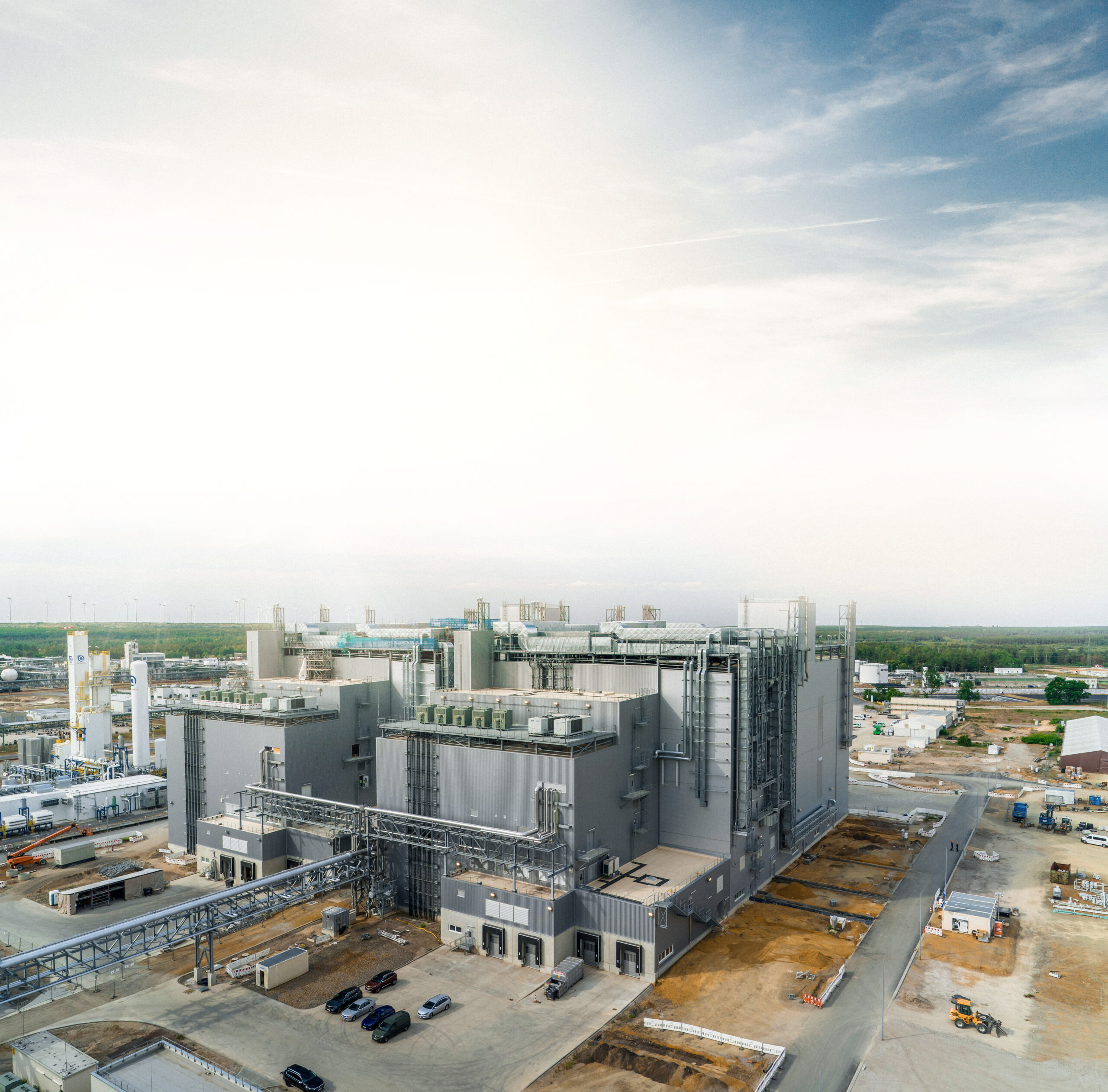
Schwarzheide is an established production location within BASF’s battery materials business. The company describes the site as Germany’s only facility manufacturing high-performance cathode active materials, giving it a specialised role within Europe’s battery production supply chain.
The start of deliveries is a different milestone from signing a commercial supply agreement. Before a new cathode material can be incorporated into commercial battery production, the supplier and cell manufacturer must establish whether its composition, processing characteristics and electrochemical performance meet the required specification.
Cathode active material is one of the principal functional components of a lithium-ion cell. Its chemistry influences how lithium ions move during charging and discharging, contributing to characteristics such as usable energy, voltage, cycling performance and the operating limits of the finished battery.
The required material properties vary according to the battery chemistry and cell design. A formulation suitable for one application may not provide the same processing behaviour or performance in another, even where both products use lithium-ion technology. BASF has not disclosed the precise chemistry or grade of the material being supplied to CATL from Schwarzheide.
Producing cathode active materials involves chemical processing intended to achieve the required composition and physical characteristics. Parameters such as particle size, particle distribution, impurities and material structure can influence subsequent electrode manufacturing and battery performance.
During electrode production, cathode active material is typically combined with binders and other constituents to form a coating mixture. That material is applied to a metallic current collector, dried and processed before the electrode is incorporated into the cell assembly.
Variations in the characteristics of the active material can affect how the coating mixture behaves, how evenly it is deposited and whether the resulting electrode meets its dimensional and electrochemical requirements. Material qualification must therefore consider the manufacturing process used by the customer as well as the performance of the material in laboratory testing.
Transferring a product into industrial production introduces a further requirement for consistency. Manufacturing conditions must be controlled so that material produced at commercial scale continues to satisfy the specification established during development and qualification.
That work can involve changes to processing arrangements, raw material controls, inspection procedures and operating parameters. An acceptable laboratory result does not establish that a product can be manufactured repeatedly at the volumes and consistency required by a battery producer.
BASF identifies cooperation across development, qualification, production and supply as the basis of the first CATL deliveries. The company has not disclosed the duration of the qualification programme or the individual process changes required to manufacture the customer-specific material at Schwarzheide.
The use of two manufacturing locations also introduces supply chain considerations. Materials produced at separate sites must meet the customer’s requirements, while differences in production equipment, raw material sources and operating conditions may require appropriate quality controls.
Regional manufacturing can reduce dependence on a single production location and may shorten transport routes to customers operating nearby. However, the commercial and logistical benefits depend on where the material is consumed, the source of its constituent raw materials and the terms of the supply arrangements.
The European battery industry has invested in manufacturing capacity across cell production, chemical processing and associated materials supply. Those activities are closely connected because battery factories require reliable access to qualified inputs rather than simply greater quantities of undifferentiated industrial chemicals.
Cathode material supply is particularly demanding because product changes can affect the performance of the completed cell. A manufacturer introducing a different supplier or material grade may need to assess electrode processing, cell behaviour, reliability and compatibility with existing production equipment.
Long-term supply arrangements consequently depend on technical relationships as well as price and delivery schedules. The ability to produce a material consistently can become important when battery manufacturers are seeking to maintain output across several factories or support products with extended commercial lifetimes.
The initial Schwarzheide shipments provide evidence that BASF and CATL have progressed from their July 2025 framework agreement into deliveries of material manufactured in Germany. They do not establish the full annual volume of future business between the companies.
Neither BASF nor CATL has disclosed the quantity contained in the initial shipments, their commercial value or the annual output allocated to this customer. The companies have also not identified the specific battery cell products into which the Schwarzheide material will be incorporated.
Those omissions limit any assessment of the immediate effect on the German factory’s utilisation. A first shipment confirms that supply has begun, but further deliveries and sustained production would be needed to establish the scale and continuity of the relationship.
The Schwarzheide milestone occurs as BASF places greater emphasis on cathode active materials within its battery business. The company is separately restructuring its battery recycling activities, but that transaction is distinct from the continuing production and supply of cathode materials to CATL.
BASF’s next operational requirement will be maintaining product quality and delivery performance as the supply relationship develops. The first German shipments establish a new manufacturing source for CATL, with the volume and timing of subsequent deliveries remaining undisclosed.