Australian battery developer Graphene Manufacturing Group (GMG) has signed a manufacturing service agreement with the UK Battery Industrialisation Centre (UKBIC) in Coventry to make and form its G-CELL graphene aluminium-ion battery cells. GMG will use existing industrial equipment to test larger cell formats while it continues developing the chemistry, deferring a decision on investment in a dedicated large-format cell factory.
GMG will develop and supply battery materials from its Battery Development Centre at Richlands in Brisbane, with initial UKBIC work focused on pouch cells. The arrangement adds a British manufacturing development route to GMG’s operations in Australia and its work with the Battery Innovation Center of Indiana in the United States. GMG expects those sites to give it additional capacity for parallel format development and access to prospective European customers.
UKBIC is being paid to perform manufacturing services; the agreement is not an acquisition, equity partnership or commitment to commercial cell deliveries. GMG retains the intellectual property associated with its development programme. Neither company has announced a contracted production volume, a date for commercial output or an agreed cell selling price, leaving the immediate scope centred on manufacturing development and formation.
Producing a larger battery cell requires more than reproducing the composition of a successful laboratory sample. Electrode material must be prepared consistently and, where the selected process requires it, applied at controlled thickness before the layers are cut and assembled. Material distribution, alignment and the condition of the interfaces between cell components can affect electrical behaviour. These are recognised scale-up variables, rather than defects identified in GMG’s cells.
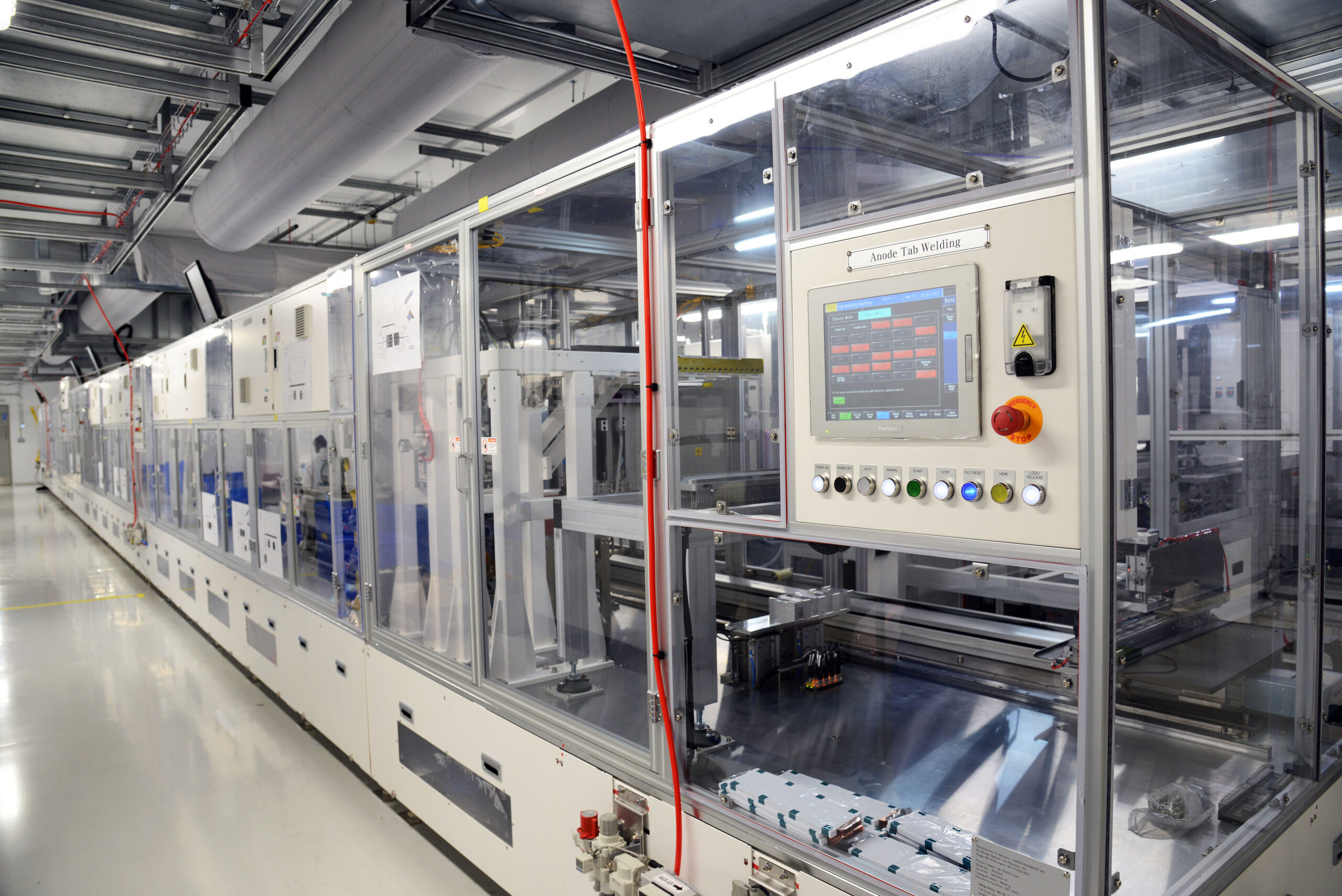
Industrial battery development links material preparation with assembly, formation, ageing and testing. During formation, controlled electrical cycles are applied to newly built cells so that their initial behaviour can be measured and the relevant chemistry-dependent processes can be managed. Tests on successive cells then help establish how closely their capacity, resistance and other measured characteristics agree under specified conditions. UKBIC’s production equipment offers a route to gather that evidence using larger formats.
Moving to pouch formats also creates practical production constraints. Electrode dimensions, layer alignment, seals and mechanical handling become more demanding as cell size increases, while electrical and thermal behaviour must be checked across the larger assembly. GMG has not released the UKBIC process parameters, initial planned batch sizes or cell qualification schedule. Without those results, performance from small cells cannot yet be treated as performance demonstrated in the intended larger format.
GMG points to cycle-life and energy-efficiency results from its earlier work at BIC Indiana as a basis for taking the next step in cell development. Those figures have been reported by the developer and do not establish how larger pouch cells manufactured at UKBIC will perform. The agreement will allow the company to investigate production repeatability and gather comparable test results as it develops the cell design.
Bob Galyen, a GMG director and former chief technology officer at CATL, has identified the move from smaller cells to larger formats as a critical test of a new chemistry. GMG points to cycle-life and energy-efficiency results from work at BIC Indiana, although it has not published corresponding production-scale qualification results for cells made at Coventry. The UK arrangement allows manufacturing methods to be evaluated before the company commits capital to its own equipment.
The use of three manufacturing and development locations also creates a need for common material specifications and test records. Australian batches must arrive in a controlled condition, while differences in machinery and process settings at the US and UK facilities need to be recorded. Comparing those settings will help the developer determine whether changes in cell measurements arise from chemistry, assembly or equipment rather than treating all test results as interchangeable.
Sharing development work between established facilities gives GMG access to different equipment and production experience without immediately duplicating every process at a new plant. The sites will need comparable specifications for incoming materials, documented settings and common test methods if results from Indiana and Coventry are to be interpreted together. Such controls help distinguish a change in electrochemical performance from a difference introduced by manufacturing conditions.
GMG expects its partnerships to create cell manufacturing capacity closer to prospective European customers and to support future development of additional formats. The company has said its UK agreement helps it defer capital expenditure while technology risks are reduced. Any decision to scale further would still depend on validated cell characteristics, reliable production and sufficient customer demand.
The first UKBIC pouch-cell runs will establish whether GMG’s materials can be processed reproducibly in larger cells and how those cells behave during formation and subsequent testing. Continued work in Australia and Indiana remains part of the programme. The service agreement therefore adds an industrial manufacturing trial capability in Coventry, with any later commercial production decision dependent on results and customer requirements.