LOTTE Biologics has secured its first major commercial manufacturing contract for Songdo Plant 1 in Incheon, South Korea. The agreement covers drug substance and drug product manufacturing for an undisclosed global pharmaceutical company, giving the new 120,000-litre facility a customer programme ahead of its targeted commercial production start in 2027.
The customer has contracted LOTTE Biologics to produce biological drug substances and finished drug products within its portfolio. Neither the customer nor the medicines involved have been identified, and the companies have not disclosed production volumes, contract duration or financial value. Without those details, the proportion of Songdo Plant 1 capacity committed to the agreement cannot be calculated.
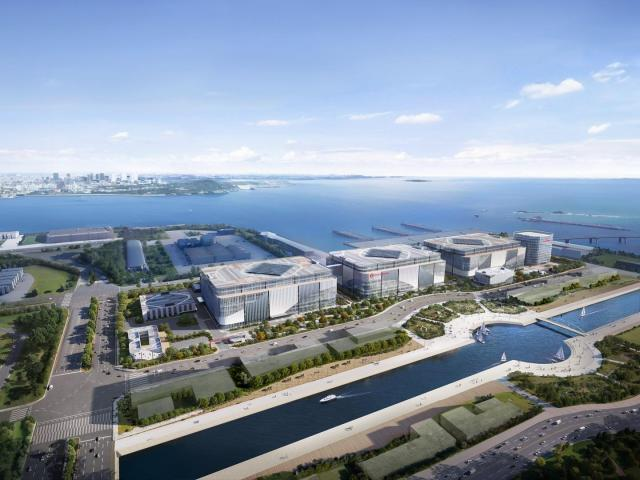
Songdo Plant 1 is designed around 120,000 litres of bioreactor capacity, provided by eight stainless steel vessels of 15,000 litres each. The equipment forms part of a wider campus development that envisages three plants with a combined capacity of 360,000 litres. The larger total is a planned campus figure rather than a measure of production equipment currently in commercial operation.
Bioreactor capacity indicates the scale of the vessels available for growing cells used to produce biological medicines. It does not translate directly into annual finished medicine output. Actual production depends on the biological process, batch duration, cleaning and turnaround, product yields, changeovers, downstream purification and quality release. A 120,000-litre installation therefore represents manufacturing infrastructure rather than a guaranteed throughput or contracted sales figure.
The contract includes both drug substance production and the subsequent manufacture of drug products, allowing the customer to engage one provider across connected stages of the supply chain. In biological medicines, the first stage generally includes cell cultivation and recovery of the therapeutic material, followed by downstream purification. Drug product operations prepare the material in the required formulation and presentation, under the appropriate controls for the intended medicine.
Connecting these stages requires more than locating equipment on one campus. Material must move through controlled handovers, with batch histories, validated processes and quality records capable of supporting review by the relevant regulators. A change in the upstream process can affect downstream purification characteristics, while the finished presentation adds its own manufacturing and quality requirements. The precise scope of the new customer’s programme has not been published.
Songdo is part of an established South Korean biopharmaceutical manufacturing cluster. LOTTE Biologics has described a broader operating model linking the new campus with its existing Syracuse operations in the United States, potentially covering development and commercial manufacturing. The Songdo contract, however, does not identify any work allocated to Syracuse, and the two sites should not be treated as a single already-qualified production programme.
Major construction work at the first Songdo plant has already been completed, and the facility received approval for use in June 2026. Building approval is distinct from the equipment qualification, process validation and manufacturing approvals required before an individual product can be supplied commercially. The company’s 2027 production target consequently remains a forward schedule, not evidence that commercial batches have started.
Qualification work at a new biologics factory involves establishing that utilities, clean areas, equipment and computerised systems operate within specified conditions. Manufacturers then demonstrate that the chosen production process can repeatedly deliver material meeting predetermined quality attributes. That work becomes more complex when multiple biological products require different cell lines, production profiles, purification steps and containment or cleaning arrangements.
Contract manufacturers also have to plan how different customers share installed capacity. A facility may have substantial nominal vessel volume but still face constraints caused by batch sequencing, testing resources, process transfer, raw material availability or the speed of product release. Customer commitments secured during commissioning can help schedule this work, provided the underlying product specifications and regulatory timelines are sufficiently advanced.
Contract development and manufacturing organisations provide specialist production equipment, technical teams and quality systems to pharmaceutical companies developing or supplying medicines. A developer can use that capacity without constructing a dedicated factory, but retains responsibility for oversight of the external manufacturer and the quality of its own product. The division of tasks must be reflected in technical agreements, process records and the applicable manufacturing authorisations.
LOTTE Biologics is targeting commercial production during 2027, after the remaining manufacturing readiness and product-specific regulatory work. Its first major Songdo contract establishes a planned production programme, but the undisclosed volumes, financial terms and product identities prevent a reliable estimate of plant utilisation or associated revenue. Further contracts and the start of qualified manufacturing will determine how quickly the new plant is brought into commercial use.