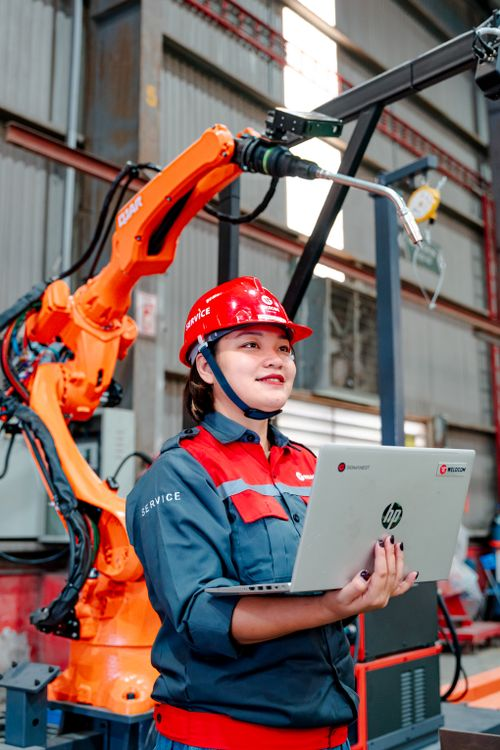
Flexxbotics has introduced Prescriptive Optimization as an optional Industrial AI application across four manufacturing software solutions, allowing plants to evaluate production behaviour and receive recommendations for improving process performance. The company says the capability uses live equipment and production context to detect drift, identify potential problems and propose corrective action, with plant personnel retaining authority over implementation.
The option extends the company’s manufacturing autonomy platform beyond data collection and conventional production monitoring. Rather than evaluating a machine signal alone, it associates that measurement with the work order, product, operation, tooling, process parameters and quality outcome. Those relationships are intended to let the software assess how a specific manufacturing process behaves under known conditions.
Flexxbotics describes a three-level context structure combining equipment, production and process information. Equipment context includes controller variables, machine states and inspection signals accessed through industrial protocols. Production context maps those readings to actual work being performed. Process context establishes characteristic operating patterns and limits derived from production runs that meet the required specifications.
At factories producing several different parts on the same equipment, a single measurement may have different meanings during different operations. A current or vibration reading that falls within the normal range for one component may indicate tool wear or another abnormal condition on a second. Associating the signal with the part, operation, cutting tool and stage of the cycle allows the model to compare each process with an appropriate baseline.
To build the reference profiles, the software analyses historical and ongoing production measurements, including how process variables change through a normal cycle. The company says targets, limits and operating rules can be established over days or weeks rather than requiring all knowledge to be documented manually in advance. That timetable is a supplier claim and will vary with process complexity, data quality and the number of machines or products involved.
Tyler Modelski, CTO and co-founder of Flexxbotics, said: “We characterize how processes actually run at production rate when they’re meeting their specified quality levels,” describing how the company establishes its operating profiles. Those profiles are intended to make knowledge of production behaviour accessible across machines, shifts and factories. The reference process must still be assessed against the required quality specification before its limits are adopted.
Prescriptive Optimization is being offered across Industrial Data Connectivity, Automated Production Tracking, Process Characterization and Autonomous Process Control. These functions can be introduced individually or combined. The first brings information out of disparate controllers and devices; the second establishes the production activity and output to which readings belong. The third builds behavioural profiles, while the fourth provides a route towards authorised corrections in the production environment.
According to the company, potential use cases include anticipating equipment downtime, detecting process drift, reducing quality defects, identifying likely root causes and extending cutting tool life. A recommendation may involve checking an abnormal variable, changing a setpoint or scheduling a recovery action. The software’s ability to identify an opportunity is separate from the manufacturer’s decision that the proposed action is safe, permitted and appropriate for the product being made.
The architecture separates AI-generated recommendations from the mechanisms able to change physical production. Plant personnel set authorisation requirements and decide which actions may proceed. Where closed-loop changes are permitted, deterministic control logic and recorded adjustments provide traceability from the detected condition to the authorised response. In regulated aerospace and medical device manufacturing, such records must remain consistent with process validation, approved instructions and inspection requirements.
Flexxbotics is designed to work with existing manufacturing equipment through edge software and device drivers, rather than requiring wholesale replacement. The company says the platform supports more than 1,000 equipment makes and models. Its control plane manages the connections between plant systems, operational functions and permissions, while edge applications collect data close to machinery. The measurements and commands available at each installation depend on the interfaces exposed by its equipment.
The application also supports bring-your-own-model deployment, including customers’ preferred large language models and locally hosted open-weight models for on-premise or air-gapped use. That architecture allows a manufacturer to select where its production data is processed. Model choice, access controls, cybersecurity and approval of machine changes remain separate configuration and governance tasks for the plant.
Flexxbotics reports a precision aerospace manufacturing deployment in which rework and scrap fell by 40%, unplanned downtime by 25%, and contract capacity increased by 20%. These are company-reported results from a particular application, not independently verified performance data for every installation of the new Prescriptive Optimization option. Outcomes depend on the baseline process, the information available to the software and the corrective actions a factory implements.
Tyler Bouchard, CEO and co-founder of Flexxbotics, said that combining production context with a profile of actual process behaviour could help engineers identify emerging problems and recommend targeted actions. The latest application is available now, according to the company, as an optional capability across the four solutions.
The new option is available across all four Flexxbotics solutions, according to the company. In an operating factory, recommendations still have to be checked against equipment limits, approved work instructions, safety controls and the product’s quality requirements before implementation. The platform’s separation of analytical recommendations from authorised production changes is intended to preserve that control while extending the use of process data for optimisation.