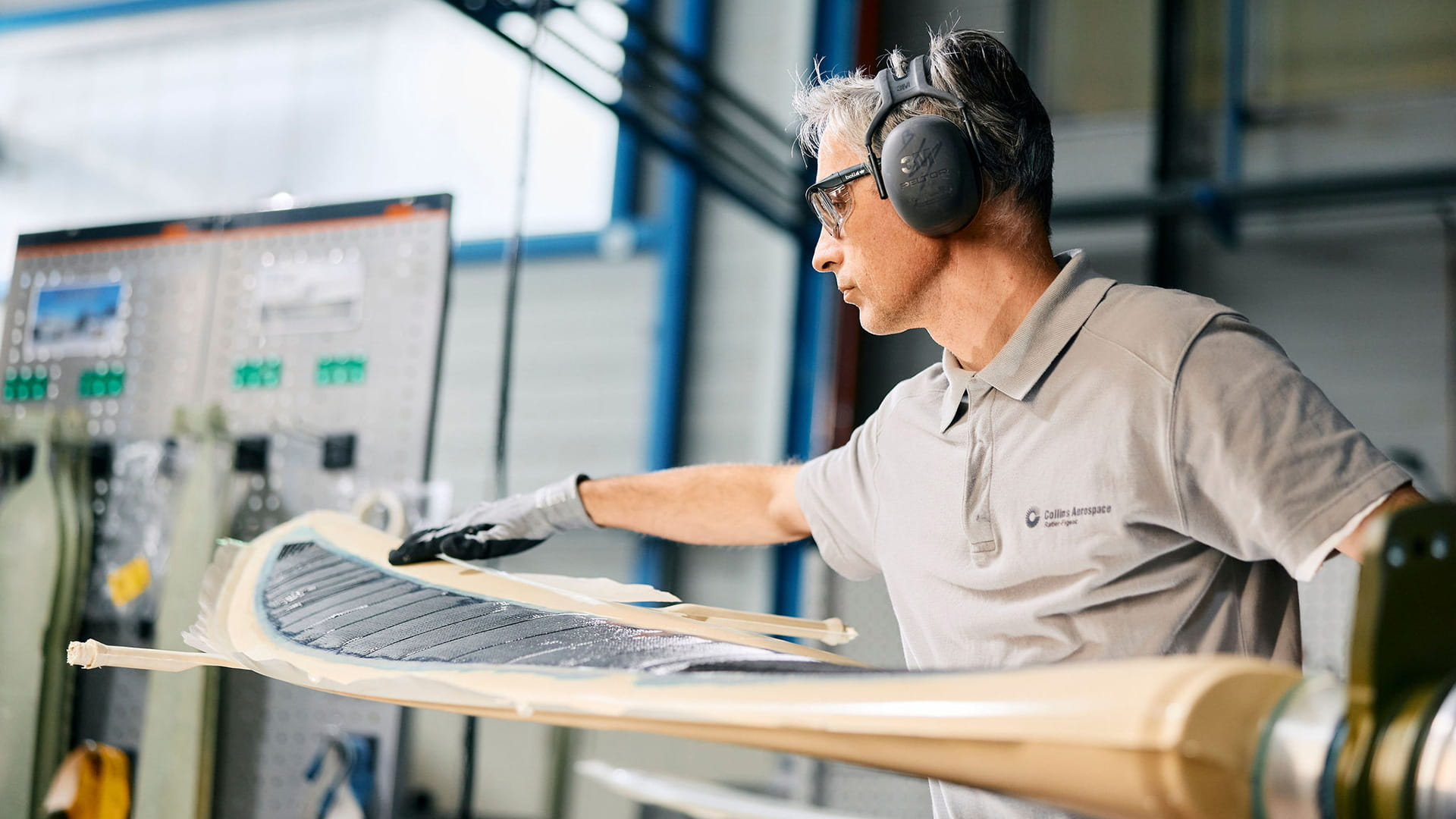
Collins Aerospace, part of RTX, has broken ground on a propeller maintenance, repair and overhaul facility at its India Operations Center in Bengaluru. The proposed centre will support 568F propeller systems used on ATR regional aircraft and Airbus C295 transports, bringing manufacturer-authorised servicing closer to airlines and other operators in India and across the Asia-Pacific region. Construction has begun; the maintenance operation is not yet in service.
The groundbreaking took place on 17 November at the Collins India Operations Center in the KIADB Aerospace Park. That site opened in November 2025 and occupies approximately 26 acres, so the new maintenance facility is an expansion of an existing aerospace operations campus rather than the opening of the entire campus. According to Collins, it will be India’s first propeller MRO facility authorised by a foreign aerospace original equipment manufacturer. That classification relates to this specialised propeller capability, rather than to the existence of aircraft maintenance businesses elsewhere in India.
The operation is intended to handle Collins’ 568F propeller family. Aircraft using these systems include the ATR 42 and ATR 72 regional turboprops, as well as the Airbus C295 military transport aircraft. Although the platforms have different missions and operating profiles, they depend on scheduled inspection, overhaul and repair of propeller components to remain available. The manufacturer’s technical instructions and authorised processes determine what can be inspected or returned to service at a particular maintenance centre.
Authorised propeller maintenance requires the inspection and controlled restoration of mechanical systems as well as individual blades. A service programme may include assessment of blades, hubs, pitch control mechanisms and related parts, followed by the appropriate repair, balancing, reassembly and functional checks. The exact scope available at Bengaluru will depend on its authorisations, qualified personnel, test equipment and repair processes. Collins has not published a complete workshop capability list or stated that every possible overhaul task will be available from the first day of operation.
Maintenance turnaround is shaped by the time required to remove a component, transport it to a suitable facility, complete the approved work and return it to an aircraft. A regional service centre can shorten part of that cycle by reducing dependence on distant shops, but it still requires access to spares, qualified tooling, inspection equipment and authorised engineering support. The operational benefit will therefore depend on actual workshop throughput and the type of repair needed, not simply on geographic proximity.
Collins says it is responding to growing demand for propeller support from the region’s aircraft fleet. The centre is expected to begin operating by 2028 and is intended to serve customers across the Asia-Pacific region as well as India. That target remains subject to construction, equipment qualification and the approvals needed to conduct the intended maintenance work.
India is seeking to increase the proportion of aerospace maintenance and engineering work performed domestically. India’s commercial turboprop fleet supports short- and medium-distance routes, including services to airports less suitable for larger jets, while the C295 programme brings military transport requirements. Both markets create demand for dependable overhaul capacity and the supply of specialist parts over the service lives of aircraft.
India’s wider aircraft MRO market has been estimated at about $2.5bn, with a KPMG projection of $6.9bn by 2035. Those figures describe the overall maintenance industry, not projected revenue for propeller servicing or Collins’ Bengaluru operation. The new centre is a specific capability investment within that broader market, not a facility capable of covering every category of aircraft maintenance.
The Bengaluru campus already supports aerospace manufacturing and engineering activities, providing an industrial base on which the planned propeller work can be developed. Adding a maintenance operation requires trained technicians, calibrated test equipment, documentation control and a parts system capable of tracing the history and status of components. The availability of engineering expertise on site may assist capability development, but regulators and customers will still expect demonstrable compliance with applicable maintenance approvals and procedures.
Collins has not provided a definitive contract value, confirmed service capacity or a number of skilled jobs attributable solely to the new propeller operation. Construction and workshop authorisation therefore remain the immediate milestones. Once repairs begin, actual turnaround times, the range of approved work and spare parts availability will determine whether the Bengaluru centre reduces aircraft downtime for regional operators.