Teescraft Engineering has acquired Plastic Mouldings Northern (PMN), adding specialist plastics manufacturing to a North East engineering group whose existing operations include precision machining, casting, fabrication and rubber products.
The acquisition adds PMN’s vacuum forming, tooling and associated plastics processing capabilities to the group’s existing metalworking operations. The companies have not disclosed the transaction value, financing arrangements or a separate capital investment programme for PMN.
PMN operates from Bishop Auckland in County Durham, where its manufacturing activities include forming rigid plastic sheet into shaped components, five-axis CNC trimming and assembly. The company also supplies industrial plastic packaging and materials handling products, giving the enlarged group access to a combination of bespoke component production and established product lines.
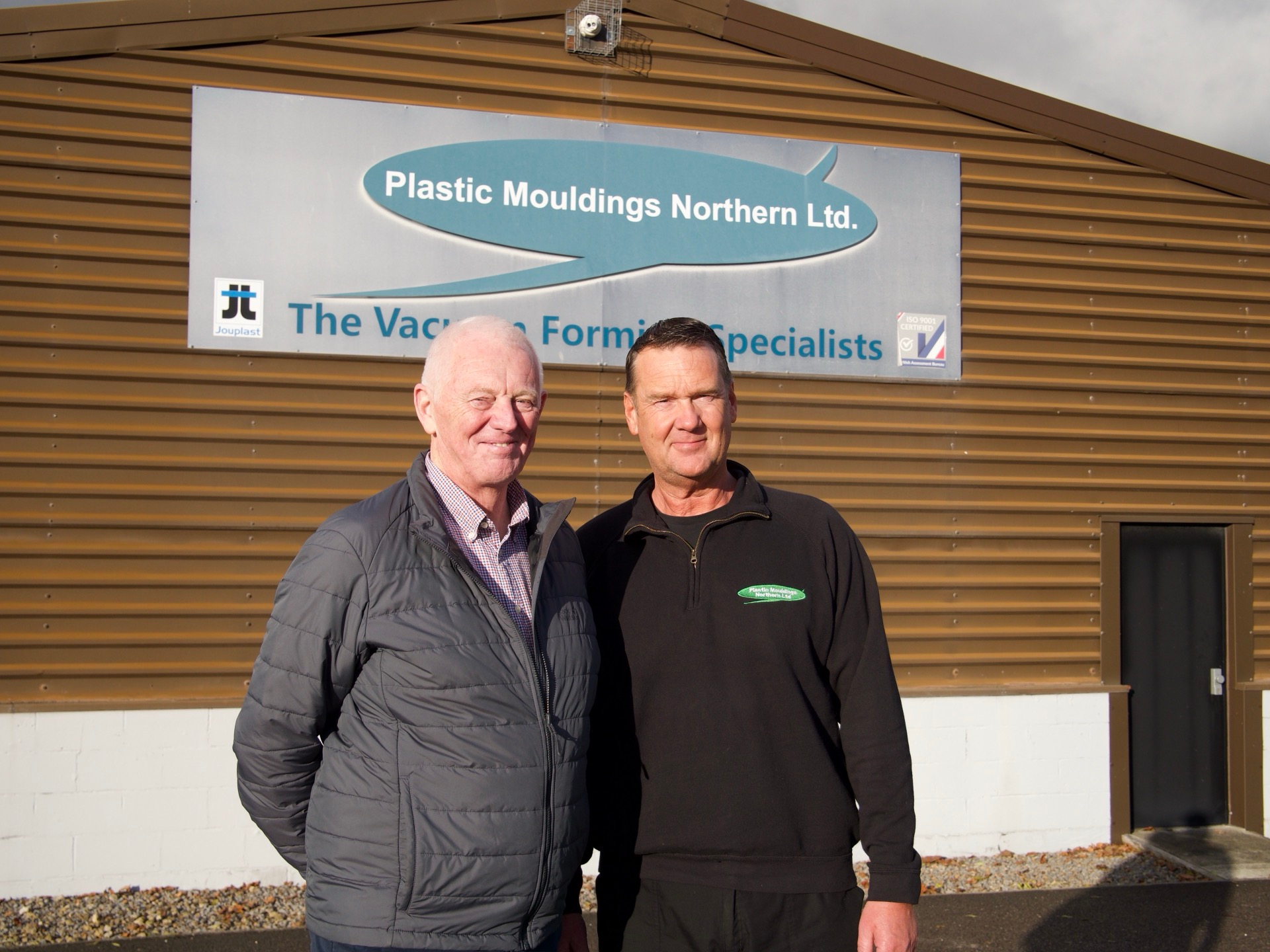
Mark Rigg will remain PMN’s managing director following the acquisition. Teescraft says established customer relationships, service levels and quality standards will continue under the new ownership, while the arrangements for sharing manufacturing resources across the group have not yet been detailed.
Rob Yorke, managing director of Teescraft Engineering, said: “We are delighted to welcome PMN to the Teescraft family. It is a business with a great reputation, talented team and excellent customer relationships.” He said the group intended to support established businesses while preserving their specialist strengths.
Teescraft was established in 1981 and has grown through a succession of acquisitions into a manufacturer serving sectors including automotive, power, oil and gas, offshore engineering, agriculture and general manufacturing. The group’s existing facilities cover different production methods, enabling it to supply machined components, metal castings, fabricated assemblies and specialist engineering services.
Earlier acquisitions include Stockton Casting Company, Steel Pro Services, Harkers machine shop, Westland Castings, LH Quarry Plant, the metallic division of UTEX Industries and Bonds Precision Foundry. Those businesses added capabilities in castings, large-part machining, fabrication and other engineering disciplines. Plastic forming extends that portfolio into another family of materials and manufacturing processes.
Vacuum forming differs materially from metal casting and subtractive machining. A rigid thermoplastic sheet is heated until it becomes formable, brought into contact with a tool and shaped using a pressure differential before cooling and trimming. The process can create large panels, housings, trays and shaped packaging parts without requiring the same tooling approach as injection moulding. Geometry, sheet thickness, material behaviour, tooling design and trimming accuracy all influence the finished component.
PMN lists nine vacuum forming machines and three five-axis CNC machines among its capabilities, with capacity for large-format work up to 3,400 by 1,400mm. After forming and cooling, five-axis machining can trim the edges and cut apertures or fixing features in components that would be difficult to complete accurately in the forming tool alone. The company’s website also describes design, prototyping and tooling services, linking development work with repeat production.
Alongside customised parts, PMN maintains a substantial materials handling and packaging offering. Its range includes Euro containers, plastic pallets, folding pallet boxes, trolleys, dividers, trays and inserts. The company reports more than 100,000 products held across a three-acre site with approximately 65,000 sq ft of indoor storage. The stock range complements made-to-order mouldings and gives PMN a separate route into factory handling, storage and returnable transport packaging.
Returnable handling products are specified according to payload, stackability, cleaning requirements and the movement of parts between facilities. Formed trays can hold components in fixed positions during storage or transport, while rigid containers and pallets must work with lifting equipment and warehouse layouts. These are applications for PMN’s established product range; Teescraft has not announced new joint packaging products as part of the transaction.
David Land, Teescraft’s group technical director, said PMN’s specialist knowledge complements the existing businesses and that access to a larger organisation should provide additional resources and experience without displacing the company’s established qualities. No specific shared production programme or jointly developed component has yet been identified.
Rigg, who helped build PMN, said: “Joining the Teescraft Group is a very positive step for the business.” He also emphasised the continuity of existing customer service. PMN had previously changed hands in December 2025, when Rigg bought the business from a co-founder; Teescraft’s subsequent purchase is a separate transaction.
The enlarged group now combines fabrication and metalworking operations with polymer processing and a sizeable industrial packaging business. The acquisition links metal casting, machining and fabrication with plastic forming, trimming and industrial packaging supply under one group. PMN’s existing management remains in place; details of future factory investment, additional capacity or combined customer contracts have not been announced.