Filtronic has secured a $3 million follow-on contract from an unnamed US satellite communications customer, taking the value of two disclosed awards associated with the same development programme to $11 million.
The latest order will fund procurement of components with long manufacturing or delivery lead times as the project moves towards pre-production. It follows an $8 million development contract announced in March 2026 and is additional to that earlier award, rather than a replacement for it.
Filtronic designs and manufactures radio frequency (RF) equipment for satellite, defence and critical communications applications. Its new contract concerns progression of an existing system-level development effort, but the company has not identified the customer, disclosed the complete system architecture or stated a firm date for volume production.
Specialist components with long manufacturing or delivery lead times can determine when a high-frequency electronics design is ready for pre-production. A programme can complete much of its design and validation work but still face production delays if critical devices, substrates, packaging components or other parts cannot be obtained to the required specification and schedule. Early procurement requires a sufficiently stable technical design, because material ordered before full production approval may need to remain compatible with any subsequent engineering changes.
Filtronic has not identified the components covered by this award or associated the expenditure with a named amplifier, semiconductor process or satellite platform. The disclosed purpose is to secure materials needed for the programme’s development and planned pre-production stages, limiting exposure to delays in the supply chain.
Nat Edington, Filtronic’s chief executive, said the contract demonstrated continued customer confidence and described the advance procurement as another step towards the pre-production phase. The company’s statement places the work on the route towards commercial sales; it does not give a confirmed volume production award or delivery timetable.
High-frequency RF assemblies present manufacturing challenges that differ from those encountered in lower-frequency electronics. Electrical losses, circuit geometry, materials, packaging and thermal behaviour can all influence whether a finished subsystem performs to specification. Production engineers must therefore control assembly processes and test completed devices under conditions that establish repeatable performance.
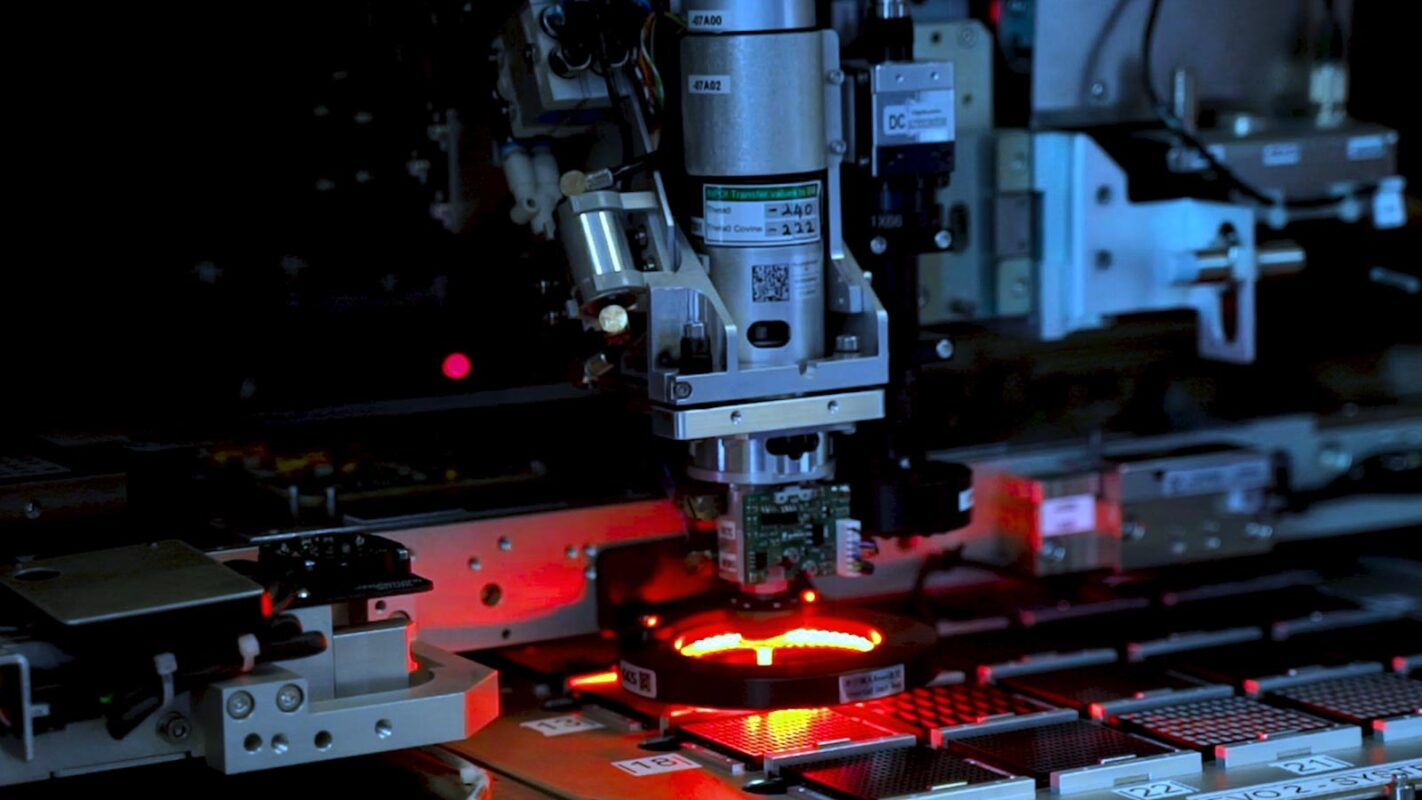
Filtronic’s manufacturing operation combines specialist microwave and millimetre-wave engineering with automated die attachment, wire and ribbon bonding, hybrid assembly, hermetic sealing and in-house testing. The company also lists environmental screening and process traceability among its capabilities. Filtronic has not specified which of those existing processes will be used for the undisclosed customer’s equipment.
In February 2026, Filtronic opened a 44,000 sq ft headquarters and manufacturing facility at NETPark in County Durham. The project doubled its UK manufacturing footprint and increased cleanroom space sixfold. The company said the expanded facilities were designed to support more than £200 million of annual revenue capacity. That capacity figure describes the site’s potential production scale, while the new satellite contract establishes a specific procurement commitment rather than a forecast of annual revenue.
Increasing cleanroom capacity is particularly relevant to sensitive microelectronics assembly, where contamination, process variation and component handling can affect reliability and yield. In-house inspection and RF testing also support the transition between development samples and repeatable manufacture. That transition normally requires processes to be qualified, test limits to be defined and supply arrangements to remain stable as volumes increase.
The new award sits alongside Filtronic’s other space sector contracts, although the customer and programme should not be conflated with those separately disclosed. In October, the manufacturer reported a $68.1 million SpaceX order for Cerus E-band gallium nitride solid-state power amplifiers. That arrangement concerns identified equipment for SpaceX and was described as a separate commercial production order. Filtronic has not said that the present $3 million procurement award is part of the SpaceX contract.
In November, Filtronic also disclosed a separate Ka-band transceiver programme for the geostationary satellite market. High-frequency products can serve different links, operating frequencies and ground or space applications; common engineering expertise does not mean that the contracts involve interchangeable hardware or the same customers.
The unnamed US customer’s programme remains at the development-to-pre-production transition, with critical material now funded in advance. Filtronic has disclosed neither projected unit volumes nor the timing or value of any later commercial supply award. Further production commitments will depend on progress through the programme’s remaining development and qualification work.