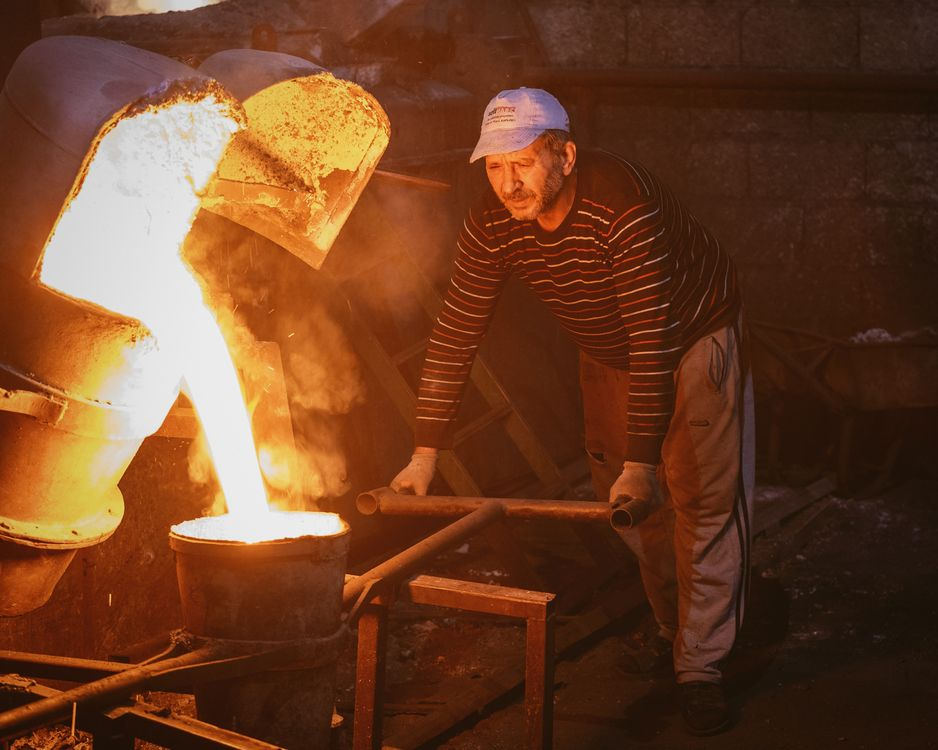
SinterCast has secured a technology licence and equipment order from a European commercial vehicle manufacturer for production of compacted graphite iron cylinder blocks used in a new 13-litre engine platform.
The agreement covers a System 4000 Plus installation at the manufacturer’s captive foundry in northern Europe, with commissioning targeted for November 2026 and series production scheduled to begin before the end of the year.
The vehicle manufacturer has not been identified, and SinterCast has not disclosed the value of the agreement. The order follows several months of technical collaboration to establish the foundry process required for the new-generation engine block.
Compacted graphite iron, or CGI, is a cast iron material whose graphite structure differs from conventional grey iron and ductile iron. Its mechanical and thermal properties have made it suitable for demanding engine components, particularly where high cylinder pressures and repeated thermal loading place substantial requirements on the cylinder block.
The cylinder block provides the principal structure of an internal combustion engine, supporting the cylinders and connecting several of its major mechanical systems. During operation, the casting is exposed to combustion-related forces, temperature changes and mechanical loads transmitted through the engine assembly.
The material must therefore combine sufficient strength and stiffness with dimensional stability and suitable thermal characteristics. Casting quality is also important because internal defects or inconsistent material properties can affect the performance of a component throughout its operating life.
Grey cast iron contains graphite largely in flake form, while ductile iron has a more nodular graphite structure. CGI has compacted, worm-like graphite particles, giving the material a combination of properties that can provide advantages for particular heavy-duty engine designs.
Those properties depend on the metallurgical conditions established during production. The form of graphite within the finished casting is influenced by molten metal composition, treatment and solidification, making process control an important part of high-volume CGI manufacturing.
Magnesium treatment is especially significant. The residual magnesium content affects graphite formation, and changes during metal preparation or handling can alter the microstructure ultimately produced within the casting.
Foundries manufacturing CGI components must therefore manage the relationship between melt preparation, treatment, sampling and the time available before pouring. Consistent chemical composition alone does not eliminate the need to control the overall casting process.
SinterCast’s technology uses thermal analysis to support process decisions during molten iron treatment. Samples taken from the melt provide information about its solidification behaviour, allowing the production process to be adjusted to achieve the required CGI characteristics.
The System 4000 Plus provides the process control infrastructure for this work. It is intended to support repeated measurement and adjustment during industrial production, helping the foundry maintain the conditions required for consistent cylinder block castings.
The new installation will operate alongside the foundry’s existing SinterCast Ladle Tracker system. That equipment provides information about individual ladles as they move through the manufacturing process, linking their handling history to the production records.
Tracking is particularly relevant when several ladles are processed in sequence. The condition of molten metal can change during handling, and the timing of treatment, sampling and casting must remain consistent with the process specification.
Combining metallurgical measurements with ladle information provides an additional basis for production traceability. A foundry can associate process data with the material used for particular casting operations, supporting investigation when a result falls outside the required operating range.
The new engine programme has already involved production planning at other foundries licensed to use SinterCast technology. Those arrangements form part of the same global engine platform rather than separate, unrelated programmes.
According to SinterCast, the combined production volumes expected from the new northern European installation and the previously announced foundry programmes would increase its current series production volume by more than 20% once the engine platform reaches full production.
The projected increase applies to the combined programme. It is not a forecast that the newly ordered System 4000 Plus alone will raise SinterCast’s present production volume by more than one fifth.
The company has not published a date for reaching the projected full production level, nor has it identified the total number of engine blocks expected to be manufactured each year under the programme.
Dr Vítor Anjos, president and chief executive of SinterCast, said the customer and supplier engineering teams had developed and validated a process control solution for the new cylinder block before proceeding with the licence and equipment order.
The move towards series production will require the foundry to reproduce those operating conditions at manufacturing scale. Processes established during development must remain stable as production volumes increase and normal variation is introduced through materials, equipment and handling.
High-volume cylinder block manufacture also depends on casting inspection, machining and the dimensional requirements of the completed engine components. A sound metallurgical process is essential, but it forms one part of the wider production and quality assurance system.
SinterCast’s licence model allows foundries to use its process control technology while the company supplies supporting equipment, consumables and technical services. Commercial activity therefore continues beyond the initial installation as licensed production programmes develop.
Revenue associated with a new engine programme will depend on subsequent production volumes and the terms of the applicable agreements. The present order establishes the additional foundry installation and licence, while the projected volume increase remains dependent on the manufacturer’s production schedule.
The System 4000 Plus is expected to be installed and commissioned during November. The manufacturer is targeting series production of the new 13-litre engine before the end of 2026, providing the next measurable milestone for the CGI manufacturing programme.