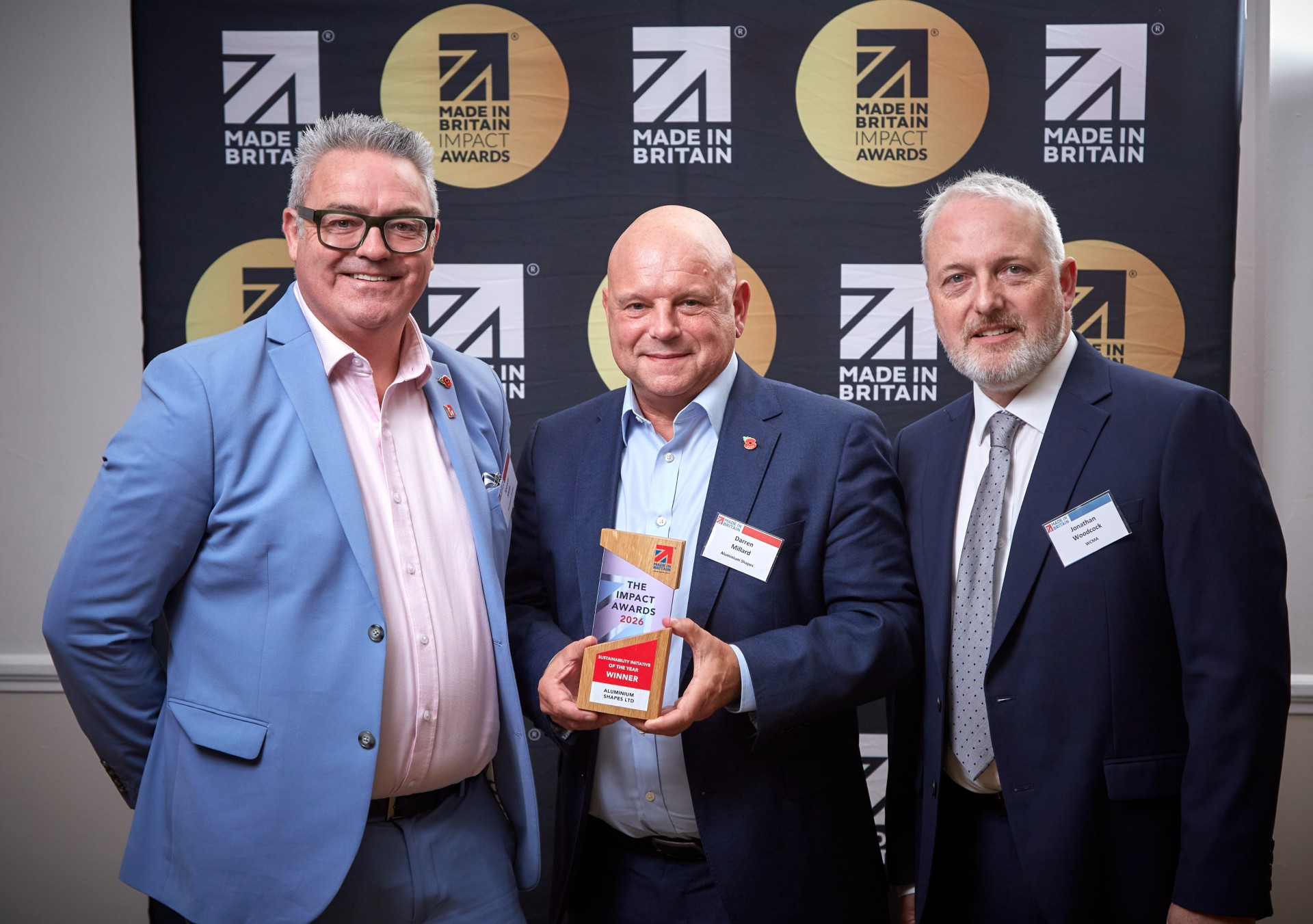
Corby-based Aluminium Shapes has received the Sustainability Initiative of the Year award at the 2026 Made in Britain Impact Awards after adopting lower-carbon aluminium billet as its standard extrusion material across the company’s manufacturing operation.
The manufacturer introduced its Ali4 specification in January, using aluminium that incorporates a high proportion of recycled metal instead of retaining a separate lower-carbon option for particular orders. Aluminium Shapes estimates that the change has avoided more than 20,000 tonnes of carbon emissions, although the underlying calculation has not been independently verified in the available information.
Ali4 uses Hydro LCR4 billet sourced from Wrexham. The supplier specifies a composition of 40% post-consumer scrap, 30% process scrap and 30% primary aluminium, giving the material a combined recycled proportion of 70%.
The declared carbon footprint is no more than 4.0kg of carbon dioxide equivalent per kilogram of aluminium, compared with a published global average of 14.8kg. That is approximately 73% lower on the basis of the quoted material figures, but it does not establish the total lifecycle emissions of every finished component made from the billet.
Aluminium Shapes produces bespoke extrusion profiles together with machined and finished components. Its Corby site combines extrusion with cutting, CNC machining, fabrication, assembly and surface treatment, allowing customers to order material at different stages of completion.
The choice of billet affects the embodied emissions of the metal entering those processes. Further energy and material inputs are required to extrude, machine, finish and transport the product, so a component-level assessment must include the appropriate manufacturing stages and system boundaries.
Primary aluminium production involves the extraction and refining of alumina followed by electrolytic reduction. Electricity requirements and the sources used to generate that energy are major factors in the associated emissions, alongside other process and supply chain inputs.
Recycled aluminium generally requires much less energy because the metal is recovered and remelted rather than produced again from alumina. Its environmental performance still depends on sorting, alloy composition, contamination control, remelting practices and the energy sources used by the recycler.
The Ali4 material combines post-consumer metal recovered after use, process scrap generated during manufacturing and a proportion of primary aluminium. These ingredients allow the supplier to manage recycled content while maintaining a specified alloy composition suitable for the products being manufactured.
During extrusion, the aluminium billet is heated and forced through a shaped die to produce a continuous profile. The resulting section can be cut and machined, and may undergo additional finishing depending on its final application. The billet’s properties must be compatible with the selected alloy, die geometry and processing conditions.
Aluminium Shapes says its standard material change does not compromise the mechanical performance, reliability or lead times expected by customers. The company also offers environmental product declaration information for Ali4 and identifies full material traceability as part of the specification.
Environmental product declarations can provide structured information about a material’s assessed impacts, subject to the relevant product category rules and declared boundary. Designers and purchasers must still consider what those declarations cover before combining them with data from other components or processes.
Using lower-carbon material as the normal specification changes purchasing arrangements for customers whose existing designs already use compatible aluminium extrusion grades. Rather than requesting a separate environmental option, they receive material produced under the supplier’s declared baseline standard.
Whether that change reduces the assessed impact of a finished assembly depends on the previous material specification and the other stages of production. A lower billet footprint does not necessarily imply an identical percentage reduction across machining, coating, assembly or transport.
Darren Millard, managing director at Aluminium Shapes, said: “Considering that we only launched the product in January of this year, to be recognised as a sustainability leader is an honour.” He added that the recognition coincided with the company’s 40th year in business.
The company’s estimated saving of more than 20,000 tonnes is a cumulative claim associated with the material change. The volume of aluminium used to derive the figure, the emissions baseline and the treatment of individual product grades have not been supplied, preventing independent reconciliation of the total.
Aluminium Shapes also identifies recovery of extrusion and machining scrap as part of its environmental operations. Returning clean material to an appropriate recycling stream can reduce material losses, although contamination and the segregation of different alloys influence the amount that can be recovered efficiently.
Energy monitoring and process optimisation are additional elements of the company’s published approach. Extrusion output depends on press utilisation, temperature control, tooling and the quantity of material removed or rejected during subsequent processing, making production efficiency a separate consideration from the carbon intensity of purchased billet.
The award was presented at Made in Britain’s Impact Awards ceremony on 4 November. Other businesses recognised in the sustainability category included Ideal Manufacturing, trading as Fill Refill Co, and Neuthread, associated with Daisy Chain.
John Pearce, chief executive of Made in Britain, said: “What ultimately set this entry apart was the company’s decision to make a more sustainable material the everyday standard, rather than the premium option – and the results it has achieved are quite extraordinary.”
Made in Britain represents manufacturers using its British-made trademark and organises the awards to recognise industrial and commercial achievements among its membership. The sustainability category focuses on changes that businesses have incorporated into their operations and products.
For Aluminium Shapes, the principal manufacturing change is the adoption of a documented lower-carbon billet specification across its normal extrusion orders. The company’s declared composition and material footprint provide measurable characteristics, while the much larger claim for cumulative avoided emissions remains its own estimate pending further methodological detail.