Naylor Concrete Products has secured a £6 million funding package from HSBC UK to modernise its concrete fencing operation in Garforth, West Yorkshire, with investment planned in automated precasting and batching equipment for a new manufacturing facility.
The Barnsley-headquartered business intends to increase output of concrete fenceposts and gravel boards, addressing capacity constraints at the existing site. The investment will support an automated precasting plant and a batching system supplying the new factory, but Naylor has not provided a confirmed commissioning date or the final production capacity.
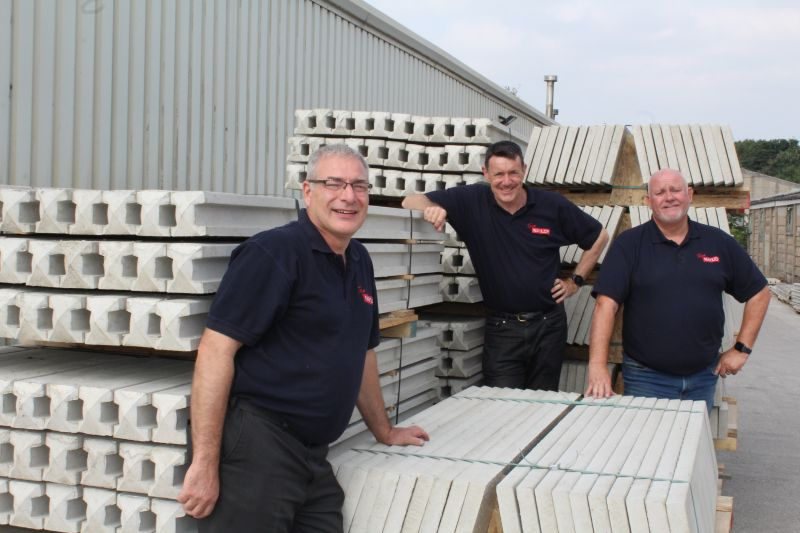
The product range will include slotted concrete fenceposts, posts designed for timber fencing, and both smooth and rock-faced gravel boards. These components are manufactured in repeatable profiles and dimensions for construction and landscaping applications, where consistent material performance and reliable availability are important to builders’ merchants and contractors.
Concrete batching determines the quantities of cementitious materials, aggregates, water and any admixtures brought together to produce a particular mix. Control over the proportions and mixing sequence helps maintain workability during casting and the properties required after the concrete has hardened. Variations in constituent moisture or grading can require adjustments to preserve the intended mix characteristics.
Once mixed, concrete is placed into moulds to form the required component geometry. Compaction and curing then influence surface quality, dimensional stability and mechanical strength. The production process must also account for when a component can be removed from the mould and handled without damage.
Precast manufacturing allows these activities to take place under factory-controlled conditions rather than on an external construction site. Production planning can coordinate material delivery, mould availability, casting cycles, curing space and finished-goods handling across repeated product designs.
Automation may improve the consistency and coordination of these operations, although the effect depends on the equipment installed and the production processes it replaces. Naylor has identified automated precasting and batching as the investment areas but has not disclosed detailed machinery specifications, operating speeds or expected reductions in labour and material use.
A new casting line must be supported by sufficient batching capacity and suitable movement of products between processing stages. Even when mould filling or handling becomes more automated, interruptions in the supply of concrete or the availability of curing and storage space can restrict overall throughput.
Naylor’s project is intended to address such capacity constraints and underpin a planned period of growth in its concrete products business. The company anticipates that the investment will contribute an additional £5 million in turnover over the next 12 months, although that is a forward estimate rather than revenue already achieved.
The expansion is expected to create ten jobs across the business, accompanied by training for existing employees as the new equipment is introduced. Technical training will need to reflect the particular machinery and control systems installed, together with operating procedures, quality checks and maintenance requirements.
Edward Naylor, executive chairman of the Naylor Group, described the funding as a key milestone for the concrete products operation. He said: “This latest investment is a key milestone for Naylor; it will drive a planned period of growth in our concrete products business.”
The company’s concrete fencing activity has developed from its acquisition of Garforth-based Procter Fencing in 2020. Naylor had previously manufactured concrete lintels for more than five decades, and the acquisition extended its range of precast construction components.
The wider Naylor Group traces its origins to 1890. Its production activities now cover concrete products, pipes and plastic extrusions across six UK factories. Edward Naylor said the group had evolved from a business heavily dependent on clay pipes into a diversified manufacturer with turnover of around £80 million.
Manufacturing different construction products creates varying equipment and materials requirements, but the new finance package is directed towards the Garforth fencing plant. It should not be interpreted as an expansion of every Naylor factory or as financing for the group’s other pipe and extrusion businesses.
HSBC UK’s support covers the acquisition and introduction of the new plant. Andy Richardson, relationship director at HSBC UK, said the manufacturer had demonstrated a clear intention to invest in its longer-term development and build additional production capability.
Automation also changes the operational information available to a factory. Depending on the chosen equipment, control systems can help staff monitor batching sequences, casting cycles and machine availability. The precise reporting and monitoring functions for Naylor’s project have not been disclosed, so measurable productivity improvements cannot yet be attributed to the new installation.
The financing has been secured, while the manufacturing benefits depend on equipment installation, commissioning, training and the subsequent volume of orders. Naylor’s stated targets are ten additional jobs and £5 million in extra turnover within the next year, with the expanded facility intended to provide the production capacity needed to pursue those objectives.