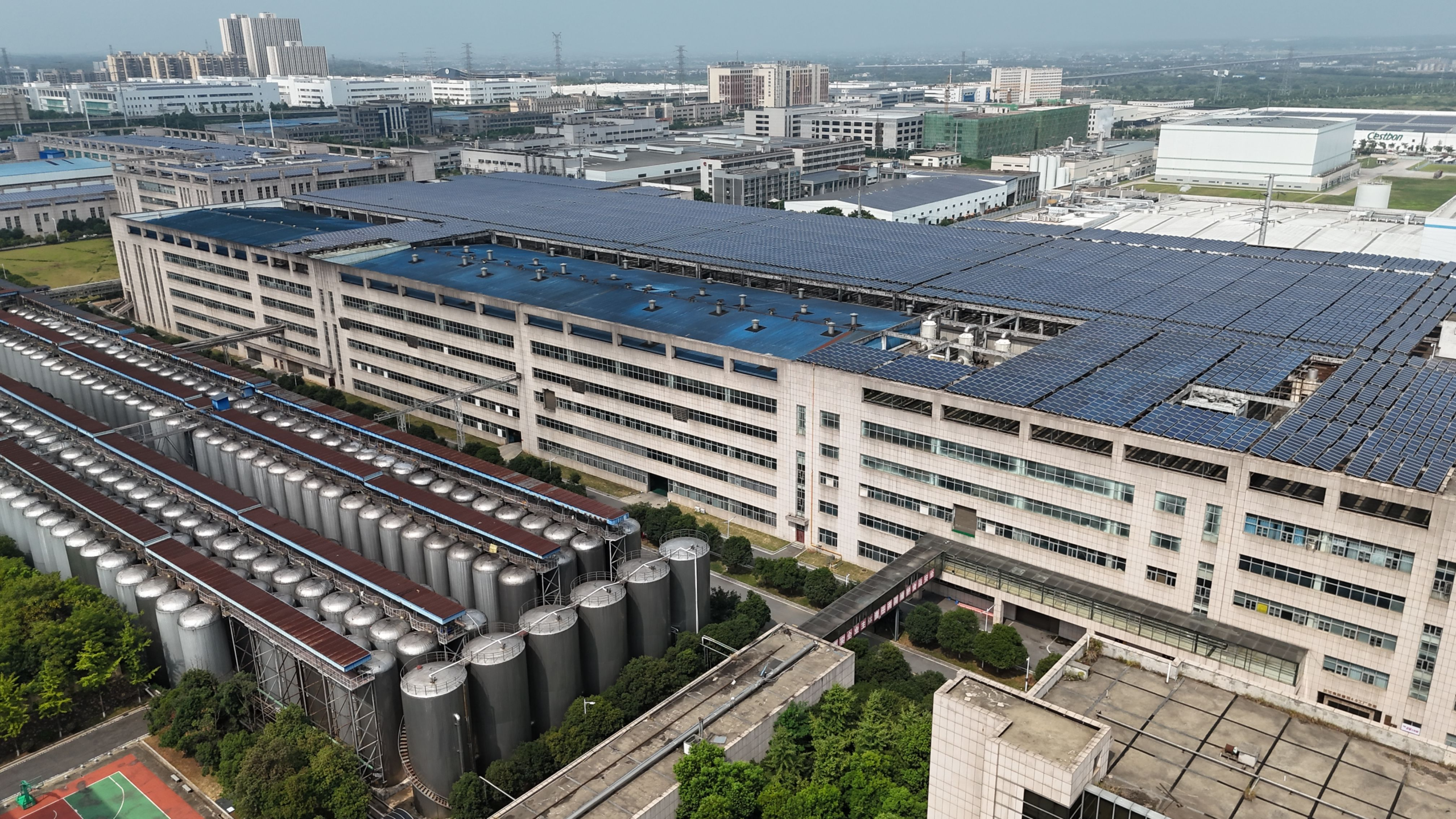
Yingfa Ruineng has outlined the production capabilities of its first overseas solar cell manufacturing base, operated by subsidiary BCI in Indonesia. The company reports annual capacity of 7.5GW for n-type tunnel oxide passivated contact (TOPCon) cells and plans to supply module manufacturers in Indonesia, Southeast Asia, the Middle East and other markets.
BCI presented the facility and the group’s technology roadmap at an industry event in Jakarta ahead of the 2 November international disclosure. Around 80 representatives attended from customer companies, industry bodies and government-related organisations. The 7.5GW figure describes reported annual capacity at the Indonesian plant; the company has not disclosed a corresponding independently verified production run rate.
The site adds a cell-manufacturing stage to Indonesia’s photovoltaic supply chain. Silicon wafers are processed into electrically active cells, which then move to module assembly with interconnections, glass and protective encapsulation. Producing cells closer to regional module makers can shorten transport routes and improve coordination of delivery schedules, while the supply of wafers and other upstream materials remains a separate procurement requirement.
TOPCon is a crystalline-silicon cell architecture that uses a thin tunnel oxide and a passivating contact structure to reduce electrical recombination at the contact interface. Recombination occurs when charge carriers are lost before they can contribute to useful current. Reducing those losses can support higher conversion efficiency, although cell performance also depends on wafer quality, coating uniformity, metallisation and the subsequent module assembly process.
BCI is positioning the facility alongside Indonesia’s domestic-content framework, known as TKDN. A local cell factory adds manufacturing activity within the country and can support module producers pursuing relevant local-content thresholds. Compliance is determined under the applicable product and certification rules, including how the finished equipment is assessed; the manufacturing location alone does not establish qualification.
Local cell supply may reduce the time between cell manufacture and module assembly for customers based in Indonesia. It can also bring process engineers and customer quality teams closer when validating batches, managing defects or adjusting product specifications. The delivered cost and availability of other inputs will continue to affect the competitiveness of completed modules.
Yingfa Ruineng reports four manufacturing bases across Tianchang, Yibin, Mianyang and Indonesia, with combined effective production capacity of 51.5GW, including 45.5GW of n-type TOPCon cells. These are supplier-reported manufacturing capacity figures for solar cells, distinct from actual annual production and from installed photovoltaic generation capacity.
Overseas markets accounted for 40% of the company’s revenue in 2025, with exports to more than 20 countries and regions, according to Yingfa Ruineng. Its Indonesian operation introduces another potential source of supply for export customers, although the commercial effect will depend on qualification, order volumes, manufacturing yield and trade rules in each destination market.
Alongside its existing TOPCon operations, Yingfa Ruineng is developing half-cell passivation and multi-cut cell designs. Dividing cells changes current paths and the way conductors are arranged in modules, so the electrical benefit depends on the interconnection design. The manufacturing process must also control handling damage and preserve surface passivation as wafers move through cutting and assembly.
Back-contact cell designs move current-collecting contacts to the rear surface, leaving the illuminated front free of conventional metal contact shading. The company reports cell conversion efficiencies of 27.3% for its TOPCon technology and 28% for back-contact designs, without publishing the full testing conditions in this disclosure. The figures should therefore be treated as stated cell-level results, not the measured output of completed modules or the Indonesian production line.
The development roadmap also includes perovskite/back-contact tandem technology, which combines absorber layers intended to capture different portions of incoming light. Yingfa Ruineng says it has completed an initial end-to-end fabrication process for tandem modules. This is a research and process-development milestone alongside the TOPCon facility, rather than evidence that tandem modules are being produced there commercially.
Achieving consistently high cell efficiency in volume production requires stable coating, passivation, patterning and inspection processes. Cell-to-cell variation, breakage and test yield influence the usable output of a factory, while finished modules face further effects from electrical interconnection, temperature and field operating conditions. Module manufacturers therefore need dependable quality records as well as reported peak conversion efficiencies.
The investment also sits within Indonesia’s programme targeting 100GW of solar deployment. That prospective market can support local manufacturing demand as projects secure land, grid connections and financing, but the country’s generation target and BCI’s annual cell manufacturing capacity describe different quantities and different stages of the photovoltaic value chain.
BCI intends to develop local suppliers, workforce capability and technical support for regional customers. Subsequent milestones will include sustained output, customer qualification and any required TKDN certification for the cells or modules supplied. These will indicate how the 7.5GW manufacturing base is integrated into Indonesia’s growing solar supply chain.