Northwood Space has closed a $375m Series C funding round to increase production of satellite ground equipment and expand its multi-orbit communications network. The financing follows the September opening of a 185,000 sq ft headquarters and factory in Torrance, California, where dedicated manufacturing lines are intended to produce hundreds of antennas and associated components annually.
Andreessen Horowitz and DFJ Growth co-led the equity round, with other existing investors participating. HSBC Innovation Banking has separately provided a multi-year credit facility for working capital and network expansion. The facility sits alongside the $375m Series C funding and will support expenditure as the company scales equipment manufacturing and site deployment.
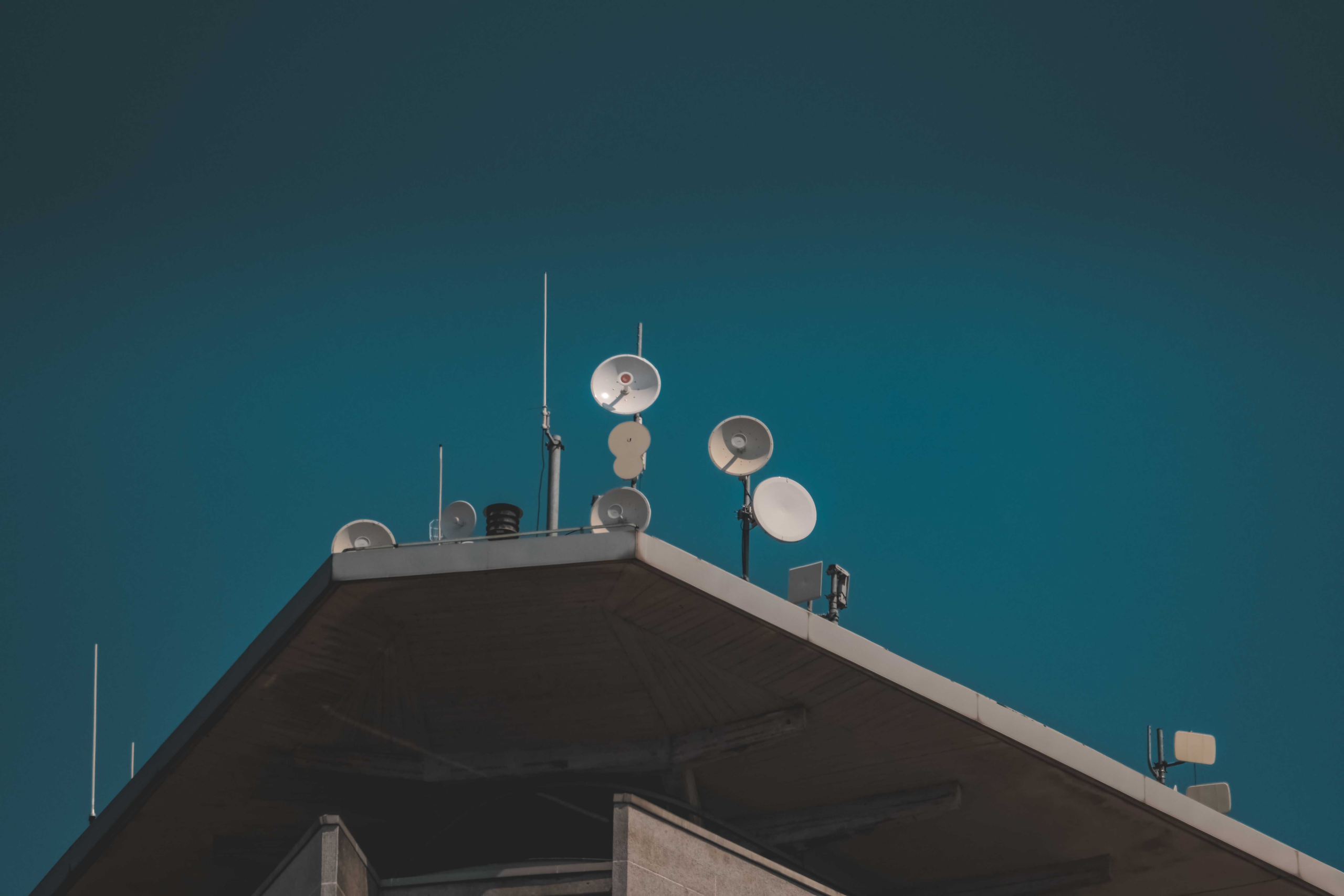
Northwood makes two complementary antenna platforms. Portal is a modular phased array for satellite command and control, while Prism is a parabolic dish designed for high-throughput payload communications. Producing both in house allows the company to coordinate the equipment design, manufacturing process and operating software used by the shared ground network.
Satellite operators need ground connections for several distinct tasks. Telemetry reports the spacecraft’s status, tracking establishes its position, and command links allow authorised operators to control the mission. Payload transfers can involve much larger data volumes, especially when an imaging satellite returns observations collected over an orbit. Those activities place different demands on antenna gain, throughput, frequency planning and network scheduling.
Portal uses phased-array beam steering to follow spacecraft electronically, whereas Prism’s reflector concentrates radio signals for links with higher data-transfer demands. The systems are intended for different ground-network functions, with the required combination determined by spacecraft orbit, frequency allocations, available contact time and the volume of data to be transferred.
Northwood reports a full-duplex command link with a US government geostationary satellite using Portal hardware, adding to previous low-Earth-orbit work. In another test, the company combined ten Portal arrays to achieve receive performance comparable with a 20-foot dish. The arraying result demonstrates a particular tested configuration; performance across other frequencies, spacecraft and sites will depend on their radio characteristics.
Manufacturing in Torrance centres on standardised modular systems that can be shipped by ordinary freight. Repeatable assemblies can simplify fabrication, testing, service parts and field installation, but antenna alignment, calibration and the final station configuration still depend on the chosen site and operating frequencies. Scaling production will also require consistent component supply and quality control across successive units.
Northwood says the Torrance premises have expanded its manufacturing footprint by more than five times. The company has more than 140 employees and plans to recruit around 400 additional people over three years for engineering, manufacturing, software and site operations in Torrance and Washington, DC. Those posts form a recruitment plan tied to the expansion, while the factory itself opened two months before the funding disclosure.
Antenna delivery is only one part of constructing a ground station. Each location needs available power, fibre backhaul, security arrangements, suitable land and the necessary permissions. Northwood says an antenna can be linked within three to four hours of arrival where the site infrastructure is already prepared, an installation step that follows the longer work of selecting and equipping the location.
Northwood places the broader process of establishing a new site at approximately three months under its current deployment model. The distinction between site preparation and hardware commissioning governs how quickly the network can reach areas without an existing supply of electricity, backhaul connectivity or approved operating space.
Six multi-orbit-capable sites have been deployed on two continents since the company’s previous financing round, according to Northwood. Its software allows spacecraft operators to search for available contacts and book, update or cancel passes through an application programming interface. Pooling capacity across sites offers customers a route to obtain access without constructing an entirely dedicated ground network.
A shared network needs scheduling as well as radio capacity. Satellite visibility, available bandwidth and competing contact requests affect when a spacecraft can transmit or receive information. Northwood’s interface lets operators reserve, change or cancel passes, aligning the capacity of individual sites with mission requirements as the deployed network grows.
The company targets more than 100Gbps of aggregate capacity at sites in high-demand regions by the end of 2027 through a combination of Portal and Prism systems. That is a future regional capacity objective, while Northwood has so far reported six deployed multi-orbit-capable sites across two continents since its previous funding round. Selected customers can also buy dedicated antenna hardware directly.
The new capital will support additional production lines, engineering recruitment and ground-station deployments. Northwood’s ability to meet its 2027 network objectives will be measured through commissioned antennas, operational sites and contracted contact capacity as it scales the factory and shared service together.