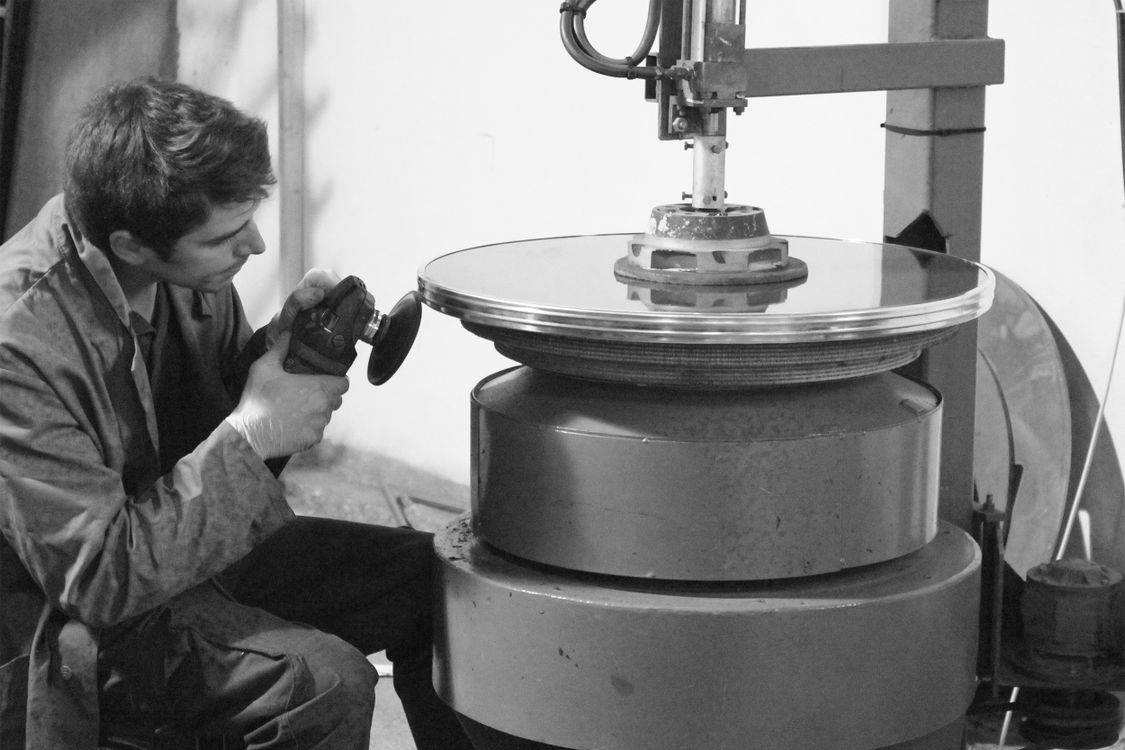
Newcastle University and Northumbria University have launched Surfaces for a Sustainable Future, a national network intended to accelerate lower-impact industrial coatings and functional surface treatments. The EPSRC Network+ brings together researchers in surface chemistry, corrosion, tribology and digital materials design with manufacturers whose products must withstand demanding service conditions.
Sunderland Software City is a partner, and the universities say 20 organisations are supporting the network at launch. It is a coordinated research and skills programme, not a new coating production line or a commercial product introduction. Proposed work includes feasibility studies, industrial secondments and better access to testing equipment that smaller manufacturers may lack.
Surfaces determine the performance of many components long before their underlying bulk material reaches the end of its useful life. Protective coatings can control contact with moisture, chemicals and abrasive particles, while engineered interfaces determine friction, wear and adhesion. The same component may require different surface properties at different locations, which is one reason a substitution that performs well in a laboratory cannot automatically replace a qualified industrial system.
The research agenda includes alternatives to petrochemical-based formulations and hazardous constituents found in established coating systems, including certain fluorinated compounds, isocyanates and chromium-based treatments. A substitute will need to satisfy the original duty specification — adhesion, chemical resistance, friction, wear and service temperature — as well as its environmental objectives. Removing a restricted substance does not, by itself, demonstrate that a replacement coating will protect the component for its intended life.
Industrial coating systems are frequently multilayer structures in which each layer performs a separate function. An adhesion layer may have to bond to the substrate, a barrier layer reduce permeability and an external layer survive wear or weathering. Changing one layer can affect the performance of the others, while stripping or repairing a damaged coating may create additional waste or expose the substrate to new risks.
The universities intend to explore coatings designed with repair, reuse and recycling in mind. That approach requires developers to consider removal and refurbishment at the design stage, when selecting both materials and methods of application. A system that is technically durable but difficult to separate from its base material may complicate recovery of high-value components after service.
Digital tools are expected to connect formulation choices with the way a coating is deposited, cured and tested. AI-assisted formulation, surface digital twins and automated experiments could reduce time spent exploring unsuitable combinations, provided the training data represents the materials and processes used in real production. Physical testing is still required to show whether a promising candidate survives the corrosion, fatigue and abrasion conditions of its eventual application.
The network also seeks to address uneven access to specialist equipment and pilot facilities. Small manufacturers may have a clear process problem but lack the laboratories needed to characterise coating thickness, adhesion or long-term degradation. Collaborative projects and feasibility studies could help them test alternatives before committing to manufacturing equipment or changing a qualified material specification.
Offshore wind, aerospace, medical devices and hydrogen infrastructure are among the identified application areas. A coating that reduces corrosion on exposed structures may avoid some maintenance work, while a repairable finish could improve recovery of costly components. Newcastle describes large potential future savings and service-life improvements, but these are examples of what better surface engineering might deliver, not measured benefits from a completed network project.
Alongside research projects, the network plans training, industrial secondments and opportunities for early career researchers and technicians. Access to specialist testing capacity is uneven, particularly when a smaller company needs to compare an alternative formulation with a long-qualified coating. Shared feasibility studies could establish whether a candidate merits more expensive pilot trials, without suggesting that network participation itself qualifies a new material.
Any shared evidence will be most valuable when laboratories record substrate preparation, layer thickness, application method, curing conditions and test environment consistently. Two nominally identical coatings may behave differently if these process variables differ. Common datasets and comparable test protocols could make it easier to judge whether results transfer from research facilities to a manufacturing line, while reducing the need to repeat basic characterisation across separate projects.
Professor Elizabeth Gibson at Newcastle leads the network, with Professor Matt Unthank at Northumbria as co-lead. The programme will support collaborative studies and training alongside materials research. Manufacturers considering new coating systems will still need repeatable production trials and qualification against customer requirements before replacing established treatments; those outcomes depend on the individual projects the network now develops.